Schools trans guidance sparks fears teachers could refuse to tell parents if child is questioning gender
•New transgender guidance issued to schools has sparked fears teachers could refuse to tell parents if their children were questioning their gender.The document published by the Department for Educatio...
•However, this would only be the case if they did not ask for changes to how they are treated or if there is a safeguarding concern.
•The Department for Education has insisted the guidance is set out to reflect that schools need to consider the individual circumstances, as that is the best way to ensure that what is done is in the i...
هذا الخبر من GB News. خبر يقدم أدوات ذكاء اصطناعي للتلخيص والترجمة والاستماع.
المصدر: GB News | Source: GB NewsNew transgender guidance issued to schools has sparked fears teachers could refuse to tell parents if their children were questioning their gender.
The document published by the Department for Education says schools should generally keep disclosures from pupils who are questioning their gender a secret.
However, this would only be the case if they did not ask for changes to how they are treated or if there is a safeguarding concern.
The Department for Education has insisted the guidance is set out to reflect that schools need to consider the individual circumstances, as that is the best way to ensure that what is done is in the interests of the child.
TRENDINGStoriesVideosYour SayHowever, the guidance officially states "where a child confides in a member of staff but does not ask the school or college to make changes to how they are treated, there is no reason to break any confidence unless there is a related safeguarding risk".
Bridget Phillipson's team has come under fire from both sides of the debate over revised statutory guidance, which comes into force in September, replacing separate plans for advice on gender-questioning children.
Maya Forstater, the chief executive of the gender-critical charity Sex Matters, said it was "deeply concerning that it also says there is 'no reason' for schools to tell parents if their child raises gender-related issues unless there is a related safeguarding risk".
Meanwhile, pro-LGBT+ charity The Proud Trust warned: "In an ideal world, we might assume that all parents are supportive of their children.
"However, in the real world, many young people do not have parents who would accept their child being trans, and some would react violently to that news. Young people should be at the heart of decision-making, including if and how parents are to be informed.
"A policy where parents are contacted in the majority of cases regardless of how the young person feels is a policy that puts trans young people at risk of harm."
The new guidance says schools should approach requests for social transitioning, which can involve using a child’s preferred name or pronoun, on a case-by-case basis, reports The Times.
It goes on to stress particular care should be taken with primary-school children.
If a child does make a request to the school to make changes, teachers have been told parents’ views “should carry great weight” and they should usually be involved in discussions.
However, schools have also been told to consider whether involving parents could place a child at risk.
LATEST DEVELOPMENTS
- Muslim teacher banned after telling pupils ‘gay and transgender people are mentally ill’
- Trans women BANNED from female jails after landmark court judgement in Scotland
- Trans row: Mum hit by 'hate incident' complaint after failing to call her trans child by new name
The guidance officially states: "In the rare circumstances where involving parents or carers would constitute a greater risk to the child than not involving them, the school or college should involve their designated safeguarding lead to determine what action is needed to safeguard the child, before the parents or carers are contacted or any decisions are taken."
However, the draft policy was met with backlash from correspondents who warned it risked "outing" children against their will.
Meanwhile, others suggested ministers had failed to recognise parents’ rights to decide what was best for their children.
In response, ministers said: "This government takes seriously the role of parents, and we trust schools and colleges to make careful decisions about safeguarding risks", adding they had strengthened the language "to be clear that parents’ views should carry great weight".
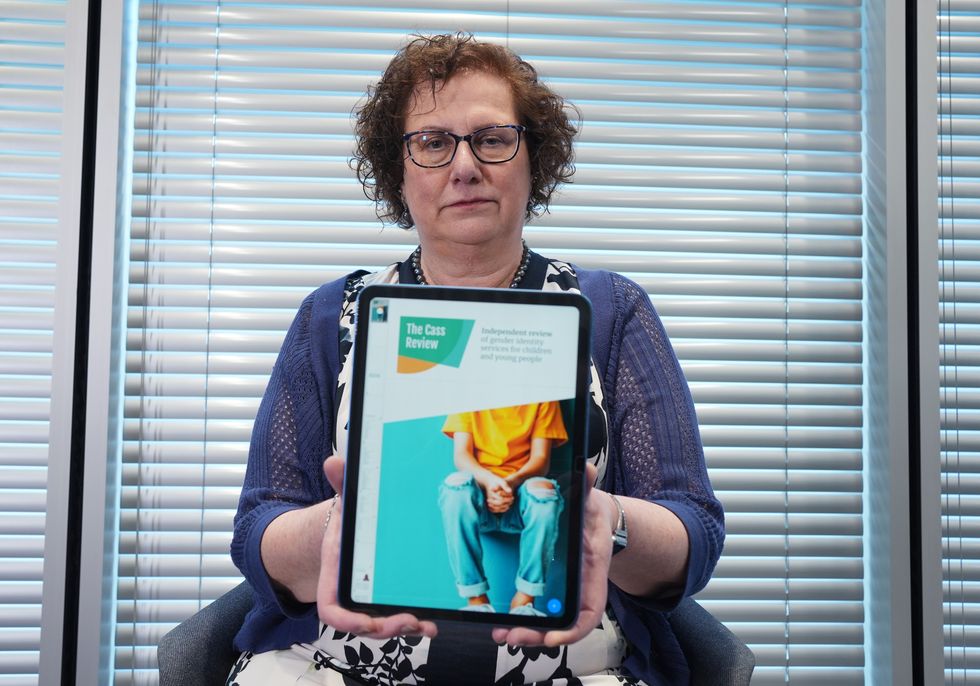
Baroness Hilary Cass, whose review of NHS gender care for under-18s led to sweeping changes welcomed the draft published by the Department for Education but accepted it is impossible for it to be “completely foolproof”.
Speaking to reporters earlier this year, she said: "When I was doing my (NHS) review, the default seemed to be to not contact parents, whereas this (guidance) is saying that you should contact parents unless you really think there’s a significant risk to the child if you do so.
"So it has turned it completely the other way around. So I think there’ll be much less risk of the sorts of things that I was hearing of children being socially transitioned without their parents knowing as a routine.
"The recommendations of my review were clear: children questioning their gender deserve safe, individualised support, and schools need clarity to provide it. This guidance delivers both. It is statutory, it is practical, and it reflects the evidence. Schools can now act with confidence — and children and families can expect consistent, accountable safeguarding as a result.”
Our Standards: The GB News Editorial Charter
ملاحظة تحريرية | Editorial Note: نُشر هذا المقال في الأصل بواسطة GB News. خبر (Khabr) هي منصة إعلامية أردنية مرخّصة تعمل بالذكاء الاصطناعي. نضيف قيمة تحريرية من خلال: تحليل ذكي للأخبار، ملخصات تلقائية، رواية صوتية بالذكاء الاصطناعي، ترجمة متعددة اللغات، وتدقيق الحقائق. هدفنا جعل الأخبار أكثر وضوحاً وسهولةً للقارئ العربي.
This article was originally published by GB News. Khabr is a licensed Jordanian AI-powered news platform (Registration #82086). We add editorial value through: AI-powered news analysis, automated summaries, AI audio narration, multi-language translation (Arabic, English, French, Turkish), and AI fact-checking. Our mission is to make news more accessible and understandable for Arabic-speaking audiences worldwide.