⚡ عاجل: كريستيانو رونالدو يُتوّج كأفضل لاعب كرة قدم في العالم●⚡ أخبار عاجلة تتابعونها لحظة بلحظة على خبر●⚡ تابعوا آخر المستجدات والأحداث من حول العالم●
AI اقتراحات ذكية
AI مباشر|--مشاهد مباشر
962,295مقال401مصدر نشط228قناة مباشرة4,467خبر اليوم
آخر تحديث:منذ 4 ثواني
Remittances to Philippines dip to 9-month low; Middle East conflict may affect rest of 2026
•Cash remittances from Filipinos abroad fell to a nine-month low in February, the Philippine central bank reported.While remittances coursed through banks rose to $3.02 billion in January this year, it...
•Philippine peso slides 16.25 against UAE dirham amid US-Israel-Iran war
Overseas Filipinos send home record Dh130.76 billion ($35.63 billion) in 2025Philippine peso nears 61 vs US dollar as Asian cur...
هذا الخبر من Khaleej Times. خبر يقدم أدوات ذكاء اصطناعي للتلخيص والترجمة والاستماع.
Cash remittances from Filipinos abroad fell to a nine-month low in February, the Philippine central bank reported.
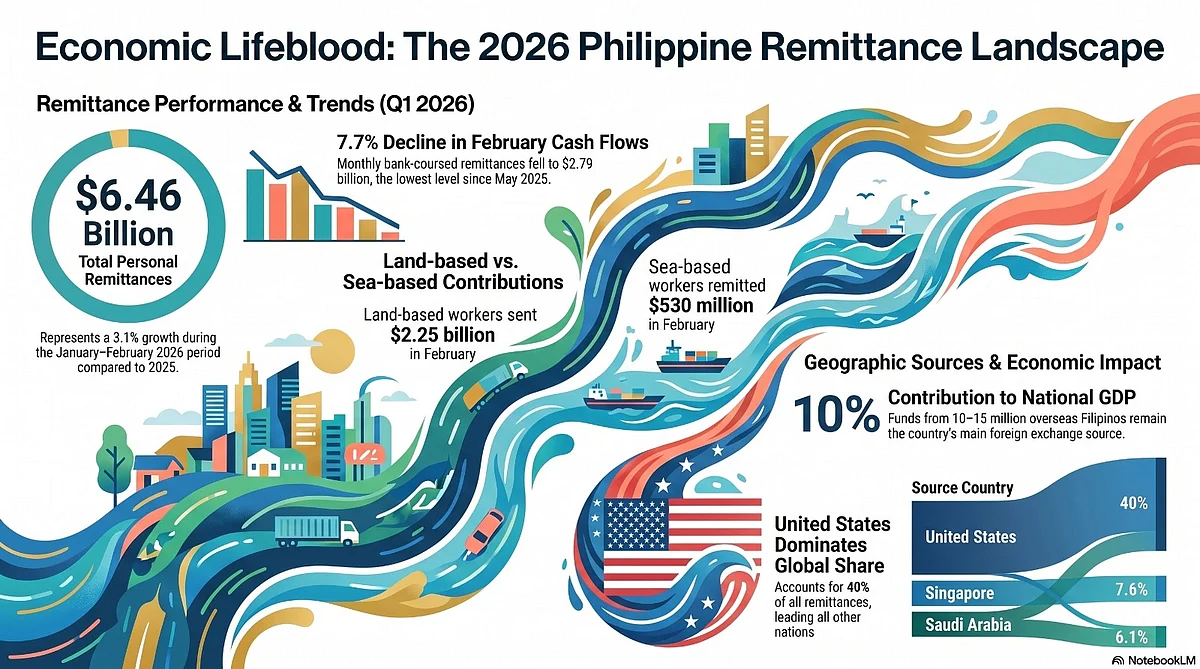
While remittances coursed through banks rose to $3.02 billion in January this year, it fell by 7.7 per cent to $2.79 billion in February, the Bangko Sentral ng Pilipinas (BSP) revealed.
It was the weakest level of remittances through bank transactions since the $2.66 billion cash inflow in May 2025.
Land-based overseas Filipino workers sent home $2.25 billion in February, while sea-based workers remitted $530 million, BSP said.
The bank explained the dip may be attributed to Filipinos abroad having already sent more funds to their families during the Christmas and New Year holidays in December and January.
“The United States remained the top source of cash remittances to the Philippines in January and February 2026 – accounting for 40 per cent of the total – followed by Singapore and Saudi Arabia,” the BSP said.
It was followed by Singapore (7.6%), Saudi Arabia (6.1%), Japan (5.3%), the United Kingdom (4.7%), the United Arab Emirates (4.2%), Canada (3.1%), Taiwan (3%), Qatar (2.9%), and Hong Kong (2.7%).
Meanwhile, personal remittances – coursed through banks, online financial applications, remittance centers, and informal channels as well as in-kind items – rose by 2.6 per cent to $3.1 billion in February from $3.02 billion a year ago, BSP reported.
In the January to February, personal remittances grew by 3.1 per cent to $6.46 billion from $6.27 billion a year earlier.
The Philippine Department of Economy, Planning and Development (DepDEV), however, expressed fears that the hostilities in the Middle East may push OFW remittances to lower levels for the rest of 2026.
DepDEV secretary Arsenio Balisacan said OFW remittances may fall by as much as P167.45 billion if the US-Israel-Iran war leads to massive job losses and forced repatriations.
Remittances by the estimated 10 to 15 million Filipinos living and working abroad contribute to as much as 10 per cent of the Philippines gross domestic product and is the country’s main source of foreign exchange.
ملاحظة تحريرية | Editorial Note:
نُشر هذا المقال في الأصل بواسطة Khaleej Times.
خبر (Khabr) هي منصة إعلامية أردنية مرخّصة تعمل بالذكاء الاصطناعي.
نضيف قيمة تحريرية من خلال: تحليل ذكي للأخبار، ملخصات تلقائية، رواية صوتية بالذكاء الاصطناعي، ترجمة متعددة اللغات، وتدقيق الحقائق.
هدفنا جعل الأخبار أكثر وضوحاً وسهولةً للقارئ العربي.
This article was originally published by Khaleej Times.
Khabr is a licensed Jordanian AI-powered news platform (Registration #82086).
We add editorial value through: AI-powered news analysis, automated summaries, AI audio narration, multi-language translation (Arabic, English, French, Turkish), and AI fact-checking.
Our mission is to make news more accessible and understandable for Arabic-speaking audiences worldwide.
هذا الخبر ضمن تغطية خبر لقسم تعليم.
نقدّم لك تحليلات ذكية وملخصات يومية لأهم الأخبار من مصادر موثوقة متعددة.
المصدر: Khaleej Times.
يوجد 6 مقالات مرتبطة بهذا الموضوع.
This article is part of Khabr's coverage of Education.
We provide AI-powered analysis, summaries, and multi-source aggregation to keep you informed.
Source: Khaleej Times.
Tags: UAE, remote work, school.
🍪 نستخدم ملفات تعريف الارتباط لتحسين تجربتك وعرض الإعلانات المخصصة. باستخدامك للموقع، فإنك توافق على سياسة ملفات تعريف الارتباط وسياسة الخصوصية.
We use cookies to enhance your experience and show personalized ads. By using this site, you agree to our Cookie Policy and Privacy Policy.
🔍
FREEFree 1GB Internet + Free International Calls
$1 trial — eSIM in 190+ countries — No roaming charges