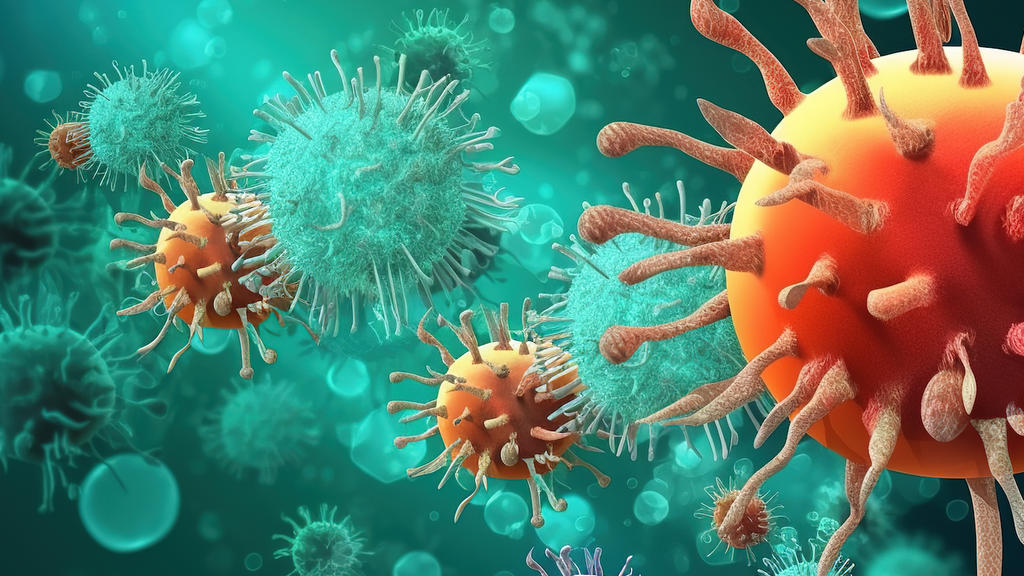
For the past two years, the U.S. National Science Foundation’s National Artificial Intelligence Research Resource (NAIRR) pilot program has driven innovative research across the U.S. for over 700 projects — spanning protein prediction and infectious disease outbreak management.
NVIDIA contributed to the NAIRR pilot through a cloud-based resource that gives researchers dedicated access to a minimum of four NVIDIA DGX nodes for at least a month. NVIDIA also provided technical support to onboard and assist the researchers throughout their projects.
With NVIDIA’s AI infrastructure support and DGX reference architecture providing dedicated resources, researchers have collapsed workflow timelines and uncovered groundbreaking technologies that will reshape and advance industries such as healthcare, agriculture and energy.
The potential for scientific exploration and discovery across the nation through NAIRR is boundless. Learn more about a few NAIRR projects below.
Physical Simulations With Polymathic AI’s Well Dataset
Simulation-to-real pipelines are becoming increasingly common across industries as a safer, more cost-efficient deployment method.
Polymathic AI — a coalition of international scientists from Flatiron Institute, Cambridge University and Lawrence Berkeley National Lab — with the help of NVIDIA GPUs and NVIDIA NVLink interconnect technology, is strengthening physical, fluidlike simulations with its large-scale dataset called the “Well.” The dataset will be used to train the largest and most broadly applicable foundation model for fluidlike behavior to date.
This foundation model, named Walrus, has been made publicly available along with its data, code and pertained weights.
Polymathic AI’s approach builds on previous work in physics pretraining environments — addressing current limitations in scale and pretraining diversity. The research group also plans to explore scaling laws to help accelerate the development of more powerful foundation models for scientific applications.
University of Michigan’s Fusion Model for Energy Storage
Energy, a foundation of society, requires designing novel and efficient materials for energy storage and conversion.
Researchers at the University of Michigan, led by Professor Venkat Viswanathan in the Department of Aerospace engineering, are developing a model-fusion framework that brings together domain-specific molecular AI and general-purpose large language models. The goal is to help computational scientists more easily explore chemical space, ask chemistry-specific questions in natural language and identify promising materials for next-generation energy technologies.
The family of molecular foundation models, MIST (the Molecular Insight SMILES Transformers), is designed for discovery and exploration across chemical space.
MIST models were pretrained on large unlabeled molecular datasets and use a novel tokenizer, Smirk, to better capture nuclear, electronic, geometric, isotopic and stereochemical information from molecular representations. MIST models have been fine-tuned on more than 400 structure-property relationships and can match or exceed state-of-the-art performance across benchmarks spanning electrochemistry, quantum chemistry, physiology and other domains.
MIST was developed on a 40-GPU NVIDIA DGX cluster the researchers gained as part of a NAIRR allocation and an additional 200,000 NVIDIA GPU hours on ALCF’s Polaris cluster. The team used NVIDIA’s NGC PyTorch container to support reproducible GPU-accelerated development across the different clusters.
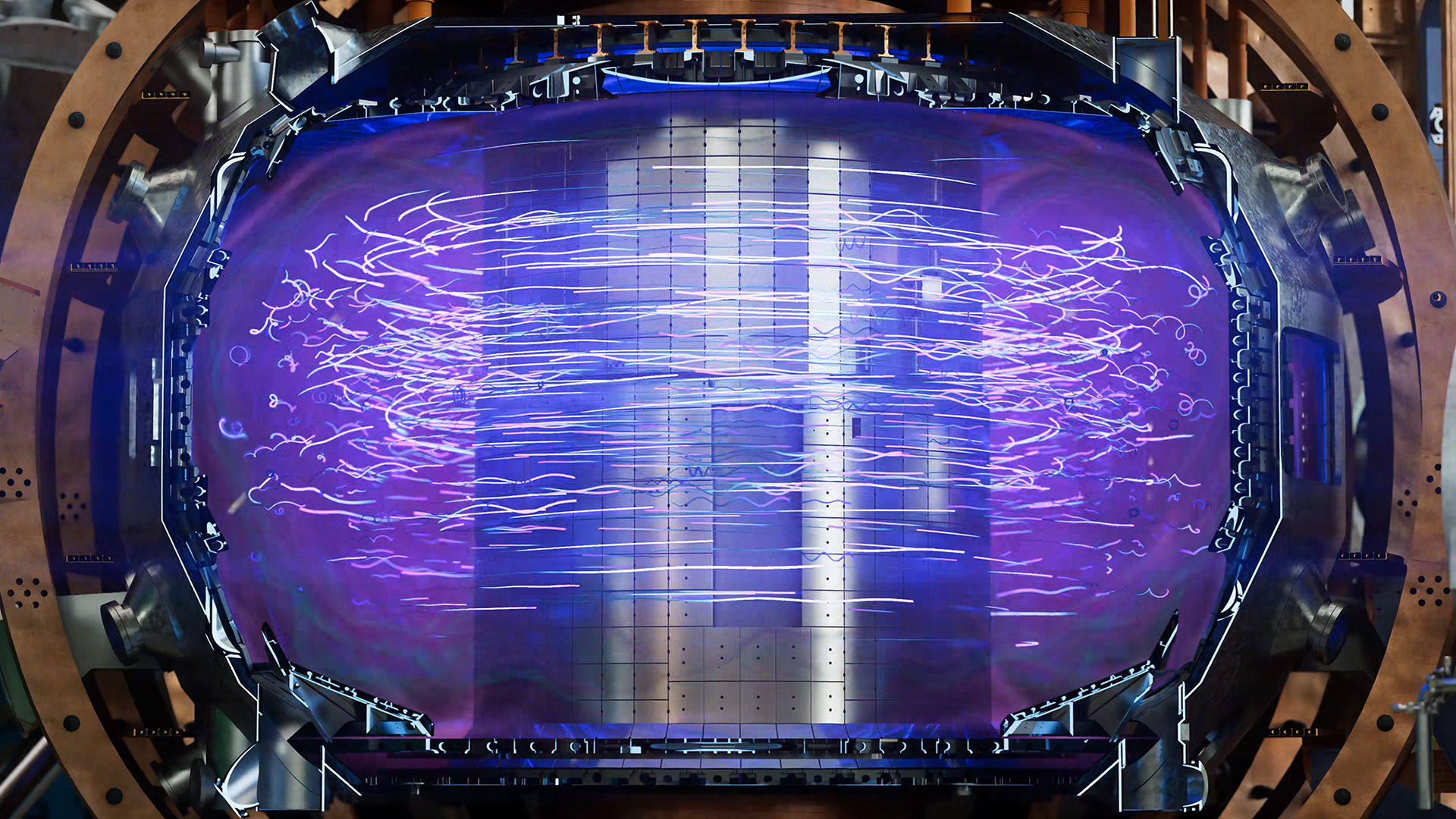
Fusing MIST with general-purpose LLMs makes accurate quantum-chemical calculations more broadly accessible and accelerates the design of energy storage and conversion systems needed to enable widespread electrification of transportation, such as in the heavy-duty and aviation sectors.
Boston University’s BEACON AI Pipeline for Infectious Disease Detection
Infectious diseases can spread rapidly in communities, causing surges in outbreaks.
Boston University’s Hariri Institute for Computing and the Center on Emerging Infectious Diseases is working to train and evaluate a LLM using NVIDIA accelerated compute, through an AI pipeline to support an outbreak monitoring program called BEACON — Biothreats Emergence, Analysis and Communications Network.
This LLM is being trained using a large corpus of documents on infectious diseases and epidemic-prone priority pathogens to support the work of field experts and outbreak analysts working on BEACON.
The model will be capable of analyzing online posts of emerging disease outbreaks on a global scale to extract features for downstream categorization and prioritization. BEACON will process signals from a variety of sources — including global disease-tracking platform HealthMap, news and social media feeds, subject-matter experts and individual communications via community boards or social media — to generate concise outbreak reports.
These comprehensive outbreak analyses can inform clinical practice guidelines for emerging infectious diseases and identify gaps where further data is needed.
Internationally deployed doctors, government organizations and academic researchers are already using the BEACON model to quickly identify and treat infectious diseases.
“When you talk to infectious disease experts about what they used to do before we developed this pipeline, it used to take several hours for them to compose a report,” said Ioannis Paschalidis, director of Boston University’s Hariri Institute. “Now, producing a report gets done in roughly two minutes.”
NAIRR and NVIDIA Across the Nation
The latest scientific research doesn’t end there. Many other universities — including Harvard, Stanford, Colorado State University and more — are pioneering scientific breakthroughs with the help of NAIRR and NVIDIA.
With scientists gaining broader access to AI and accelerated computing, innovation for a safer and healthier nation are more tangible than ever.
Learn more about the NAIRR pilot program and explore how NVIDIA is driving academic research.