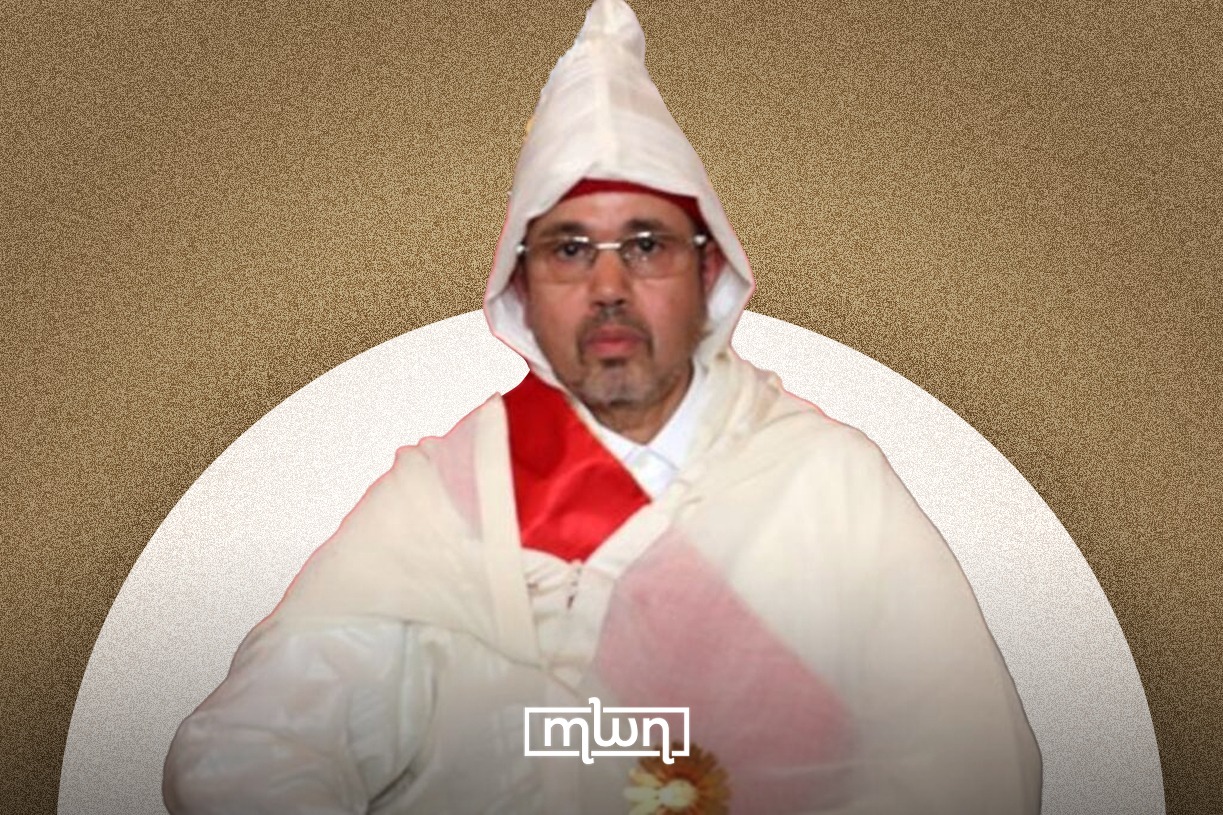
Mohamed Abdennabaoui’s career stands as a unique model in the history of Morocco’s judicial landscape, combining extensive academic knowledge with broad field experience as he rose from the public prosecution to lead the judiciary during one of the most critical phases of justice sector reform in the Kingdom. His career, spanning over four decades and culminating in his appointment by King Mohammed VI as First President of the Court of Cassation and Delegate President of the Supreme Council of the Judicial Power, reflects a steadfast royal vision based on competence and integrity in managing judicial affairs.
Mohamed Abdennabaoui was born on August 21, 1954, in Khouribga and grew up in an environment conducive to academic development. The true beginning of his academic journey came at the Faculty of Law at Mohamed V University in Rabat, where he earned his law degree in 1978, subsequently joining the Higher Institute of Judiciary and embarking on his judicial career in 1979.
Abdennabaoui did not stop there; he continued his education to broaden his intellectual horizons, joining the French National Institute for Judicial Studies to obtain a specialized diploma in administrative justice in 1993. His passion for knowledge continued as he earned a specialized higher studies diploma in law from Hassan II University in Casablanca in 1999, eventually completing a distinguished doctoral thesis at Cadi Ayyad University in Marrakech in 2015. The thesis, which received praise from the examination committee and was later published, addressed Moroccan law and international agreements on the extradition of criminals, reflecting his deep interest in criminal and international issues.
Abdennabaoui’s experience diversified to include various levels of judicial and legal work. He began his career as a judge and King’s prosecutor in southern cities, including Tan-Tan, Laayoune, and Dakhla, then as a resident judge in Ouaziguet until 2004. He subsequently held the position of King’s Attorney General at the courts of Laayoune, Ben Slimane, and Mohammedia, and finally Casablanca-Anfa. This profound field experience, during which Abdennabaoui worked on the ground in trial and appellate courts, granted him a precise understanding of the Moroccan judicial reality and its challenges. He added to his practical experience by serving as Head of the Criminal Affairs and Pardons Division at the Ministry of Justice, then progressed to leadership positions within the central administration, appointed as Advisor to the Minister of Justice on Criminal Policy, then Director of Prison Administration and Reintegration, and finally Director of Criminal Affairs and Pardons.
Morocco recasts public prosecution power
King Mohammed VI’s appointment of Mohamed Abdennabaoui on April 3, 2017, as King’s Attorney General at the Court of Cassation, and thus President of the Public Prosecution, marked a turning point in his career. This appointment came within a new constitutional context, as the 2011 Constitution stipulates the independence of the Public Prosecution from the Ministry of Justice, representing a qualitative shift in the history of Moroccan justice. Since assuming this responsibility, Abdennabaoui has shown clear firmness in defending the independence of the judiciary, considering any interference from the legislative or executive branches in judicial affairs as an infringement on the essence of justice. He demonstrated decisive leadership during the COVID-19 pandemic, leading the Public Prosecution to take strict measures to prosecute those spreading “false news” and violators of the state of health emergency, attempting to enforce legal discipline during the crisis.
On the international stage, Abdennabaoui’s achievements were equally remarkable, as he succeeded in placing the Moroccan Public Prosecution on the map of prestigious international judicial institutions. In a speech delivered at the Conference of Western United States Prosecutors, held in Santa Barbara, California (June 17-20, 2019), the King’s Attorney General highlighted the characteristics of the Public Prosecution in the Kingdom of Morocco as an integral part of the judicial authority.
Abdennabaoui noted that the Public Prosecution in Morocco was established in 1913 and was previously subject to the authority of the Minister of Justice, before becoming independent from the Ministry of Justice on October 7, 2017, with its own judicial presidency. He explained that the appointment, transfer, promotion, and discipline of public prosecution judges are carried out by the Supreme Council of the Judicial Power, unlike their counterparts among trial judges who are not subject to a hierarchical chain of command.
The Moroccan judge also proudly noted that within less than two years of its establishment, the Presidency of the Public Prosecution in Morocco became a member of the International Association of Prosecutors, Vice-President of the Association of African Prosecutors, Vice-President of the Association of Arab Public Prosecutors, and an observer member of the Consultative Council of European Prosecutors.
Discussing the broad powers granted by law to the Public Prosecution, Abdennabaoui highlighted that they include supervising the investigations of the judicial police, exercising public action in all crimes, and placing accused persons in police custody or pretrial detention. He also evoked the deep historical ties between Morocco and the United States, recalling that Morocco was the first country to recognize American independence in 1777, and that the first American diplomatic building outside its territory is located in Tangier, expressing his aspiration to open a new page in judicial cooperation between the two countries.
A court leader under pressure and purpose
On March 22, 2021, King Mohammed VI appointed Mohamed Abdennabaoui as First President of the Court of Cassation, and in this capacity, Delegate President of the Supreme Council of the Judicial Power, succeeding former president Mustapha Farès. In his speech during the inauguration ceremony, Abdennabaoui did not hide the scale of the challenges he faced, especially given the repercussions of the COVID-19 pandemic on judicial practice, but he clearly defined his priorities. These revolved around improving the quality of judicial decisions and ensuring their formulation serves the principles of justice and fairness, and addressing the high volume of appeals lodged before the Court of Cassation, seeking innovative solutions to enable the court to examine files thoroughly without compromising the right to two levels of jurisdiction. He also emphasized his determination to work with members of the Supreme Council of the Judicial Power to develop the Council’s performance, making it a key player in implementing judicial reform programs, and stressed the need to adhere to the highest standards in assigning responsibilities to judges.
Abdennabaoui’s career was not limited to national borders as he was strongly present in international forums. In March 2023, the Islamic World Educational, Scientific and Cultural Organization (ICESCO) received a high-level delegation, including heads of supreme courts from 23 countries, led by Mohamed Abdennabaoui in his capacity as First President of the Court of Cassation, to visit the exhibition on the Prophet’s Biography and Islamic Civilization. This international presence reflects the confidence international institutions have in Moroccan judicial expertise and highlights Abdennabaoui’s status as one of the most prominent judicial leaders at both the African and European levels.
Mohamed Abdennabaoui’s career represents a model of the self-made judge who built his path on solid foundations of continuous learning and diverse field experience. His transition from a judge in the southern cities to Director of Prison Administration, then Advisor to the Minister of Justice, then Director of Criminal Affairs, reaching the pinnacle of the judicial hierarchy as President of the Court of Cassation, along with his tangible international achievements, tells the story of an exceptional professional journey. As the judicial reform workshop continues in Morocco, Abdennabaoui’s wise leadership remains a fundamental asset for consolidating the rule of law and protecting judicial independence, under the high royal directives that make justice a cornerstone of the modern state.
The post Mohamed Abdennabaoui: The Extraordinary Journey of a Judge at the Head of Morocco’s Judiciary appeared first on Morocco World News.