John Esposito transformed how the West understood Islam
•play Live Sign upShow navigation menuNavigation menuNewsShow more news sectionsAfricaAsiaUS & CanadaLatin AmericaEuropeAsia PacificWorld CupMiddle EastExplainedOpinionVideoMoreShow more sectionsFeatur...
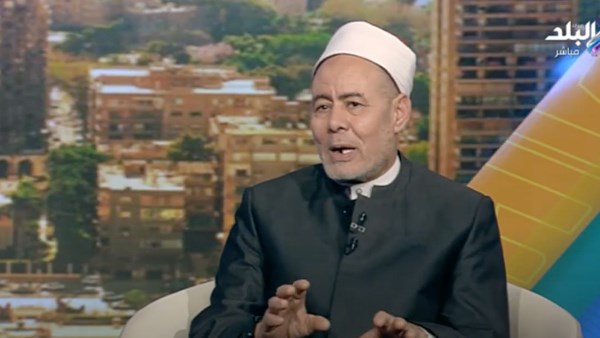
•xwhatsapp-strokecopylinkgoogleAdd Al Jazeera on GoogleinfoJohn Esposito was an early and courageous scholar who challenged Orientalist misrepresentations of Islam and Muslims in an era of deep polaris...
•He was a towering intellectual who published more than 55 books, mainly with Oxford University Press, which have been translated into dozens of languages.
هذا الخبر من Al Jazeera English. خبر يقدم أدوات ذكاء اصطناعي للتلخيص والترجمة والاستماع.
play Live Sign upShow navigation menuNavigation menuNewsShow more news sectionsAfricaAsiaUS & CanadaLatin AmericaEuropeAsia PacificWorld CupMiddle EastExplainedOpinionVideoMoreShow more sectionsFeaturesEconomySportHuman RightsClimate CrisisInvestigationsInteractivesIn PicturesScience & TechnologyPodcastsTravelSponsored Contentplay Live Click here to searchsearchSign upNavigation menucaret-leftTrendingUS-Israel war on IranWorld Cup 2026Tracking Israel's ceasefire violationsDonald Trumpcaret-rightOPINIONOPINION, OpinionJohn Esposito transformed how the West understood IslamThe pioneering scholar, who died on July 15, challenged Orientalist orthodoxies and reshaped the study of Islam and Muslim societies. xwhatsapp-strokecopylinkgoogleAdd Al Jazeera on GoogleinfoJohn Esposito was an early and courageous scholar who challenged Orientalist misrepresentations of Islam and Muslims in an era of deep polarisation [Screenshot/Al Jazeera]John L Esposito, a prominent scholar of religion and international affairs at Georgetown University, passed away on July 15, 2026, due to complications from heart surgery. He was a towering intellectual who published more than 55 books, mainly with Oxford University Press, which have been translated into dozens of languages. He uniquely shaped the modern study of Islam and Muslim societies during the late 20th and early 21st century, particularly in the area of Islam-West relations during key moments of friction following the 1979 Iranian revolution and 9/11. John was born into a working-class Italian-American family in Brooklyn, New York, in 1940. His worldview was shaped by his devout Catholic mother and his father’s commitment to social justice. He aspired to become a Catholic priest and, at a young age, joined the strict Capuchin Franciscan Order. John left the seminary before ordination and opted for graduate school instead. He earned a doctorate in religious studies at Temple University under the supervision of Ismail al-Faruqi, the late Palestinian-American scholar of religion. John’s family and friends questioned his career choice because they feared for his employability. When he entered the job market in 1974, there was only one advertised position in Islamic studies. The study of religion, particularly Islam, was absent in many institutions of higher learning, and international relations programmes at universities ignored the role of religion in global affairs. Telling stories was one of Professor Esposito’s many passions. Reflecting on his career, he frequently joked that he owed his livelihood to two famous “radical” Muslims, one Shia and the other Sunni: Ayatollah Khomeini and Osama bin Laden. After the 1979 Islamic revolution in Iran, interest in the relationship between Islam and politics skyrocketed in the West. The same happened after 9/11. John’s expertise was suddenly in high demand. He responded by publishing several groundbreaking books on the relationship between Islam and politics, Islam’s normative ideals, Islam-West relations, and the diverse political and social structures of Muslim societies. He was frequently quoted in the media, and governments now sought his counsel. This story about John’s career, however, has a steep downside. The Western interest in Islam and Muslims emerged due to threats to United States national security. This meant the ability to understand this topic in a free, unbiased and independent way was absent for most Westerners. The enveloping context that shaped the policy and public debate on Islam and Muslims was themes of political revolution, mass violence and perceived threats to global order. John’s educational efforts were always an uphill battle. Establishment academics dominated the intellectual, policy and media debates. Bernard Lewis wrote about the alleged “Roots of Muslim Rage” at modernity that purportedly explained turmoil in the Middle East. Around the same time, Samuel Huntington advanced a popular thesis on the “Clash of Civilizations”. These views had a wide following, in part because they reinforced pre-existing Western biases about Islam and Muslims. They were further enhanced by US and Israeli national security narratives about an alleged Islamic threat in the aftermath of the Cold War. John was an early and courageous scholar who challenged Orientalist misrepresentations of Islam and Muslims in an era of deep polarisation. His scholarship created room for understanding in lieu of prejudice, and his intellectual insights allowed a younger generation of scholars to build on and expand upon his pioneering research. Professor Esposito advanced a new understanding of religion by criticising the dominant social science theories about political development. He astutely drew attention to a “secular bias” that informed mainstream intellectual debates in the West on the relationship between religion and politics. These modernisation theories purported to be universally applicable based on the assumption that religion was a relic of the past that no longer mattered in the modern world. In truth, these claims were ideologically biased, based on a set of specifically Western experiences. By contrast, John interpreted the politics of the Muslim world not from a Western normative framework but rather from the Muslim world’s own experience. In other words, not from the outside in, but rather from the bottom up, from the perspective of the masses, many of whom held onto a religious identity. In doing so, he advanced a historically grounded and sociologically compelling analysis of religious politics in the Islamic world. Critiques of the legacy of colonialism, authoritarianism and US foreign policy were central to his intellectual work. Professor Esposito’s work on political Islam was pioneering. He wrote about the social conditions and collective aspirations that rendered political Islam appealing to diverse constituencies across the Middle East and the broader Muslim world. While most mainstream Western scholars and liberal intellectuals focused on the Islamist desire to implement “Sharia”, Esposito focused on the core aspirations that animated political Islam: dignity, justice, self-determination, and opposition to external domination. These same aspirations made political Islam a resilient and enduring force. In reflecting on John Esposito’s legacy, I’m reminded of an observation by Edmund Burke III. Commenting on the work of the late Marshall GS Hodgson, author of The Venture of Islam: Conscience and History of a World Civilization, Burke noted that Hodgson, like Esposito, refused to view Islam as the “other”. Instead, he understood the Islamic tradition as “a venture alongside others that marked human efforts to bring about a just and moral world”. We are unlikely to see a scholar in our lifetime again who can match John Esposito’s moral and intellectual caliber. His impact on our collective education and understanding of Islam-West relations is unique and immeasurable. Those who care about universal values rooted in international law, human rights, democracy, and cross-cultural understanding are deeply in his debt. John Esposito is survived by his wife of 61 years, Jean Esposito, his partner and primary supporter in all his endeavours, and the enduring love of John’s life. The views expressed in this article are the author’s own and do not necessarily reflect Al Jazeera’s editorial policy. Advertisement AboutAboutShow moreAbout UsCode of EthicsTerms and ConditionsEU/EEA Regulatory NoticePrivacy PolicyCookie PolicyCookie PreferencesAccessibility StatementSitemapWork for usConnectConnectShow moreContact UsUser Accounts HelpAdvertise with usStay ConnectedNewslettersChannel FinderTV SchedulePodcastsSubmit a TipPaid Partner ContentOur ChannelsOur ChannelsShow moreAl Jazeera ArabicAl Jazeera EnglishAl Jazeera Investigative UnitAl Jazeera MubasherAl Jazeera DocumentaryAl Jazeera BalkansAJ+Our NetworkOur NetworkShow moreAl Jazeera Centre for StudiesAl Jazeera Media InstituteLearn ArabicAl Jazeera Centre for Public Liberties & Human RightsAl Jazeera ForumAl Jazeera Hotel PartnersFollow Al Jazeera English:المصدر: Al Jazeera English | Source: Al Jazeera English
ملاحظة تحريرية | Editorial Note: نُشر هذا المقال في الأصل بواسطة Al Jazeera English. خبر (Khabr) هي منصة إعلامية أردنية مرخّصة تعمل بالذكاء الاصطناعي. نضيف قيمة تحريرية من خلال: تحليل ذكي للأخبار، ملخصات تلقائية، رواية صوتية بالذكاء الاصطناعي، ترجمة متعددة اللغات، وتدقيق الحقائق. هدفنا جعل الأخبار أكثر وضوحاً وسهولةً للقارئ العربي.
This article was originally published by Al Jazeera English. Khabr is a licensed Jordanian AI-powered news platform (Registration #82086). We add editorial value through: AI-powered news analysis, automated summaries, AI audio narration, multi-language translation (Arabic, English, French, Turkish), and AI fact-checking. Our mission is to make news more accessible and understandable for Arabic-speaking audiences worldwide.