Fly counters help to spot signs of river pollution
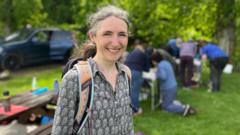
Fly counters help to spot signs of river pollution1 day agoShareSaveAdd as preferred on GoogleDavid KnoxBBC Scotland News, PeeblesBBCConservation management student, Anna Dorward, took part in the Peebles trainingA safety net against water pollution is widening across the country thanks to a growing army of fly-counting volunteers.More than 60 groups of voluntary river detectives have now been formed since the Riverfly Partnership scheme arrived in Scotland four years ago.By regularly monitoring the invertebrate life in rivers and burns, any deterioration in water quality can quickly be detected.This year's training has just started for the latest monitoring volunteers in a bid to expand the early warning system even further.Elaine Rainey said changes could be reported quickly to the Scottish Environment Protection AgencyThe riverfly monitoring programme started in England about 20 years ago and Buglife was tasked with expanding it into Scotland in 2022.By surveying numbers of invertebrates, such as caddisflies, mayflies and stoneflies, and submitting the data, any changes of water quality can be quickly detectedMost river catchments in Scotland now have at least one monitoring group - from Abhainn Gleann Leircag and the Mosset Burn in the north to the rivers Cree and Tweed in the south and more than 1,000 surveys have been logged.Buglife trainer Elaine Rainey with the latest volunteers in PeeblesConservation officer Elaine Rainey said any changes picked up were passed on to the Scottish Environment Protection Agency (Sepa) immediately."We will continue to expand the programme by offering training and providing kits for new monitoring groups," she said."People across Scotland are building connections with their rivers and burns - and we are all benefiting from this interest."In the Borders, Buglife has teamed up with the Tweed Foundation (TF) to expand its monitoring.There are currently six groups - in Peebles, Jedburgh, Ancrum, Heriot, Earl...المصدر: BBC Science | Source: BBC Science
ملاحظة تحريرية | Editorial Note: نُشر هذا المقال في الأصل بواسطة BBC Science. خبر (Khabr) هي منصة إعلامية أردنية مرخّصة تعمل بالذكاء الاصطناعي. نضيف قيمة تحريرية من خلال: تحليل ذكي للأخبار، ملخصات تلقائية، رواية صوتية بالذكاء الاصطناعي، ترجمة متعددة اللغات، وتدقيق الحقائق. هدفنا جعل الأخبار أكثر وضوحاً وسهولةً للقارئ العربي.
This article was originally published by BBC Science. Khabr is a licensed Jordanian AI-powered news platform (Registration #82086). We add editorial value through: AI-powered news analysis, automated summaries, AI audio narration, multi-language translation (Arabic, English, French, Turkish), and AI fact-checking. Our mission is to make news more accessible and understandable for Arabic-speaking audiences worldwide.