Explainer: What is rain enhancement and how does it work
المصدر: Gulf News | Source: Gulf NewsDubai: When dark clouds gather over the UAE, most people simply look up and hope for rain. But behind the scenes, a different kind of work is already under way, one that tries to make those clouds give a little more than they normally would.
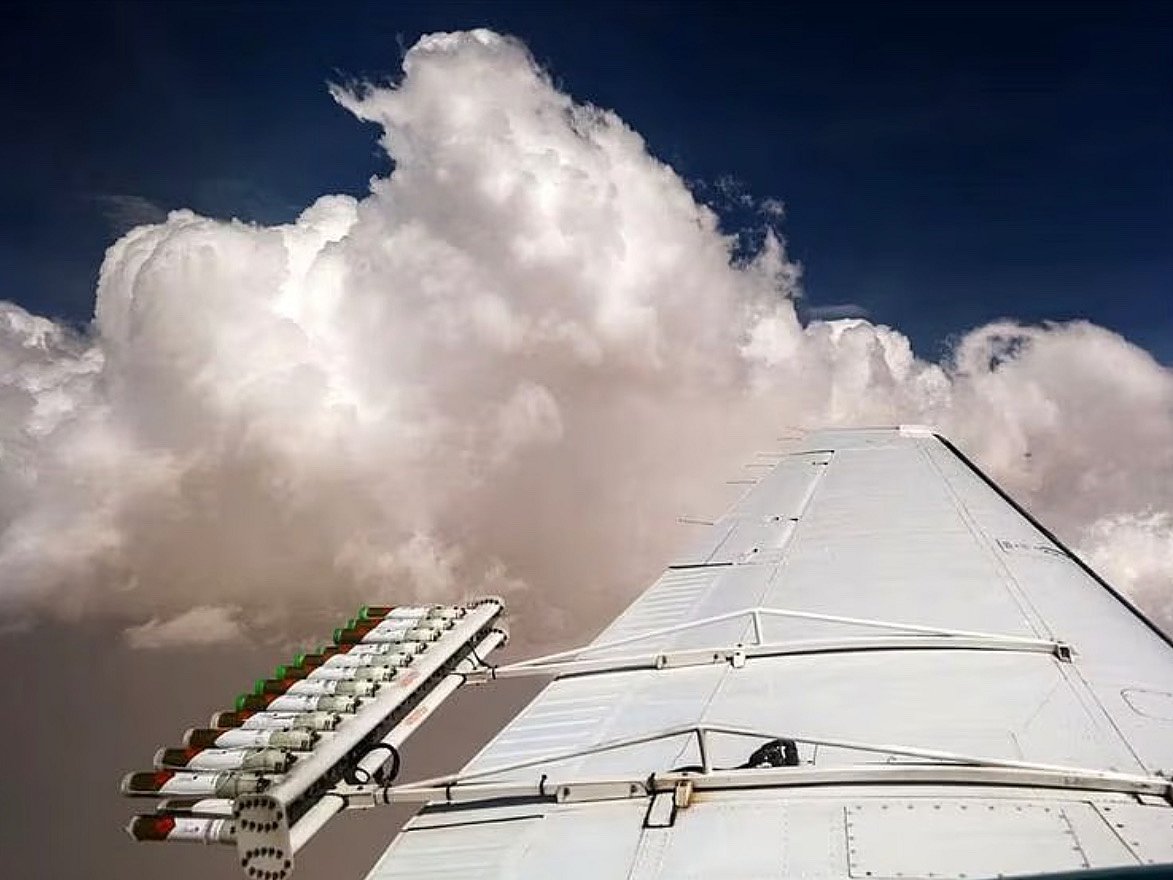
This is what is known as rain enhancement, or cloud seeding, a process the UAE has been using for years as part of its efforts to secure water in a region with relatively low rainfall.
Get updated faster and for FREE: Download the Gulf News app now - simply click here.So far this year, the National Center of Meteorology has carried out around 80 cloud seeding missions, sending aircraft into suitable clouds in an attempt to increase rainfall and replenish water reserves. But despite how often it makes headlines, the idea behind it remains widely misunderstood.
What is rain enhancement?
Rain enhancement does not create rain out of nowhere. It cannot turn clear skies into storms. What it does instead is far more subtle, and far more practical. It works only when clouds are already present, helping them release more of the moisture they naturally hold.
According to Ibrahim Al Jarwan, Chairman of the Board of Directors of the Emirates Astronomical Society and member of the Arab Union for Astronomy and Space Sciences, the process is typically used either to increase rainfall intensity when conditions are favourable or to improve the chances of rain in suitable clouds.
At its simplest, the process aims just to improve what nature is already doing. Clouds contain tiny water droplets, but these droplets are often too small to fall as rain. By introducing microscopic particles into the cloud, scientists encourage these droplets to collide, merge, and grow larger. Once they become heavy enough, gravity takes over, and rain begins to fall.
Which clouds are targeted?
In the UAE, this process is carefully targeted. Not all clouds are suitable for seeding. Meteorologists focus on cumulus clouds, the vertically developed clouds that contain strong upward air currents.
These clouds provide the right conditions for water droplets to grow and eventually fall as rain. Layered clouds, which are flatter and more stable, are generally not targeted, which is why rainfall can vary significantly from one area to another.
How the process works
Timing is critical. Using advanced radar systems and satellite imagery, specialists monitor cloud formation in real time.
Once suitable conditions are detected, aircraft are dispatched to release seeding materials, typically natural salts, into the cloud. These particles act as condensation nuclei, accelerating the formation of raindrops.
Despite the advanced technology, there are limits. Scientists cannot control where clouds move or where rain will fall. Wind patterns, atmospheric pressure, and temperature all influence the outcome. The goal is not to control the weather, but to improve the chances of rainfall where the right conditions already exist.
Why the UAE invests in it
The UAE’s investment in rain enhancement is driven by a simple reality: water is scarce. Natural rainfall in the country is limited and highly variable, with some years bringing significantly more rain than others. At the same time, demand for water continues to rise, driven by population growth, urban development, and agriculture.
While desalination remains a primary source of water, it comes at a high cost, both financially and environmentally. Rain enhancement offers a complementary solution.
According to a peer-reviewed study published in Nature Research’s npj Climate and Atmospheric Science, the cost of producing water through cloud seeding ranges between $0.01 and $0.04 per cubic metre, compared to around $0.31 per cubic metre for desalinated water in the UAE. This makes rain enhancement a significantly more economical option, particularly when used alongside other water strategies.
Its effectiveness, while not absolute, is measurable. Studies have shown that cloud seeding can increase rainfall by between 10 and 25 percent under optimal conditions. In a desert environment, even modest increases can have a meaningful impact, helping to recharge groundwater reserves, support dams, and strengthen overall water security.
The technology behind it
Behind these operations is a sophisticated infrastructure. The National Center of Meteorology operates a fleet of four specialised aircraft, supported by a national radar network comprising seven Doppler radars that monitor cloud activity across the country. In addition, more than 100 interconnected weather monitoring stations track atmospheric conditions around the clock, providing the data needed to guide each mission.
The programme also includes a dedicated facility capable of producing up to 21,000 salt flares annually, which are used in cloud seeding operations. These materials are designed to be environmentally safe, and officials have consistently emphasised that the technologies used are carefully tested and controlled.
Addressing misconceptions
Misconceptions about rain enhancement persist, particularly the idea that it can “steal” rain from neighbouring regions. Meteorologists have repeatedly dismissed this claim, explaining that cloud seeding does not create or redirect weather systems. It simply enhances rainfall within clouds that already exist in a specific area. There is no scientific evidence to support the notion that it deprives other regions of rain.
A programme that continues to evolve
The programme has evolved significantly over time. While cloud seeding has been conducted in the UAE for decades, it was formally expanded in 2010 as part of a national strategy to improve water security.
Since then, it has grown into one of the most advanced programmes of its kind, combining operational missions with ongoing research and innovation.
Artificial intelligence is now playing an increasingly important role. AI systems are used to analyse cloud behaviour, predict weather patterns, and determine the most effective moments for seeding. This allows for more precise targeting and improves the overall efficiency of operations.
Beyond current technologies, researchers are exploring new approaches to enhance rainfall. These include the use of nanotechnology to develop more effective seeding materials, as well as experimental methods involving electrical charges and advanced atmospheric modelling. Some studies are even examining the potential of drones and laser-based techniques to influence cloud formation.
Why timing matters
The number of missions conducted each year depends entirely on weather conditions. There is no fixed schedule. Operations take place only when suitable clouds form, which means activity levels can vary significantly. In 2025, for example, more than 170 missions were carried out by August. In contrast, fewer clouds in other years result in fewer opportunities for seeding.
Weather variability is influenced by various factors, including atmospheric pressure systems and broader climate patterns. Phenomena such as La Niña can indirectly affect rainfall in the region by altering wind patterns and reducing the formation of rain-bearing clouds.
In a nutshell, rain enhancement helps the UAE get more out of every cloud. It does not guarantee rain, but it improves the odds, making it a valuable addition to the country’s long-term water strategy.
ملاحظة تحريرية | Editorial Note: نُشر هذا المقال في الأصل بواسطة Gulf News. خبر (Khabr) هي منصة إعلامية أردنية مرخّصة تعمل بالذكاء الاصطناعي. نضيف قيمة تحريرية من خلال: تحليل ذكي للأخبار، ملخصات تلقائية، رواية صوتية بالذكاء الاصطناعي، ترجمة متعددة اللغات، وتدقيق الحقائق. هدفنا جعل الأخبار أكثر وضوحاً وسهولةً للقارئ العربي.
This article was originally published by Gulf News. Khabr is a licensed Jordanian AI-powered news platform (Registration #82086). We add editorial value through: AI-powered news analysis, automated summaries, AI audio narration, multi-language translation (Arabic, English, French, Turkish), and AI fact-checking. Our mission is to make news more accessible and understandable for Arabic-speaking audiences worldwide.