Artemis II: Nasa targets early April for Moon mission
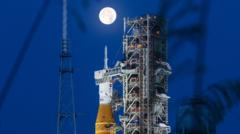
Artemis II: Nasa targets early April for Moon mission12 March 2026ShareSaveAdd as preferred on GoogleRebecca MorelleScience EditorNASAThis will be the first mission to the Moon since Apollo 17 in 1972 Nasa says it's on track to launch its Artemis II mission in early April, which will see astronauts fly around the Moon for the first time in more than 50 years.The rocket had been set to blast off in March, but after a helium leak was discovered it was returned to the Vehicle Assembly Building in Cape Canaveral, Florida, for repairs.Nasa says it's confident the problem is fixed, and is planning to roll the rocket back out to the launchpad on 19 March, with the earliest possible launch date of 1 April.Speaking at a press briefing, Nasa leaders also emphasised the risks involved with the mission.When does the Nasa Moon mission launch and who are the Artemis II crew?Nasa's mega Moon rocket arrives at launch pad for Artemis II missionThree US astronauts, Reid Wiseman, Victor Glover and Christina Koch, and Canadian astronaut Jeremy Hansen, make up the Artemis II crew.They will be the first humans to fly on Nasa's mega Moon rocket - the Space Launch System - and in the Orion spacecraft.Over the course of the 10-day mission, they are due to travel around the far side of the Moon - which is the side we never see from Earth - and back home again."We want to be sure that we're thinking about everything that can possibly go wrong, and have we assessed and adjudicated all the risks to put us in the best posture to be successful," said John Honeycutt, chair of the Artemis II Mission Management Team."If you look at the data over time, over the lifespan of building new rockets, the data would show you that one out of two is successful. You're only successful 50% of the time. I think we're in a much better position than that," he said."We do an outstanding job of understanding the risk, buying down the risk, mitigating the ri...المصدر: BBC Science | Source: BBC Science
ملاحظة تحريرية | Editorial Note: نُشر هذا المقال في الأصل بواسطة BBC Science. خبر (Khabr) هي منصة إعلامية أردنية مرخّصة تعمل بالذكاء الاصطناعي. نضيف قيمة تحريرية من خلال: تحليل ذكي للأخبار، ملخصات تلقائية، رواية صوتية بالذكاء الاصطناعي، ترجمة متعددة اللغات، وتدقيق الحقائق. هدفنا جعل الأخبار أكثر وضوحاً وسهولةً للقارئ العربي.
This article was originally published by BBC Science. Khabr is a licensed Jordanian AI-powered news platform (Registration #82086). We add editorial value through: AI-powered news analysis, automated summaries, AI audio narration, multi-language translation (Arabic, English, French, Turkish), and AI fact-checking. Our mission is to make news more accessible and understandable for Arabic-speaking audiences worldwide.