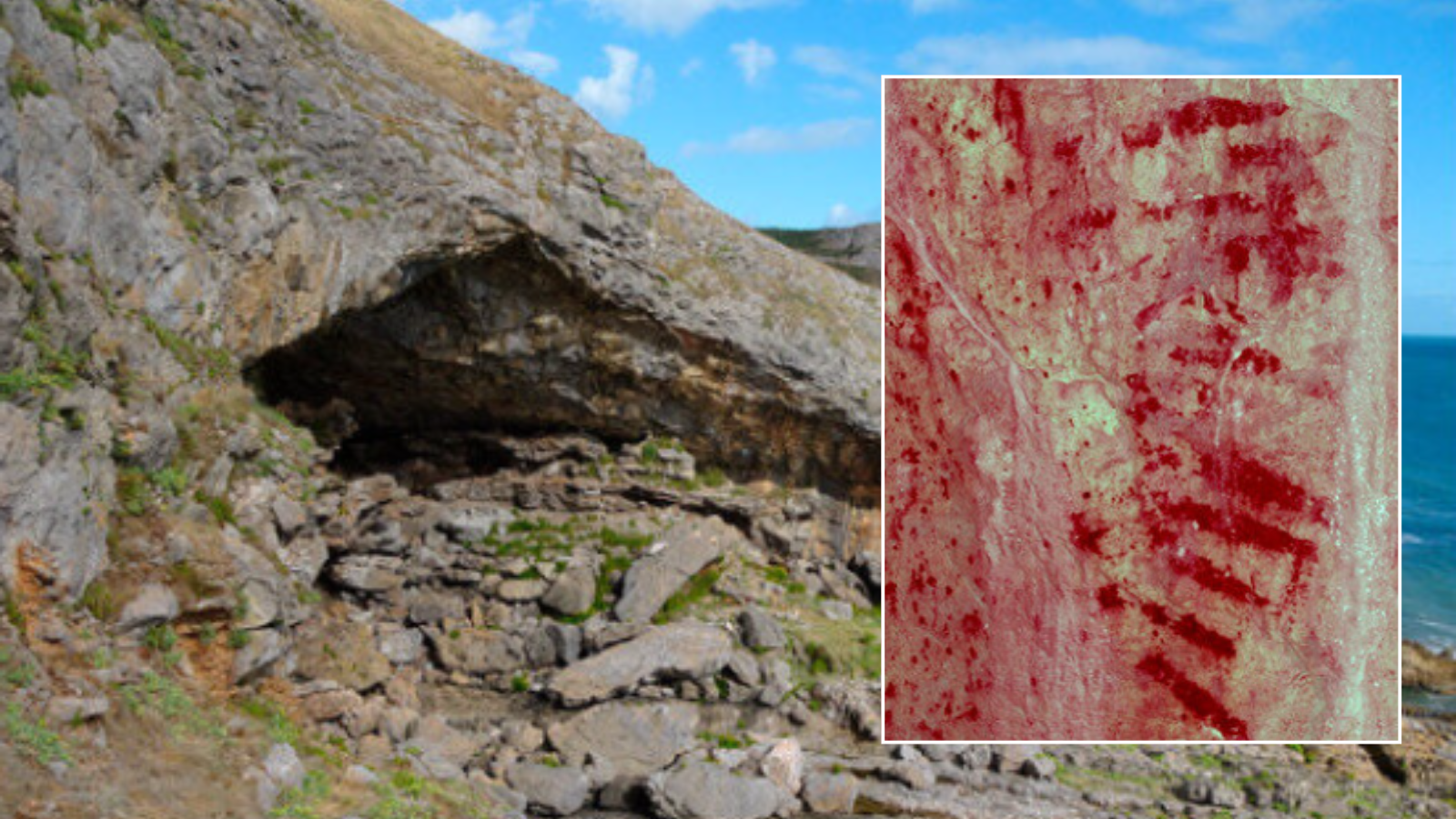
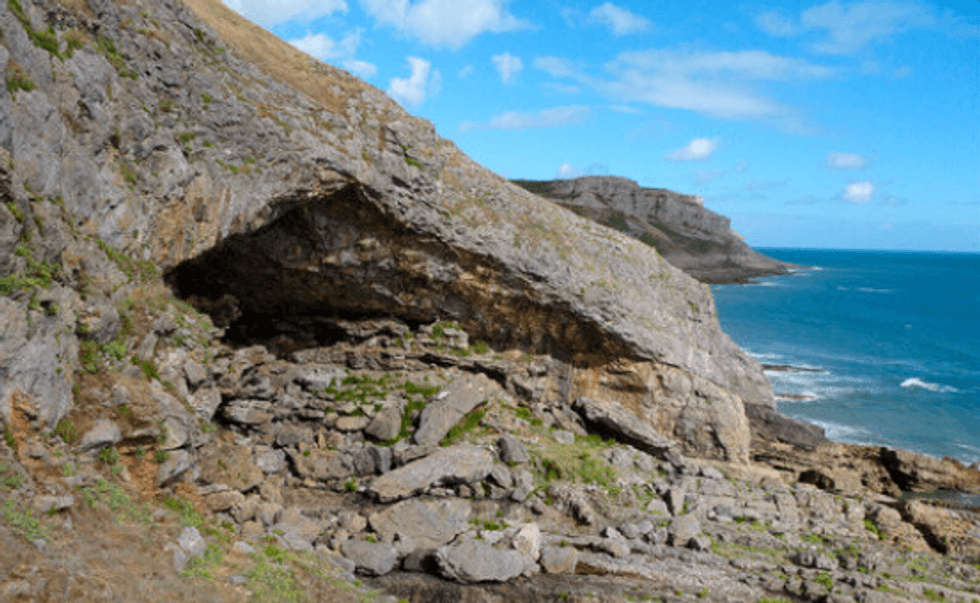
Painted markings inside a Welsh cave have been confirmed as Britain's oldest known rock art after being written off as a natural quirk a century ago.
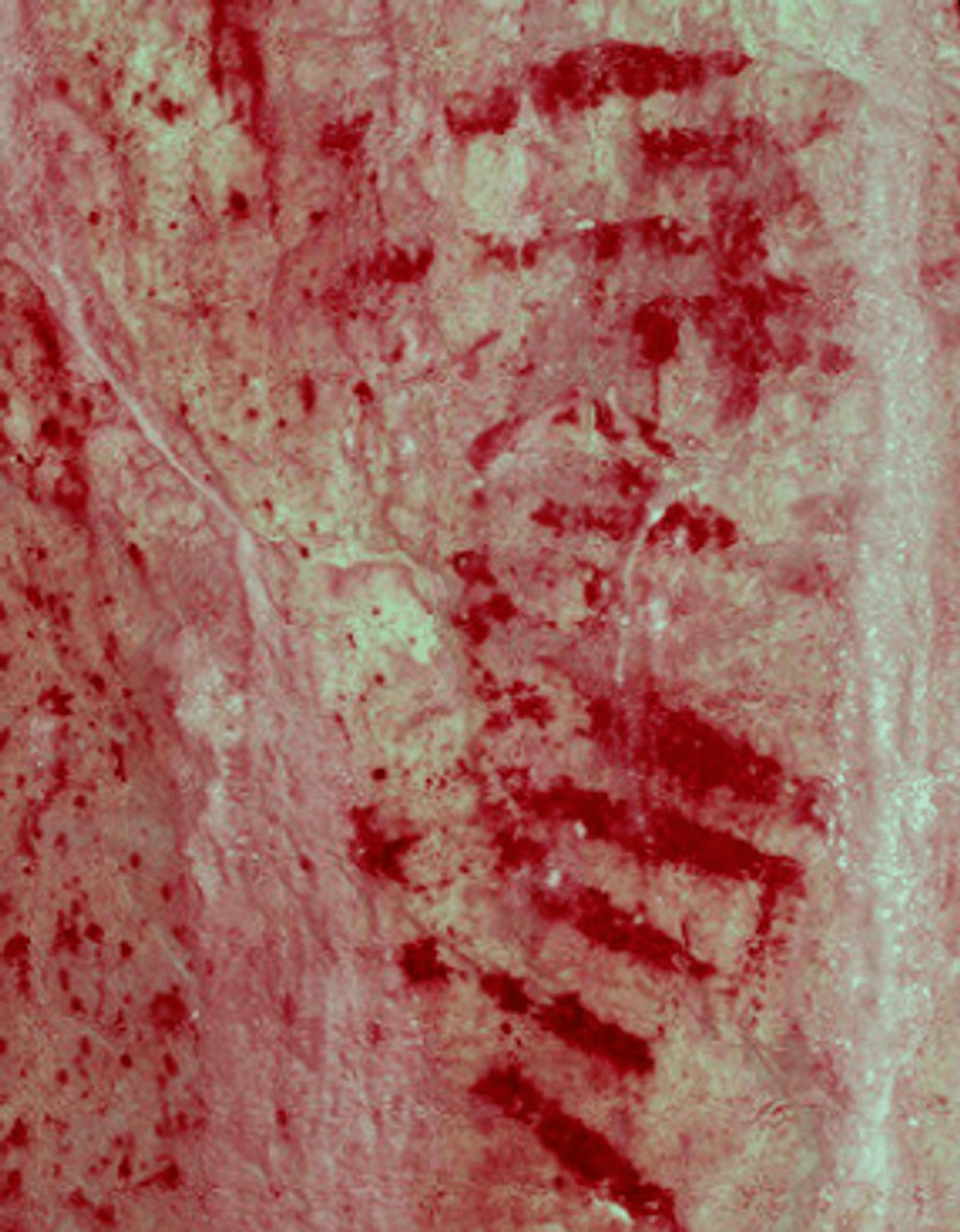
The horizontal red bands adorning the walls of Bacon Hole, near the Mumbles on the Gower peninsula, date back approximately 17,100 years.
An international team of archaeologists used dating techniques to establish the age of the pigments, supporting the original assessment that the markings represented genuine prehistoric cave paintings.
Professors William Sollas and Henri Breuil made the initial find in 1912, with the painted panel celebrated at the time as the first example of prehistoric cave art ever identified in England.
However, by 1928, experts had rejected the authenticity of the markings, concluding they were merely red oxide minerals seeping naturally through the limestone.
Dr George Nash, a Welsh-born prehistoric art specialist who led the new international research effort, has now said: "This is the earliest prehistoric art we have in Britain."
He explained without modern scientific methods, earlier researchers had no means of properly dating the artwork.
"We've used uranium-thorium dating for the pigments. We've got data 17,100 years before present, which makes it the oldest rock art in the British Isles," Dr Nash said.
"This is an exciting rediscovery, significant in understanding what was going on in Wales in the deep past."
Laboratory examination of pigment samples taken from the cave walls uncovered a mixture of calcite, matching the local limestone geology, combined with clay residues to form what researchers describe as a deliberate "pigment recipe".
The academics determined the coloured lines were unquestionably produced through human action, rather than natural geological processes.
Their analysis confirmed the original 1912 interpretation by Professors Breuil and Sollas, noting the painted bands run horizontally and maintain equal spacing between them – a purposeful and organised design.
LATEST DEVELOPMENTS
- Scientists at UK university turn sheep wool into bone-healing material in 'major milestone'
- New DNA evidence could change everything we know about how humans settled in South America
- Mysterious fossils found across America could prove Bible story is TRUE claim researchers
Researchers also established the prehistoric artists applied the pigment using their fingers.
The full scope of the original artwork was never properly understood, partly because a local fisherman had daubed graffiti on the opposite side of the chamber in 1894.
Bacon Hole sits within the limestone cliffs of South Gower, with views across the Bristol Channel – an area of outstanding natural beauty that currently lacks monument protection, which archaeologists argue it now merits.
Around 17,100 years ago, Wales was transitioning from an almost uninhabitable frozen terrain towards a treeless landscape with limited vegetation.
The Bristol Channel area would have attracted migrating animals during the summer months, while caves along the Gower coastline provided shelter for hunter-fisher-gatherer communities.
Dr Nash, an associate professor at Coimbra University's Geosciences Centre in Portugal and honorary research fellow at the University of Liverpool, published the findings in the journal Quaternary alongside colleagues from the universities of Southampton and Swansea.
The National Trust of Wales, which oversees the cave site, is set to formally reveal the research findings this week.
Our Standards: The GB News Editorial Charter