All-new species found 'hiding' in depths of Congolese jungle after series of mysterious sightings
•Scientists have officially confirmed the existence of a previously unknown primate species dwelling in the Democratic Republic of Congo's rainforests.The monkey, now formally named Colobus congoensis,...
•TRENDING Stories Videos Your Say This thumbless primate belongs to the broader colobus monkey family, a group of tree-dwelling herbivores native to Africa.Conservation workers initially spotted t...
•Amboko noted that interviews across 52 nearby villages revealed residents in merely eight had ever observed the shy creatures, which tend to remain hidden high in the forest canopy.Professor Kate Detw...
هذا الخبر من GB News. خبر يقدم أدوات ذكاء اصطناعي للتلخيص والترجمة والاستماع.
المصدر: GB News | Source: GB NewsScientists have officially confirmed the existence of a previously unknown primate species dwelling in the Democratic Republic of Congo's rainforests.
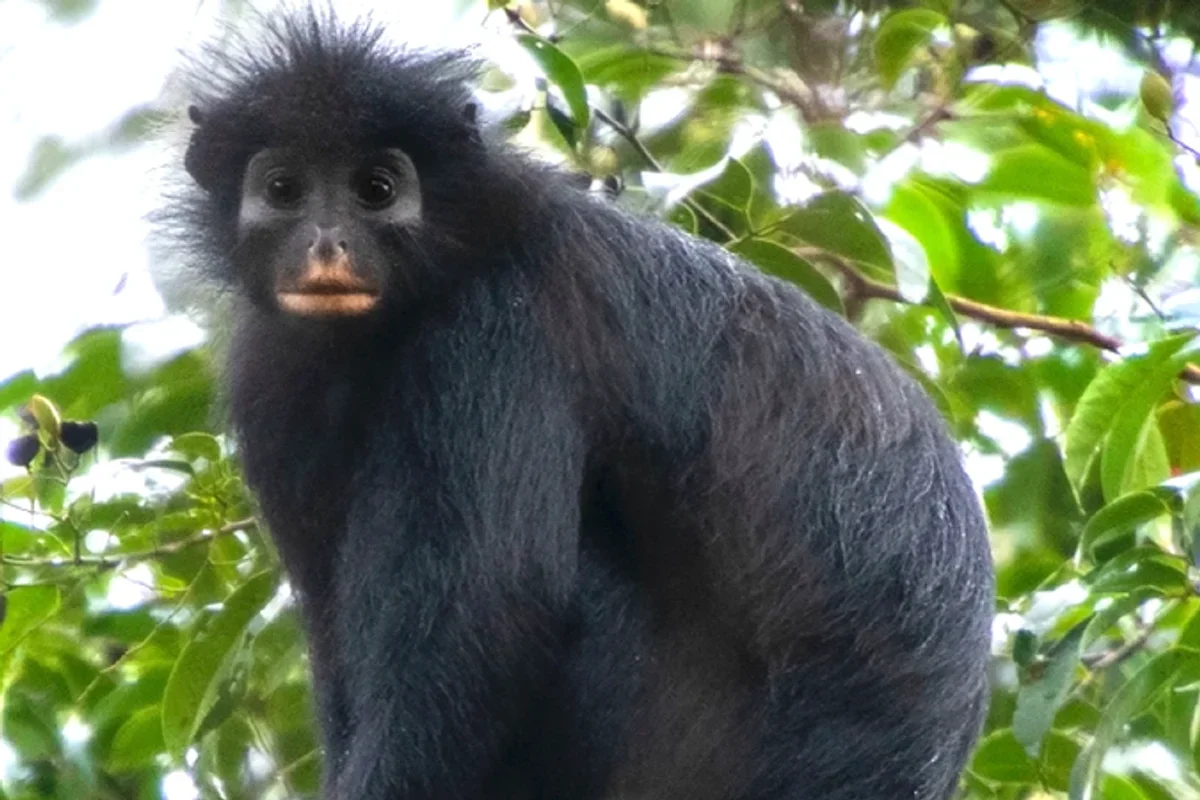
The monkey, now formally named Colobus congoensis, possesses striking pinkish-orange lips set against a dark face, with black fur covering its body.
Researchers photographed the elusive creature concealed within the upper reaches of Lomami National Park's dense tropical woodland, situated in the country's central eastern region.
The international team chose the Latin designation to honour the DRC's remarkable biodiversity.
TRENDINGStoriesVideosYour SayThis thumbless primate belongs to the broader colobus monkey family, a group of tree-dwelling herbivores native to Africa.
Conservation workers initially spotted this unusual animal in 2008, but they captured only a single blurry image.
A decade passed before another encounter occurred, prompting an international research collaboration involving scientists from the DRC, the United States and Germany to launch a comprehensive investigation.
Their work combined sound recordings, photographic evidence and extensive genetic analysis to establish that the primate represented an entirely new species.
The team's findings, now published in the journal PLoS One, mark a significant moment in African primatology.
Remarkably, Colobus congoensis represents just the fifth monkey species identified on the continent over the past three-quarters of a century.
Junior Amboko, a doctoral candidate at Florida Atlantic University who led much of the fieldwork, described the experience of encountering such a rarely seen creature as profoundly moving.
"Discovering" a species, in this context, means officially recording and confirming it has evolved to be genetically distinct, he explained to BBC News, calling it an "amazing feeling" to look into the face of an animal that so few people knew existed.
LATEST DEVELOPMENTS
- Largest great white shark EVER resurfaces in Atlantic heading straight for tourist hotspots
- Tourist rushed to hospital after massive bison tosses him EIGHT FEET in the air in brutal attack
- British wildlife park welcomes birth of adorable flamingo chick after its brother escaped to France
Local communities have long recognised the primate, referring to it as Likweli in their own language.
Yet the animal remains extraordinarily elusive. Amboko noted that interviews across 52 nearby villages revealed residents in merely eight had ever observed the shy creatures, which tend to remain hidden high in the forest canopy.
Professor Kate Detwiler, also from Florida Atlantic University, emphasised the ecological significance of colobus monkeys more broadly.
She explained: "These are really important African monkeys that don't have thumbs. They're these herbivores of the canopy that are a critical part of the ecosystem. We think they have a lot to do with processing seeds and germination in the forest."
She suggested the species' vivid facial markings might serve as visual signals for mate attraction or individual recognition.
The primates produce a characteristic roaring vocalisation.
Amboko said: "You often hear them, but don't see them."
With the animals facing hunting pressure for bushmeat, researchers hope formal species classification will enable official protection measures.
Our Standards: The GB News Editorial Charter


ملاحظة تحريرية | Editorial Note: نُشر هذا المقال في الأصل بواسطة GB News. خبر (Khabr) هي منصة إعلامية أردنية مرخّصة تعمل بالذكاء الاصطناعي. نضيف قيمة تحريرية من خلال: تحليل ذكي للأخبار، ملخصات تلقائية، رواية صوتية بالذكاء الاصطناعي، ترجمة متعددة اللغات، وتدقيق الحقائق. هدفنا جعل الأخبار أكثر وضوحاً وسهولةً للقارئ العربي.
This article was originally published by GB News. Khabr is a licensed Jordanian AI-powered news platform (Registration #82086). We add editorial value through: AI-powered news analysis, automated summaries, AI audio narration, multi-language translation (Arabic, English, French, Turkish), and AI fact-checking. Our mission is to make news more accessible and understandable for Arabic-speaking audiences worldwide.