AI’s next frontier is the real world
•Your phone – and the online world – know you perfectly.
•It knows your face, your preferences, and your payment details.
•It anticipates what you want before you ask.
هذا الخبر من فورتشن العربية. خبر يقدم أدوات ذكاء اصطناعي للتلخيص والترجمة والاستماع.
المصدر: فورتشن العربية | Source: فورتشن العربيةYour phone – and the online world – know you perfectly. It knows your face, your preferences, and your payment details. It anticipates what you want before you ask. So why, when AI has made our digital lives frictionless and intuitive, does the physical world still ask you to prove who you are? Step into any airport, offices and hospitals and the world around you reverts to the 20th century, asking for tickets, badges and manual checks.
For all the progress AI has made in our digital lives, it has remained trapped behind glass, forcing the physical world to ask us again and again to prove who we are. Finally, that’s changing. still asks us to prove who we are.
For years, now, we have been forced to tap, swipe, and scan in an outdated infrastructure, built for a pre-intelligent era. The digital world long ago learned to recognize us. The physical world still asks us to prove who we are. The gap between these two realities is no longer just an inconvenience; it is economically inefficient and structurally outdated.
The next frontier of AI is the real world—building physical intelligence. Intelligence cannot remain confined to screens, while the world continues to operate like it’s the 20th century. If AI is as transformative as its trajectory suggests, it must extend beyond content and computation into the environments that define daily life.
Three forces have converged to make this shift not just possible, but inevitable:
- AI systems are now reliable enough to operate in complex, real-world conditions rather than controlled digital environments.
- Computer vision, once experimental, is commercially deployable at scale across existing camera networks embedded in physical spaces.
- Consumer expectations have shifted permanently — we are accustomed to digital systems that remember us, anticipate our preferences, and complete transactions in the background.
History shows that truly transformational innovation doesn’t make existing systems more efficient, it renders them obsolete. The printing press didn’t make scribes faster. GPS didn’t improve printed maps. Each advancement made the baseline antiquated.
For more than a century, physical commerce and access have relied on tokens that stand in for identity: keys grant entry, tickets grant passage, cards authorize payment, badges signal permission. The deeper problem isn’t inconvenience; it’s that these systems were designed to simply authorize access, not create belonging. The model is inefficient by design and increasingly vulnerable in practice. Credentials can be lost, copied, skimmed, photographed, or forged. Fraud scales because identity is mediated by objects rather than anchored to the individual. When your presence validates the transaction, you eliminate the attack surface entirely.
Just as subscriptions redefined access and rideshares reshaped mobility, the Recognition Economy reflects a broader transition from device-based interaction to presence-based infrastructure. We are moving from repeatedly proving who we are through transferable credentials to being verified by the systems we inhabit. The Recognition Economy doesn’t just make payments faster or check-ins smoother but fundamentally changes the concepts of “paying” and “checking in,” making them disappear seamlessly into our daily lives.
At Metropolis, we started with the vehicle because that’s where the pain points are most obvious and the value most immediate. But this vision is universal — restaurants, hotels, stadiums, offices, retail stores, healthcare facilities, and transportation hubs. Any physical environment where people move and interact.
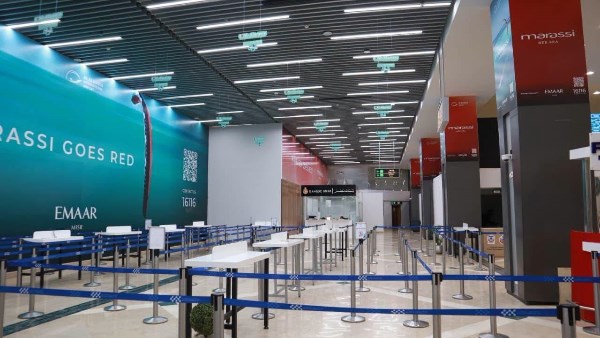
Consider a major airport. Today, identity is re-verified at nearly every step: curbside parking, terminal entry, security screening, boarding, lounge access, rental car pickup. Each checkpoint exists because identity is fragmented across siloed systems. In the Recognition Economy, identity flows securely across the entire environment.
Security protocols remain rigorous, but the infrastructure no longer treats each interaction as if they’re new. Throughput increases, operational strain decreases, and the environment begins to function as an integrated system rather than a patchwork of manual controls. This is the structural shift AI makes possible when it moves beyond screens and into the real world.
Embedding intelligence into physical space inevitably raises questions about power and privacy. It should. Any technology that reshapes how identity interacts with infrastructure carries consequence. But the critical issue is not whether this layer will emerge, because we know that it will. The more important question is whether it emerges responsibly.
A fair exchange of value is a requirement. Recognition scales when value is irrefutable. We accept the friction of an airport security line because the exchange — our safety — is profound. We would never accept that same level of friction for a marginal discount on lunch. This shift can only succeed when the value returned to individuals is significant, transparent, and immediate.
The most consequential AI platforms of the coming decade will not merely generate content or automate workflows, but will embed intelligence into infrastructure that orchestrates mobility, access, and daily life. We know that this is happening; now we need to ask, who will build it, how fast it will spread, and whether the systems that emerge treat recognition as a tool of convenience or a mechanism of control. The real world is the next frontier, and recognition is the key that unlocks it.
This story was originally featured on Fortune.com
ملاحظة تحريرية | Editorial Note: نُشر هذا المقال في الأصل بواسطة فورتشن العربية. خبر (Khabr) هي منصة إعلامية أردنية مرخّصة تعمل بالذكاء الاصطناعي. نضيف قيمة تحريرية من خلال: تحليل ذكي للأخبار، ملخصات تلقائية، رواية صوتية بالذكاء الاصطناعي، ترجمة متعددة اللغات، وتدقيق الحقائق. هدفنا جعل الأخبار أكثر وضوحاً وسهولةً للقارئ العربي.
This article was originally published by فورتشن العربية. Khabr is a licensed Jordanian AI-powered news platform (Registration #82086). We add editorial value through: AI-powered news analysis, automated summaries, AI audio narration, multi-language translation (Arabic, English, French, Turkish), and AI fact-checking. Our mission is to make news more accessible and understandable for Arabic-speaking audiences worldwide.