⚡ عاجل: كريستيانو رونالدو يُتوّج كأفضل لاعب كرة قدم في العالم●⚡ أخبار عاجلة تتابعونها لحظة بلحظة على خبر●⚡ تابعوا آخر المستجدات والأحداث من حول العالم●
AI اقتراحات ذكية
AI مباشر|--مشاهد مباشر
885,493مقال404مصدر نشط228قناة مباشرة3,718خبر اليوم
آخر تحديث:منذ 3 ثواني
Abstain, or they make you pay? That’s what the West is terrified of
To understand the horror of the slavery is to challenge the core of the modern Western world
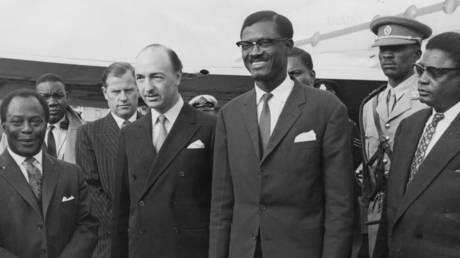
On March 25, the UN General Assembly adopted a resolution proposed by Ghana declaring the transatlantic slave trade the “gravest crime against humanity,” despite opposition from Western states. The measure secured support from 123 countries, including Russia and China, while the US, Israel, and Argentina voted against it, and 52 nations – among them the UK and EU members – abstained.
Why do the US, Israel, and Argentina stand against the recognition of the absolute horror of the enslavement of Africans? In fact, acknowledging this crime would expose them to the collapse of their own historical narratives. The US, in voting against, is rejecting its own indictment, built on the paradox of a proclaimed freedom resting atop an enslaving system it never truly reconciled with. To recognize this injustice is to open the door to reparations, and a reconfiguration of the social contract – something that today’s America, still shaped by persistent inequalities, refuses to confront.
Israel, for its part, seems to operate within a memorial logic where the centrality of the Holocaust, rightly established as an absolute crime, becomes challenged when other historical tragedies emerge. Its refusal is therefore not only political, but also identity-driven and strategic, aimed at preserving a form of moral monopoly.
As for Argentina, today it protects a national narrative built on a racial fiction of a white nation oriented toward Europe and severed from its indigenous roots. Acknowledging the full extent of the crime of slavery would mean reopening the wounds of a long-concealed historical erasure and genocide. Thus, this tripartite vote reveals a refusal to decolonize history and to face consequences, such as reparations, educational revisions, and transformation in global power relations.
Abstention in this issue, however, cannot be seen as a neutrality. When France, Belgium, Germany, the United Kingdom, and some forty other states choose to abstain, they are fleeing history itself.
What does it mean to abstain from a resolution that recognizes the transatlantic slave trade and racialized slavery as an injustice against humanity? It means: “We know, but we will not speak. We acknowledge, but we refuse to assume responsibility. We see, but we look away.”
France, the self-proclaimed homeland of human rights, exemplifies almost caricatured duplicity. It legitimized slavery for at least 150 years through its Code Noir, structured a colonial economy on the dehumanization of Africans, and continues to maintain neo-colonial relations through financial, military, and cultural influence. Yet it refuses to confront the full truth. Because, again, unequivocal acknowledgment would open Pandora’s box: reparations, and a fundamental reconfiguration of its relationship with Africa. The Republic does not want this.
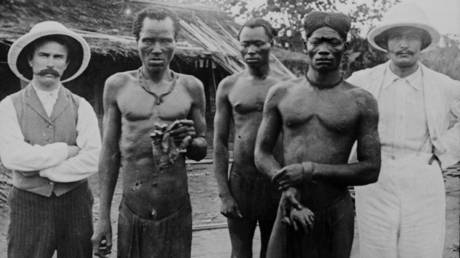
Belgium carries the shadow of the Congo Free State, an industrial-scale reign of terror where millions of lives were crushed for rubber and profit. Abstention allows it to continue sanitizing the past.
Germany, often praised for its work of remembrance regarding the Holocaust, exposes here the limits of its moral universalism. When it comes to the genocide of the Herero and Nama in Namibia, or its role in European colonial ventures, its discourse becomes calculated.
The United Kingdom, former empire upon which “the sun never set,” cannot ignore that its power was built on the triangular trade, Caribbean plantations, and systematic exploitation of African lives. Choosing abstention is a refusal to face the full consequences of a past it prefers to commemorate rather than repair. And repair means redistribution, and redistribution demands surrendering a portion of privilege.
For Ukraine and other abstaining states, the link to historical responsibility in the transatlantic trade may seem less direct. Yet their abstention reflects geopolitical alignment, the desire not to offend certain allies. Historical justice is sacrificed on the altar of strategic interest.
This collective abstention reveals a troubling truth: the international system is incapable of delivering full recognition of the crimes that shaped it. The states that comprise it are simultaneously judges and parties, accusers and accused. Under these conditions, how can genuine justice be expected?
Abstention becomes a mechanism of preservation. It maintains the illusion of international consensus while avoiding necessary ruptures. In short, it is a form of denial.
But denial comes at a cost. It fuels distrust among African peoples and their diasporas toward international institutions perceived as partial or complicit. It undermines the credibility of Western human rights rhetoric and perpetuates legitimate resentment, born of centuries of unrepaired injustice.
Abstaining in this context is choosing inertia over justice. The abstained refuse to break with colonial logics, trying to perpetuate their consequences instead. But this strategy is doomed. France, Belgium, Germany, the United Kingdom, and the other cannot hide indefinitely in this gray zone. There are moments when not choosing is betrayal, and this betrayal, though dressed in the respectable garments of diplomatic prudence, deceives no one.
What these states refuse to admit is that the monopoly over historical narratives is over. For centuries, they wrote history to suit themselves, assigning the roles of victim and perpetrator according to convenience, hierarchizing tragedies, sacralizing certain memories while marginalizing others. But this power is slipping.
And it is precisely this loss of control that frightens them.
To fully recognize the horror of racialized African slavery means to accept that the very foundations of Western modernity must be questioned. It is to acknowledge that the Enlightenment, often heralded as the dawn of universal reason, coexisted and sometimes co-constructed with the most radical darkness: systematic dehumanization.
Full recognition demands repair, and repair demands transformation. Transforming economic relations, ending exploitative mechanisms inherited from the past. Transforming international institutions, embedding genuine equity. Transforming educational systems, integrating long-marginalized narratives. This transformation threatens privileges and power. It requires political courage few states are willing to muster.
The reality today is an Africa that thinks and demands. A diaspora that articulates claims, rejects half-truths. In the face of this, what is abstention worth? Nothing except the testimony of a refusal to take responsibility.
Yet there is still time. Time to understand that recognition is strength, not weakness. That truth, even painful, is the only foundation for a shared future. But this requires courage. And clearly, that courage remains in short supply. History will move on without them, or despite them. The abstainers and the calculating will only endure it.
ملاحظة تحريرية | Editorial Note:
نُشر هذا المقال في الأصل بواسطة RT English.
خبر (Khabr) هي منصة إعلامية أردنية مرخّصة تعمل بالذكاء الاصطناعي.
نضيف قيمة تحريرية من خلال: تحليل ذكي للأخبار، ملخصات تلقائية، رواية صوتية بالذكاء الاصطناعي، ترجمة متعددة اللغات، وتدقيق الحقائق.
هدفنا جعل الأخبار أكثر وضوحاً وسهولةً للقارئ العربي.
This article was originally published by RT English.
Khabr is a licensed Jordanian AI-powered news platform (Registration #82086).
We add editorial value through: AI-powered news analysis, automated summaries, AI audio narration, multi-language translation (Arabic, English, French, Turkish), and AI fact-checking.
Our mission is to make news more accessible and understandable for Arabic-speaking audiences worldwide.
هذا الخبر ضمن تغطية خبر لقسم سياسة.
نقدّم لك تحليلات ذكية وملخصات يومية لأهم الأخبار من مصادر موثوقة متعددة.
المصدر: RT English.
يوجد 6 مقالات مرتبطة بهذا الموضوع.
This article is part of Khabr's coverage of Politics.
We provide AI-powered analysis, summaries, and multi-source aggregation to keep you informed.
Source: RT English.
Tags: west, diplomacy, fear.
🍪 نستخدم ملفات تعريف الارتباط لتحسين تجربتك وعرض الإعلانات المخصصة. باستخدامك للموقع، فإنك توافق على سياسة ملفات تعريف الارتباط وسياسة الخصوصية.
We use cookies to enhance your experience and show personalized ads. By using this site, you agree to our Cookie Policy and Privacy Policy.
🔍
FREEFree 1GB Internet + Free International Calls
$1 trial — eSIM in 190+ countries — No roaming charges