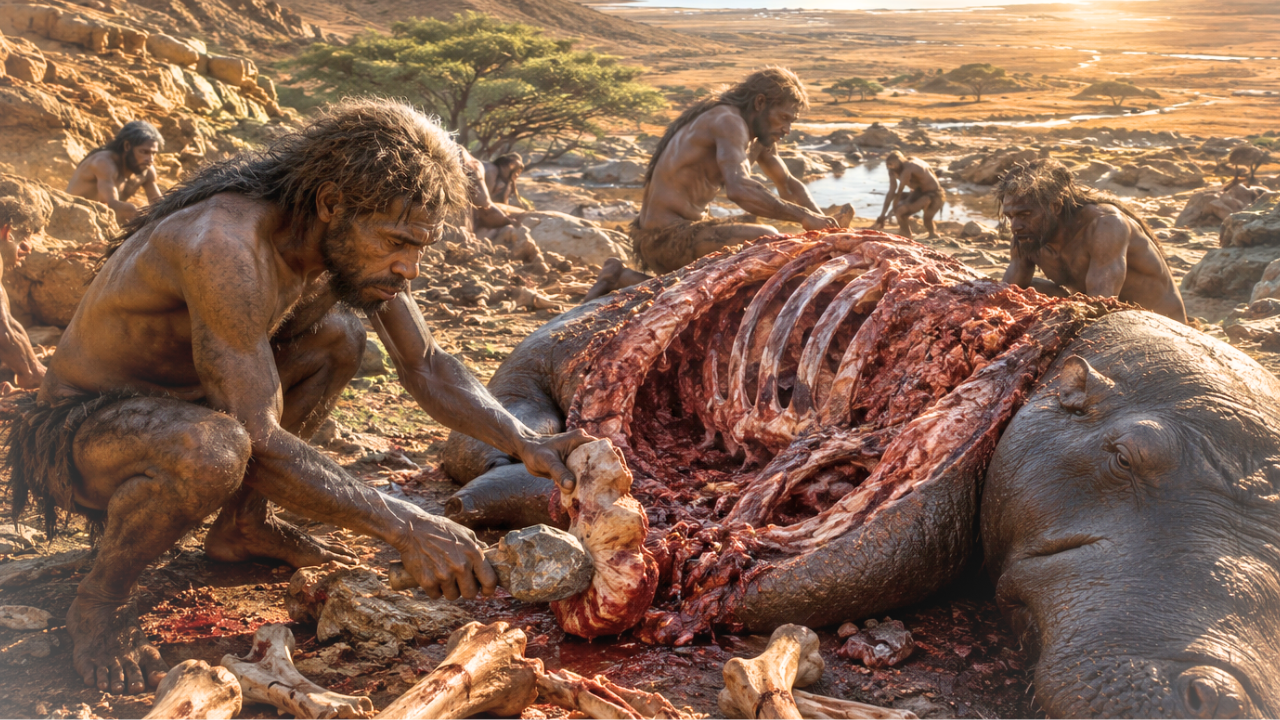
1.6 million-year-old bones reveal how the first humans really got their meat
Ancient Kenyan fossils reveal early humans employed a dynamic strategy for meat acquisition, blending hunting with opportunistic scavenging. Evidence of tool marks on bones, alongside predator tooth marks, suggests a sophisticated approach to accessing carcasses. This adaptable foraging, including marrow extraction and meat transport, was crucial for survival and brain development, moving beyond the simple hunter-scavenger debate.المصدر: Times of India | Source: Times of India
ملاحظة تحريرية | Editorial Note: نُشر هذا المقال في الأصل بواسطة Times of India. خبر (Khabr) هي منصة إعلامية أردنية مرخّصة تعمل بالذكاء الاصطناعي. نضيف قيمة تحريرية من خلال: تحليل ذكي للأخبار، ملخصات تلقائية، رواية صوتية بالذكاء الاصطناعي، ترجمة متعددة اللغات، وتدقيق الحقائق. هدفنا جعل الأخبار أكثر وضوحاً وسهولةً للقارئ العربي.
This article was originally published by Times of India. Khabr is a licensed Jordanian AI-powered news platform (Registration #82086). We add editorial value through: AI-powered news analysis, automated summaries, AI audio narration, multi-language translation (Arabic, English, French, Turkish), and AI fact-checking. Our mission is to make news more accessible and understandable for Arabic-speaking audiences worldwide.