Woman diagnosed with stage four cancer at 14 shares five menopause symptoms she suffered during ordeal
•A 25-year-old woman who battled stage four cancer as a teenager has celebrated completing her medical degree at Keele University.Ellie Waters-Barnes received her devastating diagnosis of alveolar rhab...
•Doctors gave her merely a one in five chance of survival."I went from being a very healthy, fit teenage girl to having this very intensive treatment that made me very ill," Waters-Barnes said.The youn...
•TRENDING Stories Videos Your Say She described this perspective as a "superpower" that many of her fellow medics simply cannot access.
هذا الخبر من GB News. خبر يقدم أدوات ذكاء اصطناعي للتلخيص والترجمة والاستماع.
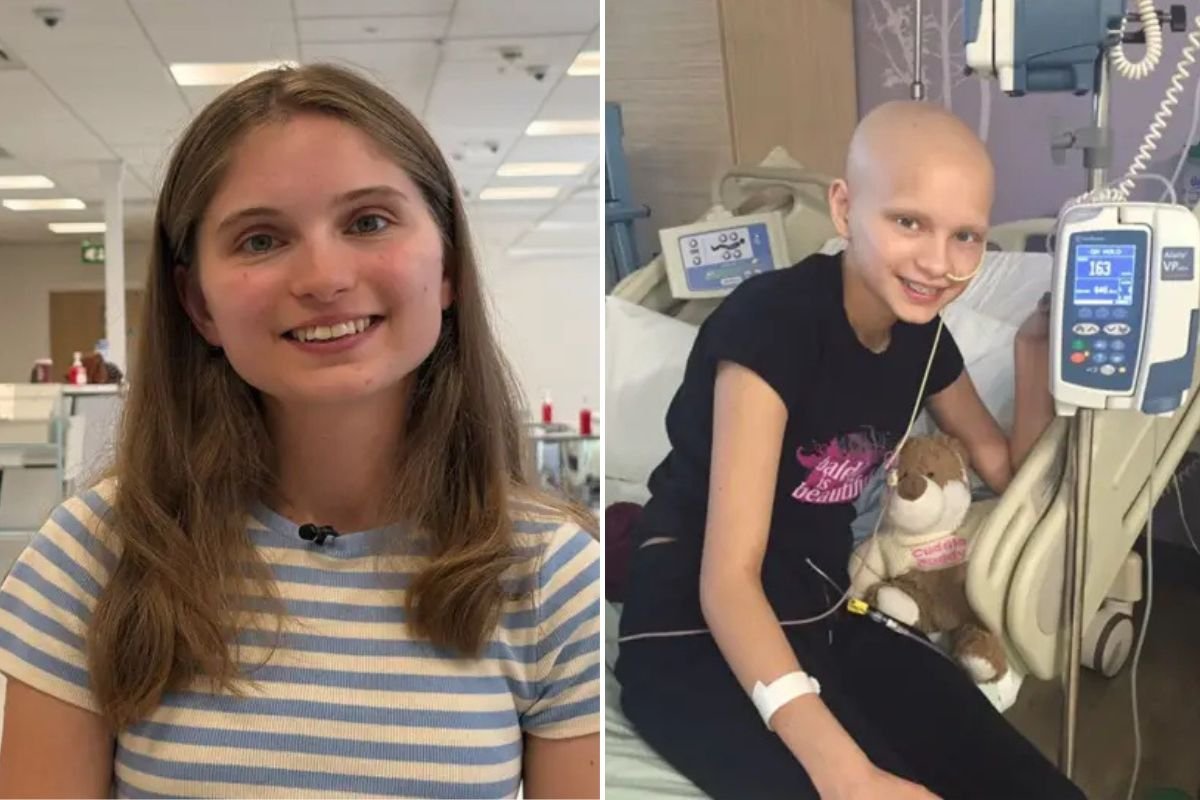
المصدر: GB News | Source: GB NewsA 25-year-old woman who battled stage four cancer as a teenager has celebrated completing her medical degree at Keele University.
Ellie Waters-Barnes received her devastating diagnosis of alveolar rhabdomyosarcoma, an aggressive soft tissue cancer, when she was just 14 years old in September 2015. Doctors gave her merely a one in five chance of survival.
"I went from being a very healthy, fit teenage girl to having this very intensive treatment that made me very ill," Waters-Barnes said.
The young graduate believes her harrowing experience has equipped her with unique insight into patient care.
TRENDINGStoriesVideosYour SayShe described this perspective as a "superpower" that many of her fellow medics simply cannot access. Her treatment spanned 18 gruelling months at Queen's Medical Centre in Nottingham.
"I lost lots of weight, lost my hair, I had to be tube fed," she said.
The intensive regimen began with nine months of chemotherapy, followed by 28 radiotherapy sessions, before concluding with a further year of maintenance chemotherapy.
"I'm all clear now, thank goodness, but at the time the cancer was very aggressive. I feel very lucky to be here today," Waters-Barnes said.
The treatment's side effects proved severe and long-lasting, forcing her into early menopause at just 15 years old.
"At 15 I didn't really know what it was. My mum hadn't even been through the menopause at that point. I thought it was going to be a walk in the park," she recalled.
Night sweats, hot flushes and other symptoms followed, complicating her A-level studies considerably. Despite the physical toll, academic work became her sanctuary during those difficult years.
LATEST DEVELOPMENTS
- Two areas in England seeing 'concerning' rise in measles cases, UKHSA warns
- Doctors discover common factor in blood of 84% of severe heart attack victims
- Blood test could flag dementia risk years before symptoms appear, scientists find
She chose to repeat Year 10 and found solace in her GCSE studies.
"I couldn't control what was going on with cancer, but I could work hard," she said. "I actually quite enjoyed it, because I could forget about my problems when I was doing hard chemistry and maths questions."
Without the energy for typical teenage social activities, she channelled everything into her education, achieving excellent results.
Curiously, it was not her time on hospital wards that drew her towards medicine.
"But when I finished treatment, I couldn't stop watching medical documentaries. I would obsessively watch them," Waters-Barnes explained.
This fascination evolved into genuine passion, as she began researching her own medical journey and discovered a profound desire to help others.
Her priorities shifted fundamentally during her illness.
"I realised helping people in their most vulnerable state was more rewarding than earning a lot of money," Waters-Barnes said.
She will now commence her career as a Foundation Doctor at Royal Stoke University Hospital, more than a decade after her original diagnosis.
Regular health checks remain part of her life, though she continues to face some physical challenges.
"You can definitely understand better what the patient's priorities are, what they want and what matters to them. It's definitely a strength rather than a weakness," she said.
The remarkable doctors and nurses who cared for her during treatment left a lasting impression.
Waters-Barnes expressed hope that her own experiences would ultimately make her a better physician.
Our Standards: The GB News Editorial Charter


ملاحظة تحريرية | Editorial Note: نُشر هذا المقال في الأصل بواسطة GB News. خبر (Khabr) هي منصة إعلامية أردنية مرخّصة تعمل بالذكاء الاصطناعي. نضيف قيمة تحريرية من خلال: تحليل ذكي للأخبار، ملخصات تلقائية، رواية صوتية بالذكاء الاصطناعي، ترجمة متعددة اللغات، وتدقيق الحقائق. هدفنا جعل الأخبار أكثر وضوحاً وسهولةً للقارئ العربي.
This article was originally published by GB News. Khabr is a licensed Jordanian AI-powered news platform (Registration #82086). We add editorial value through: AI-powered news analysis, automated summaries, AI audio narration, multi-language translation (Arabic, English, French, Turkish), and AI fact-checking. Our mission is to make news more accessible and understandable for Arabic-speaking audiences worldwide.