⚡ عاجل: كريستيانو رونالدو يُتوّج كأفضل لاعب كرة قدم في العالم●⚡ أخبار عاجلة تتابعونها لحظة بلحظة على خبر●⚡ تابعوا آخر المستجدات والأحداث من حول العالم●
AI اقتراحات ذكية
AI مباشر|--مشاهد مباشر
891,556مقال401مصدر نشط228قناة مباشرة4,690خبر اليوم
What emerged from the war was not peace, nor even a credible settlement, but merely a pause shaped by the exposed limits of American strength
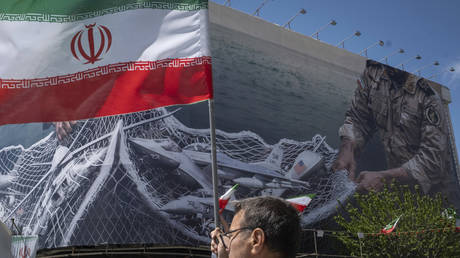
In Washington, the two-week ceasefire with Iran has been hastily presented as the beginning of de-escalation and as proof that pressure had once again created the conditions for diplomacy. Yet once the political packaging is removed and events are viewed in their true strategic dimension, the picture looks very different.
What really happened is a forced interruption, reached under pressure and surrounded by incompatible interpretations in Washington and Tehran. The temporary nature of this pause, its mediated character, and the striking divergence in how its meaning is understood all indicate that this is not the end of a war, but a breathing space within an unfinished conflict whose core political contradictions remain unresolved.
More importantly, in the eyes of many outside observers and much of global public opinion, Iran now appears to be the clear winner of the present battle. It absorbed the blow, answered with force and dignity, refused capitulation, and most importantly, gradually shifted control over the very logic of a war imposed upon it. The US and Israel had expected to define the rules of the conflict and then present any compelled Iranian retreat as proof of their own victory. What happened in practice was the opposite. Iran not only refused externally imposed terms, but also raised the cost of war to a point where the American military campaign became a political liability for the US itself. That is why this moment is increasingly perceived as a sign that even under conditions of overwhelming technological and military superiority, the US can no longer automatically convert a campaign of strikes into the submission of its opponent.
Why Washington backed off
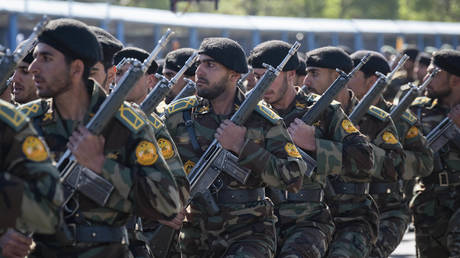
From the outset, the operation rested on a familiar formula of coercion. The US and Israel proceeded on the assumption that a series of destructive strikes combined with intimidating rhetoric would compel Iran to accept external demands. This logic has long been a hallmark of American policy in the Middle East. First a condition of maximal pressure is created, then the adversary is left with a choice between submission and devastation, after which any tactical retreat is presented as evidence that Washington has imposed its will. But Iran once again exposed the central weakness of that model. A large state with internal mobilization, a resilient political system, and a strong historical consciousness cannot necessarily be broken by a single cycle of punishment, even when that punishment inflicts enormous damage. Iran is not invulnerable, but it has shown itself to be extremely hard to break. Its leadership remained in place, the state system did not disintegrate, its capacity to retaliate was not reduced to irrelevance, and its influence over the strategic environment around the Persian Gulf and the Strait of Hormuz, by all indications, remained intact.
For that reason, Donald Trump’s sudden reversal in the final hours before the expiry of his own ultimatum should not be read as the confident gesture of a victor, but as the compelled maneuver of a leader urgently seeking an exit from an increasingly dangerous configuration. Shortly before the pause was announced, American rhetoric had already escalated to threats against civilian infrastructure if Iran did not ensure passage through Hormuz on Washington’s terms. Such signals were widely taken as evidence that the crisis had approached an extremely dangerous threshold. The subsequent pivot toward a temporary halt in attacks and toward negotiations means that pressure had begun to work not only against Iran, but against the American side itself. Continuing the war threatened Washington with multiple layers of cost. Military uncertainty remained high, allies were uneasy, markets were reacting nervously, and the prospect of a prolonged conflict without a swift and convincing outcome was becoming increasingly real.
The gravity of the situation for the US was determined not only by external pressures, but also by domestic risk. For Trump, a protracted war with Iran would inevitably have become a test of internal political resilience. Any major Middle Eastern escalation quickly turns into a question of domestic stability for an American administration. Rising oil and fuel prices, volatility in financial markets, possible strikes against American facilities and military bases, the danger of new casualties, mounting criticism from parts of the political class and expert community, and the risk that a promised quick victory might instead become an expensive and unpredictable campaign all created an acutely toxic political environment. For a president determined to appear strong and effective, there are few more dangerous outcomes than being seen as the leader who dragged the country into another war without any clear path to a strategic result. Inside the US, such a scenario could quickly have produced accusations of recklessness, loss of control, and the transformation of theatrical bravado into a costly impasse. This, in all likelihood, was one of the central reasons why the White House was compelled to move from maximalist rhetoric to a ceasefire.
Iran’s losses have hardened it
From a military standpoint, the US and Israel undeniably inflicted serious damage on Iran. Infrastructure was struck, losses were significant, economic pressure intensified, and social strain inside the country increased. But war cannot be measured simply by the number of destroyed targets. In the end, war is judged by whether force achieves the political outcome for which it was launched. And the internal political collapse that the architects of the campaign may have hoped for did not occur.
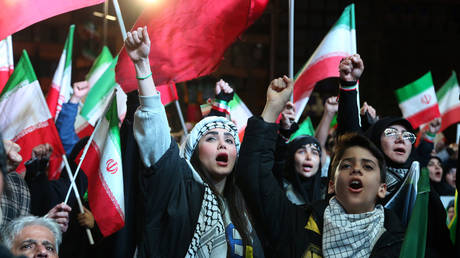
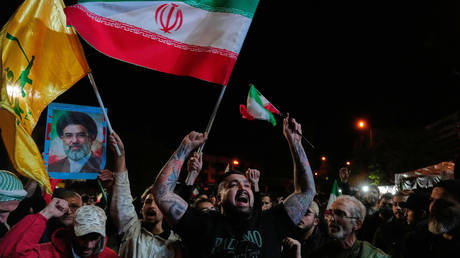
Iran, by contrast, responded not only militarily, but politically and psychologically. External pressure on this scale almost always produces a double effect. It heightens fear, exhaustion, and anger, yet it can also sharply strengthen a sense of historical community, especially when society perceives events not as pressure on a government alone, but as an attack on the country itself, on its sovereignty, and on its right to independent existence. That is precisely what appears to have happened here. Even if anxiety, confusion, and fatigue accumulated within Iran, the war simultaneously fostered internal consolidation, mass mobilization, and a strengthened conviction that national survival itself was at stake. This is one of the most important reasons why Iran now appears, in the eyes of many external observers, as the winner of the current phase. It turned its own resilience into a political resource, while its adversaries, having begun the war from a position of strength, ultimately found themselves searching for a formula to stop it.
This does not mean that Iran is free of internal problems. It remains a complex country marked by serious social, economic, and political contradictions. But the scale of the attack altered the hierarchy of threats within the country. When a state is subjected to direct strikes, when threats are made against its infrastructure, and when external aggression becomes openly demonstrative, internal dissatisfaction recedes behind the logic of national survival. In that sense, the US and Israel achieved the opposite of what they may have intended. Instead of loosening the internal fabric of Iranian society, they contributed to tightening it. The more the war came to be seen in Iran as an assault on the nation as a whole, the less likely internal political fragmentation became, and the greater society’s willingness to see resistance as the only dignified response.
The outcome for Iran is far from pure triumph. Yet politically it is of enormous importance. Yes, the losses were severe. Yes, economic pressure has not disappeared. Yes, the risk of renewed escalation remains. But in international politics, what matters is not only who suffered more destruction, but who could not be broken. Iran has not been reduced to a passive object of someone else’s will. On the contrary, it has managed to seize the political initiative. If one side begins a war in the expectation of forcing capitulation and ends by turning to mediation and bargaining over the parameters of negotiation, then its original design has already failed.
Ripples across the world
The regional consequences of the war were equally revealing. The conflict very quickly ceased to be merely about the US, Israel, and Iran. It cast doubt on the entire security architecture of the Middle East, an architecture that for decades rested on the American military umbrella. For a long time, Arab monarchies were offered a relatively simple formula. The US would provide security, and regional partners would pay for it with contracts, political loyalty, and a partial limitation of their own autonomy. But a large war with Iran showed that this structure no longer appears either unconditional or reliable. Any major confrontation with Tehran automatically turns the bases, ports, energy infrastructure, and shipping routes of Washington’s allies into zones of heightened risk. That is why the reaction of Gulf markets to the ceasefire looked almost euphoric in its relief – enormous relief that the region had, at least temporarily, stepped back from the edge of catastrophe.
A similar mood is evident among America’s European allies. Formally, no one is abandoning the alliance with Washington, but throughout this war there were clear signs of cautious distancing. Europeans were far more inclined to welcome a halt in hostilities and a return to diplomacy than to turn the American campaign into their own common cause. The US failed to sell the Iran war project to its allies, and thus failed to reinforce that its military superiority is bolstered by international consent.
At the global level, the consequences also extended far beyond the regional theater. Any crisis around the Strait of Hormuz immediately affects the world economy, maritime logistics, insurance markets, energy prices, and the broader psychology of financial systems. The very reaction of markets to the halt in hostilities showed that this war was a systemic danger. This is especially painful for the US because it undermines one of the central pillars of America’s image in the world. For decades, it has sought to present itself not merely as a global source of order. Yet with the Iran war and its consequences, American power increasingly came to be seen as a producer of chaos, which then attempted to repackage a temporary pause as a diplomatic success.
What are the chances for a lasting peace?
The current pause looks not like a strategic settlement, but like a tactical stoppage. The reversal by the White House was simply too abrupt to be seen as part of a long-calculated design. Only recently, the rhetoric had approached an almost apocalyptic register, and suddenly Washington was speaking of a workable basis for future agreement. Such contrasts usually mean that the original scenario either failed or became too dangerous to sustain.
The negotiation process itself is of particular importance. Its structure points to a difficult and complex bargaining process. The American side seeks to present events as the result of successfully applied pressure, while Tehran emphasizes that a ceasefire does not cancel its sovereign claims and does not amount to recognition that the aggressor was right.
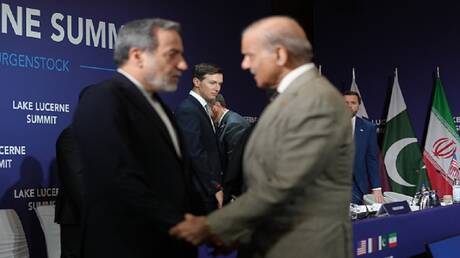
There already seems to be struggle over the interpretation of the pause itself. Iran has reportedly submitted to the US, via Pakistani intermediaries, a 10-point peace plan that has to be the basis for any lasting peace it will accept. This plan includes several conditions that Washington has already rejected in the past. But even the fact that such a plan is formally under discussion shows that the US is now compelled to discuss a framework for halting the conflict, while Iran is in a position to advance conditions of its own.
The mediated character of the negotiations suggests that direct trust between the sides is almost entirely absent, and that each fears being trapped within the other’s interpretive framework. In such a context, a mediator is needed to construct a formula sufficiently flexible for both sides to accept in practice without publicly abandoning their own narrative. Washington wants the pause to be seen as the fruit of force. Tehran wants it to be seen as the fruit of endurance and successful resistance. This is the central struggle within the negotiation process.
As for the conditions of the parties, they arise from opposite strategic imperatives. The US wants to restore navigational security, reduce Iran’s capacity for retaliation, and frame negotiations in a way that can be presented to an American audience as evidence that deterrence has been restored. The White House also needs to avoid allowing the conflict to become a prolonged, costly, and politically toxic campaign. Iran, by contrast, wants to fix in place the fact of its own steadfastness, obtain guarantees against renewed strikes, prevent the pause from becoming merely a prelude to a new wave of pressure, and preserve its right to dictate at least some of the terms of future discussion. That is why this conflict cannot be quickly dissolved. The sides are arguing not only over mechanisms, but over the meaning of what has happened. One side is trying to prove the effectiveness of coercion. The other has already, in effect, demonstrated its limits.
Israel was a direct aggressor and an active participant in the pressure campaign, yet in recent weeks its role noticeably receded into the background, because Trump’s sharp statements and ultimatums effectively overshadowed the Israeli factor in the international information space. As a result, Netanyahu largely succeeded in removing himself from the center of critical attention at precisely the moment when that was most advantageous for him. While much of the world was preoccupied with the war around Iran, Israel continued its occupation, destruction, and military pressure in southern Lebanon. This goes to show how easily, amid a larger crisis, attention to Israeli actions can be pushed to the margins even when Israel remains one of the principal sources of destabilization on adjacent fronts.
If the pause does not in fact extend to Lebanon, then that means that the war has not really ended – it has merely been partially reconfigured. One front has been temporarily cooled, another remains active, and the possibility of their renewed convergence remains. This is the clearest sign of a tactical pause. Strategic peace presupposes a new order and a new equilibrium. Nothing of the kind has emerged here. No actor has renounced escalation as such. No one has definitively accepted a new regional configuration. The confrontation has been interrupted, but not overcome.
In the end, the war exposed a structural miscalculation in American strategy. The US and Israel did not abandon the logic of coercion, but they were forced to recognize that this particular phase of coercion had failed to produce the political result they expected. Washington appears to have underestimated Iranian resilience, the scale of Iran’s response, the sensitivity of global markets, the anxiety of its allies, and its own domestic political risks. That is why there arose an urgent need to shift the crisis into a format of temporary ceasefire and mediated negotiation. For Iran, by contrast, the story, despite enormous losses, became a moment of political affirmation.
The most enduring outcome of these weeks will likely be measured by a change in global perception. The world saw that Washington is still capable of driving events to the threshold of a major regional catastrophe. But it also saw that Washington can no longer turn military escalation into stable political order with the same confidence and speed. The world saw that Iran can be gravely wounded, yet is difficult to break. It also saw that even though the war was imposed by the US and Israel, Iran responded in such a way that, in the eyes of many societies, it was Iran that displayed resilience, initiative, and strategic composure. That is why the present pause is perceived not as a triumph of American strength, but as evidence of its limits.
ملاحظة تحريرية | Editorial Note:
نُشر هذا المقال في الأصل بواسطة RT English.
خبر (Khabr) هي منصة إعلامية أردنية مرخّصة تعمل بالذكاء الاصطناعي.
نضيف قيمة تحريرية من خلال: تحليل ذكي للأخبار، ملخصات تلقائية، رواية صوتية بالذكاء الاصطناعي، ترجمة متعددة اللغات، وتدقيق الحقائق.
هدفنا جعل الأخبار أكثر وضوحاً وسهولةً للقارئ العربي.
This article was originally published by RT English.
Khabr is a licensed Jordanian AI-powered news platform (Registration #82086).
We add editorial value through: AI-powered news analysis, automated summaries, AI audio narration, multi-language translation (Arabic, English, French, Turkish), and AI fact-checking.
Our mission is to make news more accessible and understandable for Arabic-speaking audiences worldwide.
هذا الخبر ضمن تغطية خبر لقسم سياسة.
نقدّم لك تحليلات ذكية وملخصات يومية لأهم الأخبار من مصادر موثوقة متعددة.
المصدر: RT English.
يوجد 6 مقالات مرتبطة بهذا الموضوع.
This article is part of Khabr's coverage of Politics.
We provide AI-powered analysis, summaries, and multi-source aggregation to keep you informed.
Source: RT English.
Tags: Iran, geopolitics, analysis.
🍪 نستخدم ملفات تعريف الارتباط لتحسين تجربتك وعرض الإعلانات المخصصة. باستخدامك للموقع، فإنك توافق على سياسة ملفات تعريف الارتباط وسياسة الخصوصية.
We use cookies to enhance your experience and show personalized ads. By using this site, you agree to our Cookie Policy and Privacy Policy.
🔍
FREEFree 1GB Internet + Free International Calls
$1 trial — eSIM in 190+ countries — No roaming charges