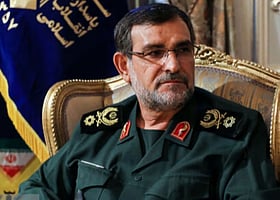
Dubai: Israel says it has killed Alireza Tangsiri, the commander of Iran’s Revolutionary Guards navy and the man widely seen as running Tehran’s strategy in the Strait of Hormuz — a critical global energy chokepoint.
If confirmed, his death could mark a turning point in Iran’s maritime posture — raising questions over whether its strategy in the Strait of Hormuz will shift or continue under new leadership.Israeli Defence Minister Israel Katz said Tangsiri was killed in a “precise and lethal operation”, describing him as the man “directly responsible” for attempts to block the Strait of Hormuz.
However, Iranian authorities have not yet confirmed the claim, and it remains unclear whether the strike was carried out by Israel or the United States.
Who was Alireza Tangsiri?
Tangsiri, a veteran of the Iran–Iraq War, rose through the ranks of the Islamic Revolutionary Guard Corps to become commander of its naval wing in 2018.
He oversaw a strategy centred on asymmetric naval warfare — deploying fast attack boats, naval mines, drones and missile systems designed to disrupt shipping and challenge larger, more advanced naval forces.
At a glance
IRGC Navy chief since 2018, oversaw operations in the Arabian Gulf
Veteran of Iran–Iraq War, rose through naval command ranks
Led asymmetric warfare strategy using fast boats, mines and missiles
Key figure behind Hormuz blockade and shipping disruption tactics
Known for hardline stance and threats targeting US-linked oil infrastructure
Under his leadership, the IRGC Navy became a central pillar of Iran’s deterrence posture in the Gulf.
Known for his hardline stance, Tangsiri frequently warned the United States and its regional allies against operating in the Arabian Gulf, signalling a willingness to expand the conflict to energy infrastructure.
The man behind Hormuz strategy
Tangsiri was widely seen as the architect of Iran’s effort to control — and, if needed, choke — the Strait of Hormuz.
He repeatedly asserted that Iran maintained round-the-clock surveillance over the waterway, monitoring vessels across the surface, air and subsurface domains.
His forces were linked to operations involving the inspection, disruption and potential mining of shipping routes — moves that have heightened fears of a global energy crisis.
“Our list of targets is updated. Oil facilities associated with America are now on par with American bases,” he said last week, signalling a possible expansion of attacks.
Part of a widening campaign
Tangsiri is the latest in a series of senior Iranian figures reported killed since the start of US-Israeli strikes on February 28.
Israel has said it has targeted multiple high-ranking officials and key military assets, including naval vessels equipped with missile systems.
If confirmed, Tangsiri’s killing would further weaken Iran’s command structure at a time when Tehran is relying heavily on its naval capabilities and control of Hormuz as leverage in the conflict.
It would also strike at the heart of a strategy that has allowed Iran to project power far beyond its shores — using the threat of disruption in one of the world’s most vital energy corridors.