Marrakech – UNICEF Morocco released its 2025 annual report this week, detailing wide-ranging interventions across health, education, child protection, and social inclusion. The report outlines concrete progress in structural reforms affecting millions of Moroccan children.
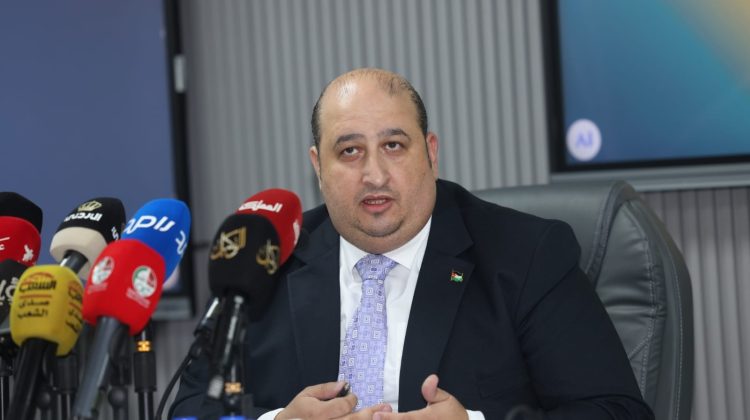
Laura Bill, UNICEF Representative in Morocco, described 2025 as a globally difficult year for children’s rights. “At the global level, UNICEF reorganized to respond to this new context while pursuing its strategic plan as the Sustainable Development Goals deadline approaches,” Bill stated.
In Morocco, she noted, the agency continued supporting national reforms “for concrete results for the most vulnerable children.”
In the health sector, UNICEF facilitated the procurement of 19 million doses of vaccines and nutrients worth $11.5 million. The organization also coordinated the emergency supply of 5.5 million measles-rubella vaccine doses during a resurgence of measles cases in certain areas.
Community dialogues brought together vaccinated and unvaccinated parents to address vaccine hesitancy through peer support.
In the Fez-Meknes region, health professionals across nine provinces received training in effective vaccine management. UNICEF supported the first-ever temperature mapping of cold storage rooms there.
A parallel $4.6 million investment, involving the Ministry of Health, Institut Pasteur Morocco, and Africa CDC, aims to upgrade cold chain infrastructure and laboratory capacity for the national immunization program.
A breastfeeding promotion campaign, conducted with INDH and the World Bank using behavioral science, reached over 2.1 million parents.
Social protection coverage rose from 58% in 2021 to 80% in 2025
Social protection coverage expanded significantly between 2021 and 2025. Monthly cash transfers now reach 5.6 million vulnerable children. To limit exclusion risks tied to digital registration, UNICEF advocated for a territorialized governance approach.
This contributed to the July 2025 launch of the first territorial branch of the National Social Support Agency in El Jadida province. The branch relies on human-centered local mediation. Integrated pilot programs are planned for 2026 to link financial aid with better access to basic social services.
Two pilot regions, Marrakech-Safi and Tanger-Tetouan-Al Hoceima, underwent in-depth reviews of child health plans. This strengthened coordination between central, regional, and provincial levels. Both regions now produce consolidated annual child health reports, enabling evidence-based decision-making.
On education, UNICEF focused on early childhood, school retention, and climate-resilient learning environments. The agency worked with the Ministry of Youth to develop new national daycare standards, including provisions for children with disabilities.
A voluntary accreditation system was created for public and private providers. An intersectoral committee involving the ministries of Interior, Education, Solidarity, Health, Finance, and INDH drove this process forward.
UNICEF also provided technical support for revising the 2018 preschool curriculum to reflect the latest science on early childhood development. A pilot parental education program was launched with the Ministry of Education and Fondation Zakoura.
Mobile preschool units and itinerant educators were tested in Beni Mellal, Oriental, and Souss Massa for remote sites with fewer than 10 students.
School dropout remains a pressing concern. Nearly 280,000 students left school in 2025. A multisectoral dropout prevention model was finalized with the Ministry of Education. It combines individualized student support with improved learning environments. In pilot regions, over 5,523 young people, including 3,798 girls, benefited from workshops and innovation programs.
Some target schools cut dropout to zero
The evaluation of this model confirmed it as a best practice and recommended its institutionalization nationwide.
In the target zones, certain schools managed to bring their dropout rate down to 0% during the 2024-2025 school year. The model relies on peer participation, community engagement, and network-based approaches. Tools developed include school management guides for directors, pedagogical guides for teachers, and a menstrual hygiene support component.
An inclusion kit for migrant and refugee children was also developed and introduced in three regions. It includes Arabic and French linguistic transition manuals and intercultural support tools. Thirty trainers were trained across Oriental, Tanger-Tetouan-Al Hoceima, and Souss Massa.
Seven schools damaged by the 2023 Al Haouz earthquake were rehabilitated in Marrakech and Souss Massa. The renovations feature gender-sensitive, accessible, climate-resilient water and sanitation infrastructure. These upgrades now serve 3,356 students, including 1,662 girls. Lessons from this experience will feed into Morocco’s first national WASH standards for schools.
In child protection, the Integrated Territorial Child Protection System expanded from 23 units in 2024 to 50 in 2025. Standardized operational procedures were adopted in line with the 2024 Territorial Child Protection Protocol, validated by eight national institutions.
A digital case management system became operational in 27 child protection support centers across four regions.
Bill pointed to progress in child protection, noting that “an evaluation of detention practices and non-custodial alternatives has been finalized, now constituting a global reference model.”
In juvenile justice, the shift was substantial. A total of 81% of children in contact with the law received alternative measures rather than punitive sentences in 2025. Over 367 prosecutors, judges, social workers, and police officers participated in regional workshops promoting these alternatives.
Children co-author a UN rights report for the first time
In June 2025, 372 children, including 186 girls from across Morocco, participated in drafting a parallel report to the UN Committee on the Rights of the Child.
The National Human Rights Council (CNDH) and UNICEF facilitated this exercise. It marked a historic moment in child participation in Morocco. Children were not consulted symbolically. They actively contributed to a formal submission on the state of their rights in the country.
In earthquake-affected Al Haouz and Chichaoua provinces, 3,653 children, including 2,097 girls, received psychosocial support. Protection units maintained community relays and child-friendly spaces.
Additionally, 27,092 children received child protection support overall. In Oujda and Tetouan, 781 migrant children accessed comprehensive services through the EU-cofinanced Himaya wa Tamkine project, launched in January 2025 for a 30-month period.
On social inclusion, UNICEF collaborated with the Ministry of Economy and Finance on a study identifying an annual need of approximately $4.4 billion from 2027. This funding would sustain the Direct Social Aid Program and the health insurance system. Four fiscal options are currently under review.
A multisectoral pilot was also launched in Beni Mellal-Khenifra to coordinate health, education, child protection, and social inclusion under one regional plan.
The report flags lead exposure as a silent public health crisis in Morocco. It estimates 1.9 million Moroccan children may be affected. According to UNICEF data, one in three children globally has blood lead levels above safety thresholds. Morocco joined the global “Lead-Free Future” partnership in August 2024, aiming to eliminate child exposure by 2040.
A national multisectoral task force, led by the Ministry of Health and UNICEF, has been working since 2025 to establish a dedicated national program. As Dr. Alaoui El Youssfi put it, “protecting children from lead exposure means protecting their development, their health, and the country’s future.”
Bill affirmed continued commitment as the SDG deadline nears. “As the SDG deadline approaches, a key milestone for the kingdom’s new development model, our engagement remains total,” she stated. “Together, we will pursue lasting transformations for every child.”
The post What Has UNICEF Achieved for Morocco’s Children in 2025? appeared first on Morocco World News.