‘What are the potential risks of taking high-dose vitamin D supplements for an extended period of time?’
•Weather ePaper Today’s Paper Journalism of Courage Home ePaper Politics Explained Opinion India Business Premium Cities UPSC Entertainment Sports World Lifestyle Tech Subscribe Sign In TrendingUPSC Of...
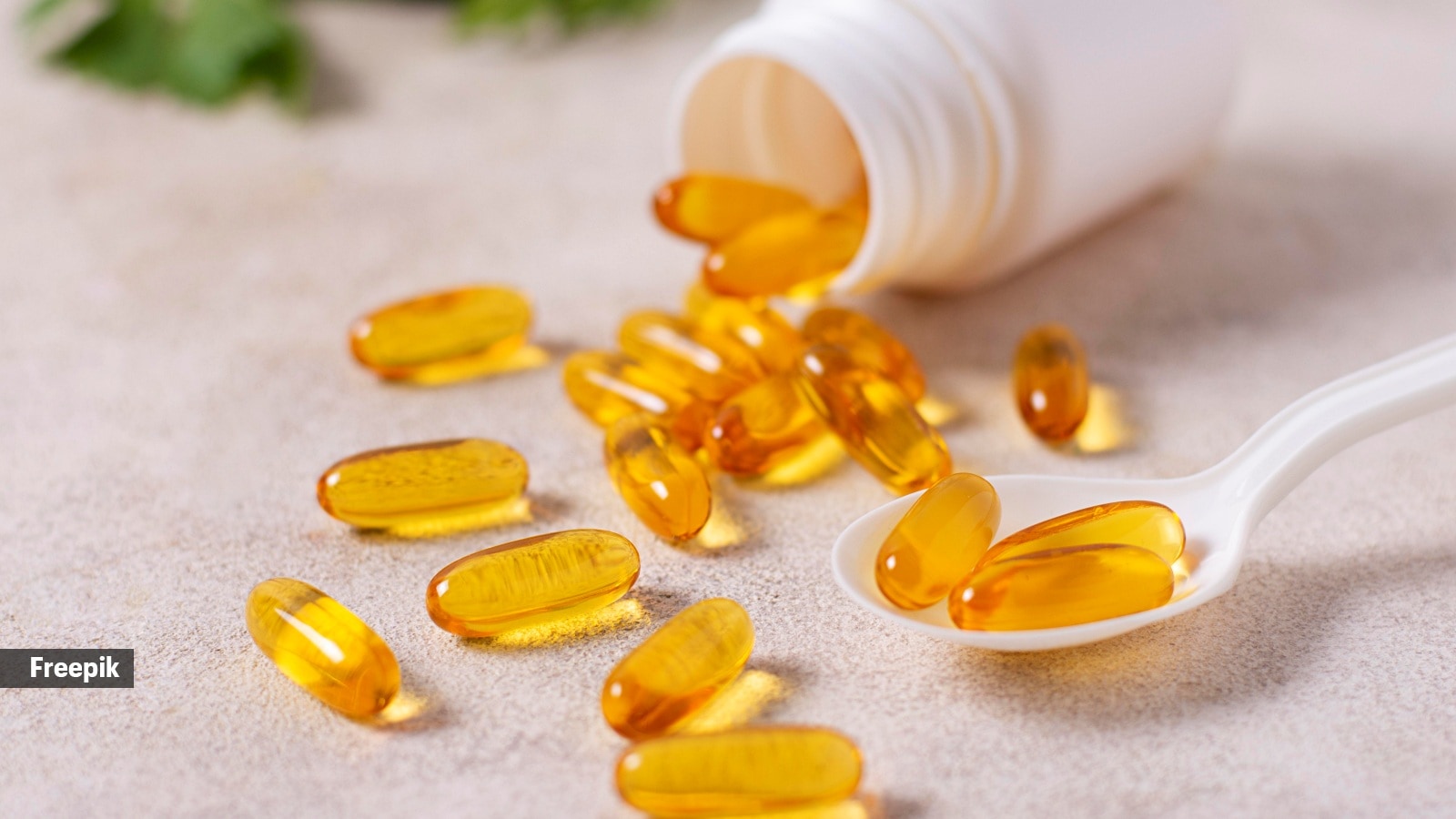
•By: Lifestyle Desk5 min readNew DelhiUpdated: Apr 21, 2026 09:36 AM IST Levels of Vitamin D more than 100-150 mg/ mL are considered as hazardous to the body (Image: Freepik) Make us preferred source o...
•How long can one safely take high-dose vitamin D before experiencing negative side effects?” It’s a relevant question, especially in India, where vitamin D deficiency is rampant and self-supplementati...
هذا الخبر من Indian Express. خبر يقدم أدوات ذكاء اصطناعي للتلخيص والترجمة والاستماع.
Weather ePaper Today’s Paper Journalism of Courage Home ePaper Politics Explained Opinion India Business Premium Cities UPSC Entertainment Sports World Lifestyle Tech Subscribe Sign In TrendingUPSC OfferIPL 2026US NewsPuzzles & GamesLegal NewsFresh TakeHealthResearch🎙️ Podcast Advertisement function checkAndLoadWindowSizeScript() { if (window.jQuery) { // jQuery is loaded, include your script jQuery(document).ready(function($) { // Your existing script for checking window width if (window.innerWidth) var page_w = window.innerWidth; else if (document.all) var page_w = document.body.clientWidth; if (page_w > 1024) { $(".add-left, .add-right").show(); } else { $(".add-left, .add-right").hide(); } }); } else { // jQuery is not loaded, check again after 0.2 seconds setTimeout(checkAndLoadWindowSizeScript, 200); } } // Initial call to the function checkAndLoadWindowSizeScript(); NewsLifestyleHealth'What are the potential risks of taking high-dose vitamin D supplements for an extended period of time?' ‘What are the potential risks of taking high-dose vitamin D supplements for an extended period of time?’ Vitamin D is also called the Sunshine Vitamin, as it is available in abundance in sunlight. By: Lifestyle Desk5 min readNew DelhiUpdated: Apr 21, 2026 09:36 AM IST Levels of Vitamin D more than 100-150 mg/ mL are considered as hazardous to the body (Image: Freepik) Make us preferred source on Google Whatsapp twitter Facebook Reddit PRINT A Quora user recently asked, “What are the potential risks of taking high-dose vitamin D supplements for an extended period of time? How long can one safely take high-dose vitamin D before experiencing negative side effects?” It’s a relevant question, especially in India, where vitamin D deficiency is rampant and self-supplementation is common. To clear the confusion, we spoke to Dr Vyankatesh Shivane, Consultant Diabetologist and Metabolic Physician, Department of Endocrinology, Jaslok Hospital & Research Centre, Mumbai, and Dr Vimal Pahuja, Associate Director, Internal Medicine and Metabolic Physician, Dr LH Hiranandani Hospital, Powai. DISCLAIMER: This article is based on information from the public domain and/or the experts we spoke to. Always consult your health practitioner before starting any routine. “Vitamin D is also called the Sunshine Vitamin, as it is available in abundance in sunlight. India, in spite of being a sunny country, most of the Indian population is either Vitamin D insufficient or deficient,” says Dr Pahuja. “Normally, a level of Vitamin D more than 30 ng/mL is considered a sufficient level, as at this level, the level of Parathyroid hormone is stable without causing any harm to the bones.” He explains that vitamin D levels above 100–150 ng/mL are considered harmful to the body. “At these levels, more calcium is excreted in the urine, making someone at risk of kidney stones. Vitamin D supplements of more than 50,000 IU per day for many weeks are considered to be toxic,” he says. According to Dr Shivane, “In India, vitamin D deficiency is widespread, but excess supplementation has become a new concern.” He notes that the Endocrine Society of India (ESI) and ICMR-NIN recommend 600–800 IU/day for adults, with an upper safe limit of 4,000 IU/day. “For optimal bone and muscle health, the adequate serum 25(OH)D range is 20–40 ng/mL. Levels above 40 ng/mL provide no added benefit and may raise calcium levels.” “High-dose, long-term use can cause hypercalcaemia, kidney stones, vascular calcification, and even cardiac arrhythmias,” warns Dr Shivane. “Since vitamin D is fat-soluble, toxicity develops gradually and presents with nausea, thirst, muscle weakness, and confusion.” Dr Pahuja agrees, adding that toxicity often happens unintentionally. “It is not always the case, but inadvertently, a few patients keep on taking daily supplements rather than weekly. Or they may continue it for a longer duration than prescribed, as they may feel ‘better’ with supplements.” Also Read | ‘How can someone differentiate between normal dehydration and the excessive thirst associated with diabetes?’ “One should take Vitamin D supplements only as per their Doctor’s advice. Do not continue these supplements for longer than as advised,” says Dr Pahuja. “Once low levels of Vitamin D has been normalised, ask the doctor for regular maintenance dose of Vitamin D. Usually in India we need 1000 IU to 1500 IU per day as maintenance dose for Vitamin D.” “As stated above increase frequency of urine, increase thirst, pain in abdomen, Bone and body pains may the early signs of toxic levels of vitamin D,” says Dr Pahuja. “One should check and confirm these levels at earliest and in some cases concomitant tests of Blood Calcium and Phosphorous are required to detect excess of calcium in the blood.” Dr Shivane recommends, “Testing is advised before starting supplements and again after 8–12 weeks; once stable, annual monitoring is adequate.” Dr Pahuja adds that after initial correction with weekly 60,000 IU doses for 10–12 weeks, one can continue with a maintenance dose and “Annually you can check whether these supplements are optimum enough to maintain your Vitamin D in normal ranges.” He also highlights the role of sunlight: “Daily sunlight exposure of 45–60 minutes between 10 am to 12 pm may be helpful. Sunlight should be available to maximum body surface area like both hands below elbows, both legs below knee, neck and face etc. It is advised not to apply sunscreen or lotions on these parts to get maximum benefit of sunlight.” DISCLAIMER: This article is based on information from the public domain and/or the experts we spoke to. Always consult your health practitioner before starting any routine. 📣 For more lifestyle news, click here to join our WhatsApp Channel and also follow us on Instagramالمصدر: Indian Express | Source: Indian Express
ملاحظة تحريرية | Editorial Note: نُشر هذا المقال في الأصل بواسطة Indian Express. خبر (Khabr) هي منصة إعلامية أردنية مرخّصة تعمل بالذكاء الاصطناعي. نضيف قيمة تحريرية من خلال: تحليل ذكي للأخبار، ملخصات تلقائية، رواية صوتية بالذكاء الاصطناعي، ترجمة متعددة اللغات، وتدقيق الحقائق. هدفنا جعل الأخبار أكثر وضوحاً وسهولةً للقارئ العربي.
This article was originally published by Indian Express. Khabr is a licensed Jordanian AI-powered news platform (Registration #82086). We add editorial value through: AI-powered news analysis, automated summaries, AI audio narration, multi-language translation (Arabic, English, French, Turkish), and AI fact-checking. Our mission is to make news more accessible and understandable for Arabic-speaking audiences worldwide.