Weapons stockpile shortages impacting military strategy in the Mideast
•The Pentagon is confronting a growing reality after months of fighting Iran: America's stockpile of missile defense interceptors.It is shrinking so much, military planners are weighing whether they ca...
•Patriot interceptor inventories have fallen from roughly 2,300 pre-war to fewer than 827.
•THAAD interceptor inventories have also dropped from 452 to fewer than 278.CSIS warns rebuilding those stockpiles could take three years or more, raising concerns about protecting U.S.
هذا الخبر من Fox News. خبر يقدم أدوات ذكاء اصطناعي للتلخيص والترجمة والاستماع.
المصدر: Fox News | Source: Fox NewsThe Pentagon is confronting a growing reality after months of fighting Iran: America's stockpile of missile defense interceptors.
It is shrinking so much, military planners are weighing whether they can continue the current cycle of limited retaliatory strikes.
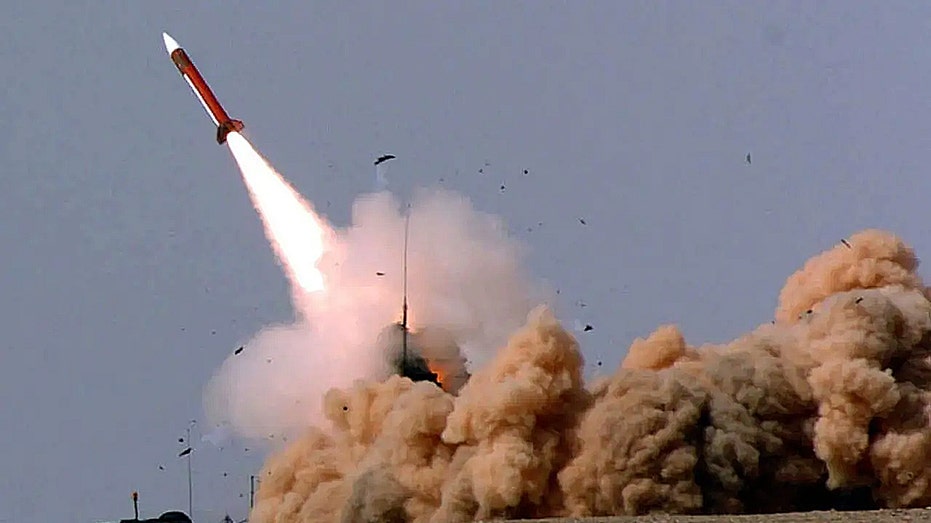
The Center for Strategic and International Studies, using open-source budget numbers provided to Congress, estimates U.S. Patriot interceptor inventories have fallen from roughly 2,300 pre-war to fewer than 827.
THAAD interceptor inventories have also dropped from 452 to fewer than 278.
CSIS warns rebuilding those stockpiles could take three years or more, raising concerns about protecting U.S. forces and bases worldwide if another major conflict erupts, for instance in the Pacific.
"If you look at what we've expended for the Patriots, for example, over half the global inventory has now been consumed in the Middle East. Similar to the THAAD interceptors as well," said Kelly Grieco, a missile expert at the Stimson Center.
"These are things that we have to intercept ballistic missiles. Almost half of THAAD interceptors have been used. So that's global inventory. So that really leaves us with very little excess to be able to use in other theaters, whether it's defending US forces in Europe or the Indo-Pacific. So this becomes quite a constraint, I would say, on the United States capabilities, not just today, but in the years to come."
The Pentagon’s $67 billion request for fiscal year 2026 emergency funding includes $18.2 billion to replace the U.S.’s most advanced Patriot missile, Navy Tomahawks and the Army’s high-altitude interceptor known as THAAD, according to Bloomberg.
Half of the munitions requested in the Pentagon's 2027 budget are low-cost munitions worth $600,000 or less.
US NAVY PLANS MAJOR TORPEDO STOCKPILE OVERHAUL AS MILITARY SHIFTS TO TWO-WAR STRATEGY
By 2031, 70 percent of the munitions purchased by the Pentagon are expected to be in this lower-cost range, according to Jerry McGinn, who tracks the defense industrial base at CSIS.
"The munitions we use today are incredibly effective: the Tomahawk, the Patriot, the theater missile defense interceptors, or THAAD, that you've seen in the press are incredibly effective. They were built solely for performance, and they were designed a long time ago," McGinn said.
"They weren't built or designed to be produced at scale. So they take two to three years from this contract award to actually come off the assembly line because these are very intricate systems. They're essentially handmade in a lot of ways. So it's hard to scale production on these efforts."
Operation Midnight Hammer and Epic Fury burned through numerous missiles, but concerns about stockpiles preceded the latest Middle East conflict.
McGinn and others described a recent Pentagon meeting in which the department summoned a dozen leading Silicon Valley defense firms such as Shield AI and Anduril to discuss urgently replenishing depleted U.S. weapons inventories as the war consumes precision munitions.
"Concerns are that these companies have not produced at scale," McGinn added. "They have commercial kinds of technologies. They've done prototyping, but are they able to have production lines that can work with the government to produce those munitions at scale?"
Brandon Tseng attended the Pentagon meeting.
This former Navy SEAL started SHIELD AI over a decade ago at a time when Silicon Valley did not want to partner with the Pentagon, and it was hard to get venture capital money.
Just two years ago, 10,000 defense tech startups were formed.
"Defense tech was not a word in 2015. Venture capitalists thought we were crazy. When we said we wanted to work on this mission of protecting service members and civilians, they just didn't believe you could build a business behind it," Tseng told Fox.
He was recently in Ukraine where his V-BAT, an AI-driven targeting system, is being used to strike Russian targets.
"It's a miniature Predator or Reaper drone. It does the mission of these $40 million aircraft at a fraction of the price — roughly a million dollars per aircraft," Tseng explained how Ukraine is using the cheaper version for "intelligence surveillance, reconnaissance and targeting" at very long ranges.
The V-BAT "can operate when GPS or communications are jammed because it has our AI pilot Hivemind on board," Tseng said.
TRUMP DECLARES HAMAS TO DISARM AS SAUDI MILITARY READIES FOR POTENTIAL HOUTHI GROUND OFFENSIVE
Ukraine is the battlefield where many of these tech start-ups are testing their weapons and adjusting their product "at the speed of war."
CENTCOM Commander Adm. Brad Cooper developed an option for a 10- to 14-day intensive air campaign to cripple Iran's missile capabilities, according to the Wall Street Journal, reflecting concerns that the current tit-for-tat approach is becoming unsustainable as a result of dwindling numbers of these missile interceptors.
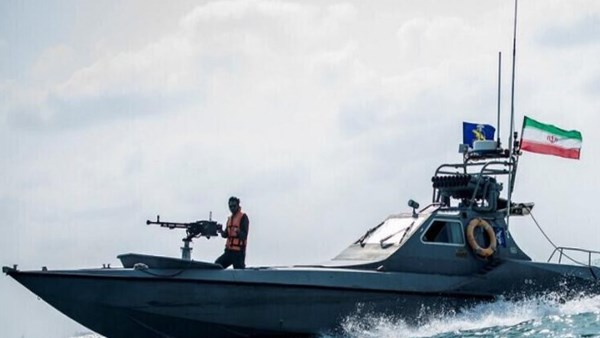
Iran's strategy is to target U.S. bases, forcing the U.S. to fire these exquisite defensive missile interceptors, forcing the Pentagon to take greater risks in defending U.S. troops the longer the conflict drags on.
Iran believes that is its best hope at outlasting the U.S. military.
"This is clearly the Iranian strategy," Grieco said. "Every time they're firing missiles at U.S. bases, they're forcing the United States to intercept them, drawing down those stockpiles. And I think they fundamentally believe that U.S. interests are limited in this war, whereas Iran sees it as existential, and that ultimately the United States, if the IRGC continues driving up the costs, particularly human costs, will decide this is not worth continuing this fight."
ملاحظة تحريرية | Editorial Note: نُشر هذا المقال في الأصل بواسطة Fox News. خبر (Khabr) هي منصة إعلامية أردنية مرخّصة تعمل بالذكاء الاصطناعي. نضيف قيمة تحريرية من خلال: تحليل ذكي للأخبار، ملخصات تلقائية، رواية صوتية بالذكاء الاصطناعي، ترجمة متعددة اللغات، وتدقيق الحقائق. هدفنا جعل الأخبار أكثر وضوحاً وسهولةً للقارئ العربي.
This article was originally published by Fox News. Khabr is a licensed Jordanian AI-powered news platform (Registration #82086). We add editorial value through: AI-powered news analysis, automated summaries, AI audio narration, multi-language translation (Arabic, English, French, Turkish), and AI fact-checking. Our mission is to make news more accessible and understandable for Arabic-speaking audiences worldwide.