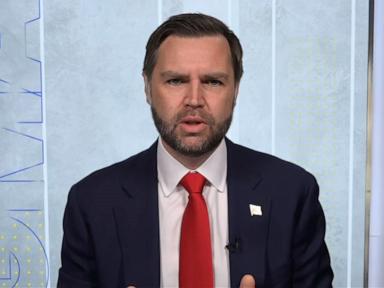
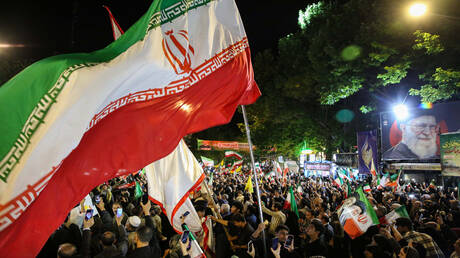
34||h=1&&(this.target=t[0]),t.length>=2&&(this.opts=t[1]);var n,r=this.opts||{},i=this.target;if("string"==typeof i?n=i:"object"==typeof i&&i instanceof y?n=i.url:window.URL&&"object"==typeof i&&i instanceof URL&&(n=i.href),o(this,n),"data"!==this.params.protocol){var s=(""+(i&&i instanceof y&&i.method||r.method||"GET")).toUpperCase();this.params.method=s,this.txSize=m(r.body)||0}}),u.on("fetch-done",function(t,e){if(this.endTime=a.now(),this.params||(this.params={}),"data"===this.params.protocol)return void g("Ajax/DataUrl/Excluded");this.params.status=e?e.status:0;var n;"string"==typeof this.rxSize&&this.rxSize.length>0&&(n=+this.rxSize);var r={txSize:this.txSize,rxSize:n,duration:a.now()-this.startTime};s("xhr",[this.params,r,this.startTime,this.endTime,"fetch"],this)})}},{}],18:[function(t,e,n){var r={};e.exports=function(t){if(t in r)return r[t];if(0===(t||"").indexOf("data:"))return{protocol:"data"};var e=document.createElement("a"),n=window.location,o={};e.href=t,o.port=e.port;var i=e.href.split("://");!o.port&&i[1]&&(o.port=i[1].split("/")[0].split("@").pop().split(":")[1]),o.port&&"0"!==o.port||(o.port="https"===i[0]?"443":"80"),o.hostname=e.hostname||n.hostname,o.pathname=e.pathname,o.protocol=i[0],"/"!==o.pathname.charAt(0)&&(o.pathname="/"+o.pathname);var a=!e.protocol||":"===e.protocol||e.protocol===n.protocol,s=e.hostname===document.domain&&e.port===n.port;return o.sameOrigin=a&&(!e.hostname||s),"/"===o.pathname&&(r[t]=o),o}},{}],19:[function(t,e,n){function r(t,e){var n=t.responseType;return"json"===n&&null!==e?e:"arraybuffer"===n||"blob"===n||"json"===n?o(t.response):"text"===n||""===n||void 0===n?o(t.responseText):void 0}var o=t(22);e.exports=r},{}],20:[function(t,e,n){function r(){}function o(t,e,n,r){return function(){return u.recordSupportability("API/"+e+"/called"),i(t+e,[f.now()].concat(s(arguments)),n?null:this,r),n?void 0:this}}var i=t("handle"),a=t(31),s=t(32),c=t("ee").get("tracer"),f=t("loader"),u=t(25),d=NREUM;"undefined"==typeof window.newrelic&&(newrelic=d);var p=["setPageViewName","setCustomAttribute","setErrorHandler","finished","addToTrace","inlineHit","addRelease"],l="api-",h=l+"ixn-";a(p,function(t,e){d[e]=o(l,e,!0,"api")}),d.addPageAction=o(l,"addPageAction",!0),d.setCurrentRouteName=o(l,"routeName",!0),e.exports=newrelic,d.interaction=function(){return(new r).get()};var m=r.prototype={createTracer:function(t,e){var n={},r=this,o="function"==typeof e;return i(h+"tracer",[f.now(),t,n],r),function(){if(c.emit((o?"":"no-")+"fn-start",[f.now(),r,o],n),o)try{return e.apply(this,arguments)}catch(t){throw c.emit("fn-err",[arguments,this,t],n),t}finally{c.emit("fn-end",[f.now()],n)}}}};a("actionText,setName,setAttribute,save,ignore,onEnd,getContext,end,get".split(","),function(t,e){m[e]=o(h,e)}),newrelic.noticeError=function(t,e){"string"==typeof t&&(t=new Error(t)),u.recordSupportability("API/noticeError/called"),i("err",[t,f.now(),!1,e])}},{}],21:[function(t,e,n){function r(t){if(NREUM.init){for(var e=NREUM.init,n=t.split("."),r=0;r0){var r=n[n.length-1];if(f&&f 6:11Vice President JD Vance appears on ABC News' "Good Morning America" on Monday, June 15, 2026.ABC NewsVice President JD Vance on Monday spoke about the settlement that would extend the U.S.-Iran ceasefire and pave the way for 60 days of technical negotiations to end the war, saying it has been signed "digitally." Vance said the agreement marked a moment in which Iran has a "two-path" option. "On the one hand, if they continue to try to rebuild their nuclear program, this deal ensures they will never have the resources to do that," Vance told ABC News' "Good Morning America" in an interview on Monday. "On the other hand, if the Iranians are willing to give a long-term commitment -- along with proper verification -- to giving up that nuclear weapon, we’re willing to welcome them into the world economy, to lift some sanctions and to turn over a new leaf in that relationship." Vice President JD Vance appears on ABC News' "Good Morning America" on Monday, June 15, 2026.ABC NewsIranian officials have long publicly maintained that the country's nuclear program operates only for civilian purposes, although Western officials have said their uranium enrichment has gone beyond what would be needed for civilian use. Iran has also said it does not have ambitions to create nuclear weapons, a claim that American officials have disputed. Vance's interview followed a Sunday social media post from President Donald Trump, who said the United States and Iran reached an agreement for a 60-day ceasefire in the conflict that began with U.S. and Israeli strikes on Iran on Feb. 28. Vance said that the deal had already been digitally signed by parties, but also maintained that there would be a signing ceremony on Friday -- though it's unclear exactly what the Friday signing will mean if the deal has already been signed digitally. The vice president did say that the full text of the agreement would be released at some point this week and that negotiations were expected to continue. The exact contents of the agreement is still unclear, and he remained vague about what specifics were in the the text of the already-signed agreement. When pressed by "Good Morning America" Anchor George Stephanopoulos about whether this deal was the president going back on promises that Iran would need to provide "unconditional surrender," Vance responded that "what this deal fundamentally does is it reopens the Straits of Hormuz." "You see, oil prices have already come down substantially just in the last 24 hours," Vance added. Vance also said that the deal includes provisions that Iran will stop funding terror groups, though he did not expand on what exactly that means. As a potential deal was reportedly coming together on Friday, Vance took to social media to push back on what he described as "fake information" about the potential terms, which he said were expected to include financial incentives for Iran. Vance said funds would not be released to Iran "for simply signing a deal or attending a meeting." Vance also said that since the deal was digitally signed on Sunday, no money for Iran has been released, "and that won't change, George," Vance said. An Iranian man rides a scooter past anti-US banners outside the former US embassy in Tehran on June 15, 2026.Atta Kenare/AFP via Getty ImagesVance on Monday said forward momentum for the deal would hinge on Iranian officials "doing the right thing," including allowing for some form of verification to show that Iran is not working toward building a nuclear weapon. "This is fundamentally a win-win for the American people," Vance said. "What the president has said is he wants it to be a win for the Iranian people as well. But that requires some real trust building and some real positive conduct from the Iranian political system." "We're going to see if that happens," he added. "If it does, they're absolutely going to find the president of United States and the entire team a willing partner, to make their country more prosperous." Stephanopoulos pressed Vance about whether Israel's comments that they are not party to the agreement amid their continued hostilities in Lebanon, asking Vance whether that might complicate the peace settlement. "Well, George, everything's going to complicate the deal, as you know, in this region of the world, even a ceasefire, sometimes they're a little bit dirty," Vance said. "It goes from shooting a lot to shooting a little to shooting not at all. But what we fundamentally believe is that this is going to be a good deal for the people of Israel, for the people of the Gulf, the people of America, and again, potentially for the people of Iran as well." A landmark nuclear agreement, known as the Joint Comprehensive Plan of Action, or JCPOA, followed two years of negotiations. It imposed restrictions on Iran’s civilian nuclear enrichment program in exchange for sanctions relief. Iran, in that 2015 deal, agreed to international monitoring and to keeping its nuclear program "solely for peaceful purposes," according to the Center for Arms Control and Non-Proliferation. Trump withdrew the U.S. that deal in 2018, during his first term. "There are all of these ways I could explain the ways this deal is fundamentally better for the American people than the JCPOA," Vance said on Monday. "But the fundamental difference is that the Gulf Coast coalition, our Arab partners in the region, they hated the JCPOA, because they felt that it emboldened Iran to be a bad actor. They love this deal because they feel that it's going to create a totally new dynamic in the Middle East." ABC News' Meredith Deliso contributed to this report. 24/7 coverage of breaking news and live events Vice President JD Vance on Monday spoke about the settlement that would extend the U.S.-Iran ceasefire and pave the way for 60 days of technical negotiations to end the war, saying it has been signed \"digitally.\" Vance said the agreement marked a moment in which Iran has a \"two-path\" option. \"On the one hand, if they continue to try to rebuild their nuclear program, this deal ensures they will never have the resources to do that,\" Vance told ABC News' \"Good Morning America\" in an interview on Monday. \"On the other hand, if the Iranians are willing to give a long-term commitment -- along with proper verification -- to giving up that nuclear weapon, we’re willing to welcome them into the world economy, to lift some sanctions and to turn over a new leaf in that relationship.\" Iranian officials have long publicly maintained that the country's nuclear program operates only for civilian purposes, although Western officials have said their uranium enrichment has gone beyond what would be needed for civilian use. Iran has also said it does not have ambitions to create nuclear weapons, a claim that American officials have disputed. Vance's interview followed a Sunday social media post from President Donald Trump, who said the United States and Iran reached an agreement for a 60-day ceasefire in the conflict that began with U.S. and Israeli strikes on Iran on Feb. 28. Vance said that the deal had already been digitally signed by parties, but also maintained that there would be a signing ceremony on Friday -- though it's unclear exactly what the Friday signing will mean if the deal has already been signed digitally. The vice president did say that the full text of the agreement would be released at some point this week and that negotiations were expected to continue. The exact contents of the agreement is still unclear, and he remained vague about what specifics were in the the text of the already-signed agreement. When pressed by \"Good Morning America\" Anchor George Stephanopoulos about whether this deal was the president going back on promises that Iran would need to provide \"unconditional surrender,\" Vance responded that \"what this deal fundamentally does is it reopens the Straits of Hormuz.\" \"You see, oil prices have already come down substantially just in the last 24 hours,\" Vance added. Vance also said that the deal includes provisions that Iran will stop funding terror groups, though he did not expand on what exactly that means. As a potential deal was reportedly coming together on Friday, Vance took to social media to push back on what he described as \"fake information\" about the potential terms, which he said were expected to include financial incentives for Iran. Vance said funds would not be released to Iran \"for simply signing a deal or attending a meeting.\" Vance also said that since the deal was digitally signed on Sunday, no money for Iran has been released, \"and that won't change, George,\" Vance said. Vance on Monday said forward momentum for the deal would hinge on Iranian officials \"doing the right thing,\" including allowing for some form of verification to show that Iran is not working toward building a nuclear weapon. \"This is fundamentally a win-win for the American people,\" Vance said. \"What the president has said is he wants it to be a win for the Iranian people as well. But that requires some real trust building and some real positive conduct from the Iranian political system.\" \"We're going to see if that happens,\" he added. \"If it does, they're absolutely going to find the president of United States and the entire team a willing partner, to make their country more prosperous.\" Stephanopoulos pressed Vance about whether Israel's comments that they are not party to the agreement amid their continued hostilities in Lebanon, asking Vance whether that might complicate the peace settlement. \"Well, George, everything's going to complicate the deal, as you know, in this region of the world, even a ceasefire, sometimes they're a little bit dirty,\" Vance said. \"It goes from shooting a lot to shooting a little to shooting not at all. But what we fundamentally believe is that this is going to be a good deal for the people of Israel, for the people of the Gulf, the people of America, and again, potentially for the people of Iran as well.\" A landmark nuclear agreement, known as the Joint Comprehensive Plan of Action, or JCPOA, followed two years of negotiations. It imposed restrictions on Iran’s civilian nuclear enrichment program in exchange for sanctions relief. Iran, in that 2015 deal, agreed to international monitoring and to keeping its nuclear program \"solely for peaceful purposes,\" according to the Center for Arms Control and Non-Proliferation. Trump withdrew the U.S. that deal in 2018, during his first term. \"There are all of these ways I could explain the ways this deal is fundamentally better for the American people than the JCPOA,\" Vance said on Monday. \"But the fundamental difference is that the Gulf Coast coalition, our Arab partners in the region, they hated the JCPOA, because they felt that it emboldened Iran to be a bad actor. They love this deal because they feel that it's going to create a totally new dynamic in the Middle East.\" ABC News' Meredith Deliso contributed to this report.
المصدر: ABC News
| Source: ABC News