US says China to buy billions in agricultural goods after Trump-Xi talks
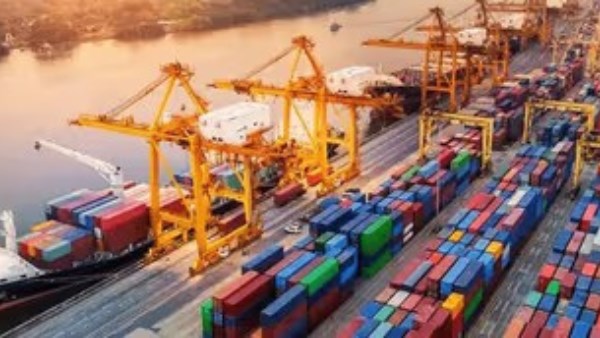
play Live Sign upShow navigation menu.css-15ru6p1{font-size:inherit;font-weight:normal;}Navigation menuNewsShow more news sectionsAfricaAsiaUS & CanadaLatin AmericaEuropeAsia PacificMiddle EastExplainedOpinionSportVideoMoreShow more sectionsFeaturesEconomyHuman RightsClimate CrisisInvestigationsInteractivesIn PicturesScience & TechnologyPodcastsTravelplay Live Click here to searchsearchSign upNavigation menucaret-leftTrendingUS-Israel war on IranTracking Israel's ceasefire violationsRussia-Ukraine warDonald Trumpcaret-rightEconomy|Business and EconomyUS says China to buy billions in agricultural goods after Trump-Xi talksChina will buy ‘at least’ $17bn worth of US agricultural goods annually, the White House says. xwhatsapp-strokecopylinkgoogleAdd Al Jazeera on GoogleinfoUS President Donald Trump greets Chinese leader Xi Jinping at the Great Hall of the People in Beijing, China, on May 14, 2026 [Kenny Holston/pool via Reuters]By John PowerPublished On 18 May 202618 May 2026China will buy “at least” $17bn worth of agricultural goods from the United States annually following US President Donald Trump and Chinese leader Xi Jinping’s summit in Beijing, the White House has said. China will make the purchases through 2028, with the 2026 target applying to the remainder of the year on a proportionate basis, according to a fact sheet released on Sunday. The White House said the deal is in addition to China’s commitment to buy at least 87 million metric tonnes of US soya beans, which was made at Trump and Xi’s summit in South Korea in October. China will also restore market access for US beef by renewing the expired listings for more than 400 production facilities, and resume imports of poultry from states determined by the US Department of Agriculture to be free of avian influenza, according to the fact sheet. Trump and Xi also agreed to establish two new bodies – the US-China Board of Trade and the US-China Board of Investment – to manage trade and investment between the sides, the White House said. China has yet to confirm or comment on the White House’s announcement. The Chinese Embassy in Washington, DC, did not immediately respond to a request for comment. The White House’s announcement comes after Trump and Xi on Friday wrapped up a two-day summit that was heavy on pageantry and camaraderie but light on concrete agreements. During their talks in Beijing, Trump and Xi sought greater alignment on economic issues and trade, while largely skirting the sensitive issues of Taiwan and the US-Israel war on Iran. In a readout after the summit wrapped up on Friday, the White House said the two sides had discussed ways to “enhance economic cooperation”, and that they agreed on the need to keep the Strait of Hormuz open and that Iran “can never have a nuclear weapon.” Beijing did not explicitly state that Iran should not have nuclear weapons, but stressed the importance of reaching “a settlement on the Iranian nuclear issue and other issues that accommodates the concerns of all parties”. Neither White House statement contained any mention of Taiwan, the self-governing island that Beijing views as an integral part of its territory. The omission of any reference to the island – the defence of which Washington is committed to supporting under the 1979 Taiwan Relations Act – came after Xi warned of “clashes and even conflicts” between the superpowers if the issue is not “handled properly”. Deborah Elms, head of trade policy at the Hinrich Foundation in Singapore, said Washington’s statements on the summit should be treated with caution until they are confirmed by the Chinese side. “On agriculture purchases, I’m sceptical of any announcements that have been made by one side and not confirmed by the other. This is sometimes an issue in many relationships, but it’s acute under Trump 2, especially with China,” Elms told Al Jazeera. Elms said an additional $17bn in agricultural purchases annually would only provide a minor, albeit welcome, boost to the US economy. “But the US is a $30 trillion economy. Even if these buys materialise, the net effect is going to be tiny,” she said. After nearly a decade of tit-for-tat economic salvoes between Washington and Beijing, US-Chinese trade is down sharply from its peak. Their bilateral trade in goods last year came to some $415bn, down from more than $690bn in 2022. Advertisement AboutAboutShow moreAbout UsCode of EthicsTerms and ConditionsEU/EEA Regulatory NoticePrivacy PolicyCookie PolicyCookie PreferencesAccessibility StatementSitemapWork for usConnectConnectShow moreContact UsUser Accounts HelpAdvertise with usStay ConnectedNewslettersChannel FinderTV SchedulePodcastsSubmit a TipPaid Partner ContentOur ChannelsOur ChannelsShow moreAl Jazeera ArabicAl Jazeera EnglishAl Jazeera Investigative UnitAl Jazeera MubasherAl Jazeera DocumentaryAl Jazeera BalkansAJ+Our NetworkOur NetworkShow moreAl Jazeera Centre for StudiesAl Jazeera Media InstituteLearn ArabicAl Jazeera Centre for Public Liberties & Human RightsAl Jazeera ForumAl Jazeera Hotel PartnersFollow Al Jazeera English:المصدر: Al Jazeera EN | Source: Al Jazeera EN
ملاحظة تحريرية | Editorial Note: نُشر هذا المقال في الأصل بواسطة Al Jazeera EN. خبر (Khabr) هي منصة إعلامية أردنية مرخّصة تعمل بالذكاء الاصطناعي. نضيف قيمة تحريرية من خلال: تحليل ذكي للأخبار، ملخصات تلقائية، رواية صوتية بالذكاء الاصطناعي، ترجمة متعددة اللغات، وتدقيق الحقائق. هدفنا جعل الأخبار أكثر وضوحاً وسهولةً للقارئ العربي.
This article was originally published by Al Jazeera EN. Khabr is a licensed Jordanian AI-powered news platform (Registration #82086). We add editorial value through: AI-powered news analysis, automated summaries, AI audio narration, multi-language translation (Arabic, English, French, Turkish), and AI fact-checking. Our mission is to make news more accessible and understandable for Arabic-speaking audiences worldwide.