US-Iran ceasefire: Trump says the Iran war 'is very close to over'
•Trump says the Iran war 'is very close to over' In clips showing excerpts of an interview he taped with Fox Business Network's "Mornings with Maria," Trump says of the Iran war, "I think it's close t...
•I mean, I view it as very close to over."He adds, "If I pulled up stakes right now, it would take them 20 years to rebuild that country.
•And we're not finished.
هذا الخبر من Gulf News. خبر يقدم أدوات ذكاء اصطناعي للتلخيص والترجمة والاستماع.
المصدر: Gulf News | Source: Gulf NewsTrump says the Iran war 'is very close to over'
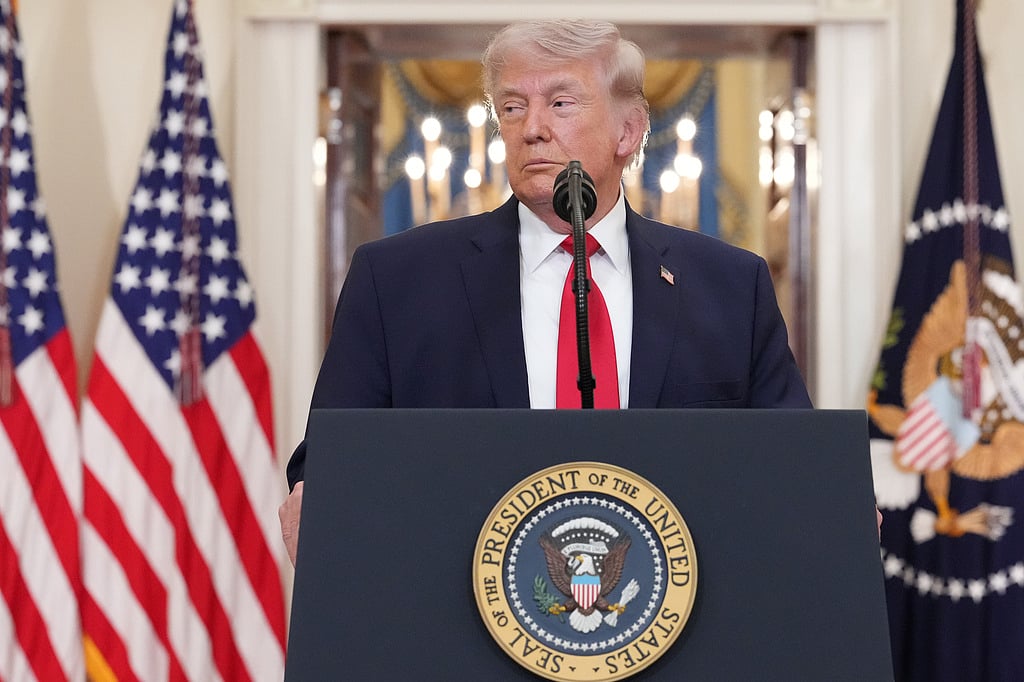
In clips showing excerpts of an interview he taped with Fox Business Network's "Mornings with Maria," Trump says of the Iran war, "I think it's close to over, yeah. I mean, I view it as very close to over."
He adds, "If I pulled up stakes right now, it would take them 20 years to rebuild that country. And we're not finished. We'll see what happens. I think they want to make a deal very badly."
Trump has declared a U.S. victory in Iran repeatedly since mere days after the war started - even as the reality on the ground has been far more complicated.
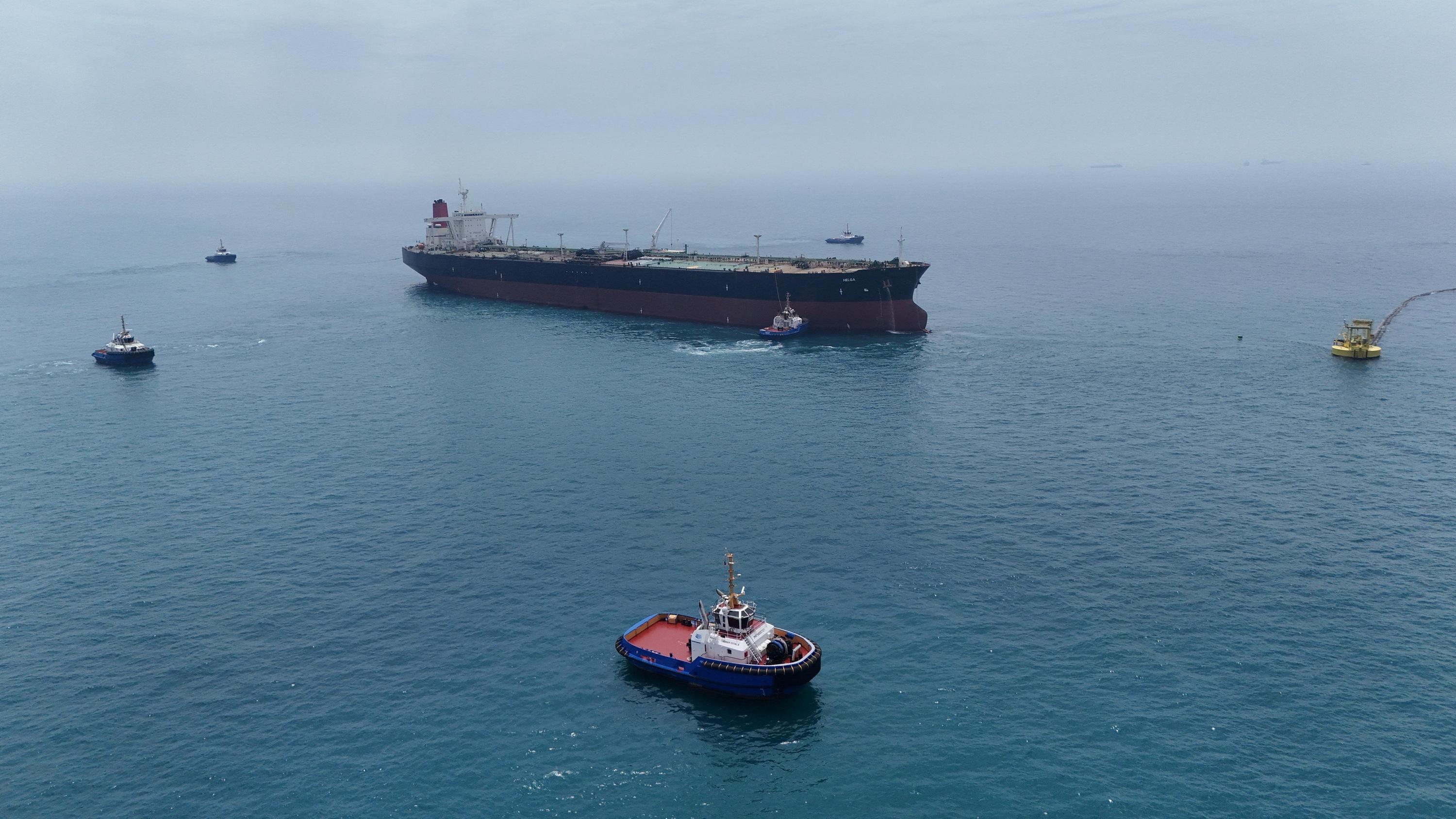
US military will operate blockade in Gulf of Oman
A U.S. official, who spoke on condition of anonymity to discuss sensitive military operations, explained that the strategy is to observe vessels subject to the blockade leave Iranian facilities and clear the Strait of Hormuz before intercepting them and forcing them to turn around.
The official said that the military relies on more than just automated tracking beacons that all merchant ships are required to carry called AIS to determine merchant ships were coming from a port in Iran but wouldn't go into more detail, citing the need for operational security.
The official also wouldn't go into what the military would do should they need to board and capture a ship.
Pakistani official says government will 'keep at it'
Pakistan Finance Minister Muhammad Aurangzeb said Tuesday in an interview with The Associated Press that "our leadership is not giving up" on its efforts to help the U.S. and Iran negotiate. He noted the talks marked the first direct discussion between the two in nearly 50 years.
"We would very much like to see if we can continue to pursue the dialogue," he added, speaking on the sidelines of the spring meetings of the International Monetary Fund and World Bank. "We'll keep at it, and our leadership is at it."
Aurangzeb said he also this week met with U.S. officials including Trade Representative Jamieson Greer and Commerce Secretary Howard Lutnick to discuss trade and finance concerns. He plans to meet Treasury Secretary Scott Bessent on Friday.
'Small bit of economic pain' worth the price of long-term security: Bessent
US Treasury Secretary Scott Bessent said a “small bit of economic pain” is worth it if it helps secure the world in the long run, as the International Monetary Fund warned the Iran war could push the global economy toward recession.
Bessent argued the conflict is aimed at removing the threat of Iranian nuclear strikes on Western capitals. His remarks highlight the administration’s view that strategic security concerns outweigh the short-term economic cost.
“I wonder what the hit to global GDP would be if a nuclear weapon hit London... I am saying that I am less concerned about short-term forecasts, for long-term security,” he told the BBC.
Bessent said the biggest risk is one people do not realise they are taking. “The biggest risk you can take is one you don't know you were taking. Now we know for a fact that, as the Iranians shot at Diego Garcia, they do have mid-range intercontinental ballistic missiles that could reach London, and we know that they want a nuclear programme,” he said.
His comments came as senior US officials said Iran had uranium enriched to 60% at the start of the war, though Iran does not have nuclear weapons. The UK government has said there is “no assessment” that Iran is trying to target Europe with missiles.
The IMF has warned that the war’s disruption to oil markets, shipping and investor confidence could slow global growth and, in a worse-case scenario, tip the world into recession. Trump also warned the oil prices may remain "elevated" until the November US midterm elections.
Get updated faster and for FREE: Download the Gulf News app now - simply click here.Oil prices drop: Brent at $95, WTI at $91 on hopes for Mideast peace deal — stocks rise
Oil prices fell as traders bet that renewed ceasefire hopes could ease Middle East tensions and reduce the risk of disruptions to the Strait of Hormuz, a critical energy chokepoint.
The retreat in crude reflected a sharp unwind in the war risk premium, with Brent and WTI both under pressure as investors priced in less chance of a wider regional conflict. Oilprice.com’s latest chart showed WTI crude at $91.25/barrel and Brent at $94.79/barrel (as of 8.47am Tokyo), both down from the previous session, underscoring how quickly sentiment can shift when diplomacy appears to gain traction. Wall Street’s major indexes rose on Tuesday (April 14); European and Asian markets, led by Nikkei, also advanced early on April 15, 2026.
Drone strike hits Iraqi Kurdistan, kills Iranian Kurdish woman
A drone struck an Iranian Kurdish group on Tuesday, killing a woman in Iraq's northern Kurdistan region, a party official told AFP.
It was the first such attack against Iranian Kurds in Iraqi Kurdistan since a fragile ceasefire in the US-Israeli war against Iran took effect in the region last week.
Commander Mohammed Hakimi from the exiled Komala party blamed the attack on "Iran and its affiliated militias".
During the Middle East war, Iran has repeatedly struck positions belonging to Iranian Kurdish exiled groups in Iraq's autonomous Kurdistan region.
A drone hit the Komala party's Camp Sordash late in the afternoon, Hakimi told AFP.
"Three Iranian Kurdish refugees were wounded, including a woman who is in a critical condition," Hakimi said.
Ceasefire between Israel and Lebanon must be brokered by governments, not armed groups: US
The US State Department stressed any cease-fire between Israel and Lebanon must be brokered by governments, not armed groups. This came following “productive discussions” between the two sides hosted by Washington. Negotiators from Israel and Lebanon — the highest-level engagement between the two sides since 1993 — agreed to begin direct talks at a mutually-agreed time and place. The talks came as fierce fighting has displaced civilians and raised regional tensions. The role of Iran-backed Hezbollah continues to be a central sticking point.
Ship signals 'disrupted or manipulated' in Hormuz area: Maritime analysts
Maritime analysts cautioned that ship signals in the area have recently been "disrupted or manipulated", complicating precise tracking.
AFP reported that marine tracking data reviewed Tuesday shows at least three ships departing Iranian ports transited the Strait of Hormuz, despite the US announcement of a "naval blockade" which took effect at 1400 GMT Monday.
The US military insists that its blockade remained in place, and insists no no vessels had breached its cordon. In a statement posted Tuesday, US Central Command said no ships had made it past US forces and that six merchant vessels were ordered to turn back and re-enter Iranian ports on the Gulf of Oman outside the strait during the first 24 hours of enforcement.
6 vessels prevented from leaving Iranian ports during the first 24 hours of the blockade: US
The United States military said on Tuesday it had successfully prevented six vessels from leaving Iranian ports during the first 24 hours of a naval blockade imposed on Iran. The United States Central Command (Centcom), which oversees US forces in the Middle East, said more than 10,000 American troops, over 10 warships and dozens of aircraft were involved in the operation.
In a post on the X platform, it added that “during the first 24 hours, no vessel was able to breach the US blockade, and six commercial ships complied with instructions from US forces and returned to Iranian ports on the Gulf of Oman”. It said the blockade was being enforced “without discrimination on vessels of all nationalities entering or leaving Iranian ports and coastal areas, including all Iranian ports on the Arabian Gulf and the Gulf of Oman.”
Get updated faster and for FREE: Download the Gulf News app now - simply click here.Israel, Lebanon agree to direct negotiations after 'productive' talks: US statement
Israel and Lebanon agreed to hold direct negotiations after "productive discussions" between the two sides in Washington, the United States said on Tuesday.
"The participants held productive discussions on steps toward launching direct negotiations between Israel and Lebanon," State Department spokesperson Tommy Pigott said in a statement, adding: "All sides agreed to launch direct negotiations at a mutually agreed time and venue."
China vows 'countermeasures' to Trump tariff threats
China vowed Tuesday to impose "countermeasures" after US President Donald Trump threatened new tariffs on its goods entering the United States if Beijing provided military assistance to Iran during the Middle East war.
"If the US insists on using this as an excuse to impose additional tariffs on China, China will definitely take resolute countermeasures," foreign ministry spokesman Guo Jiakun told a news conference, adding that reports China was providing weapons to Iran "are completely fabricated".
US‑Israel war on Iran: Recent developments
Day 46: 2 days to US-Iran talks in Pakistan? Trump thinks so
Day 45: US, Iran discuss 'another round' of direct talks
Day 44: US to begin 'blockade' of Iranian ports on Monday
Day 43: 3-way talks with the US and Iran begin in Pakistan
Day 42: Trump says Iran has 'no cards' as Vance heads for talks
Day 41: Kuwait condemns drone attacks, US warns vs Hormuz toll
Day 40: Trump agrees to suspend attack on Iran by two weeks
Day 39: UAE, Qatar on alert as Trump's deadline nears
Day 38: Iran and US receive draft proposal for war ceasefire
Day 37: Second F-15E crew member rescued in Iran
Day 36: Trump warns Iran: 48 hours or all hell will reign down
Day 35: Trump seeks $1.5t defence budget as war intensifies
Day 34: UN chief warns world on 'edge of a wider war'
Day 33: Trump says US to hit Iran 'extremely hard'
ملاحظة تحريرية | Editorial Note: نُشر هذا المقال في الأصل بواسطة Gulf News. خبر (Khabr) هي منصة إعلامية أردنية مرخّصة تعمل بالذكاء الاصطناعي. نضيف قيمة تحريرية من خلال: تحليل ذكي للأخبار، ملخصات تلقائية، رواية صوتية بالذكاء الاصطناعي، ترجمة متعددة اللغات، وتدقيق الحقائق. هدفنا جعل الأخبار أكثر وضوحاً وسهولةً للقارئ العربي.
This article was originally published by Gulf News. Khabr is a licensed Jordanian AI-powered news platform (Registration #82086). We add editorial value through: AI-powered news analysis, automated summaries, AI audio narration, multi-language translation (Arabic, English, French, Turkish), and AI fact-checking. Our mission is to make news more accessible and understandable for Arabic-speaking audiences worldwide.