Two Weeks in Hormuz: From Energy Shock to the Redistribution of Economic Power
المصدر: Morocco World News | Source: Morocco World NewsIn today’s geopolitical landscape, crises are no longer measured by their duration but by their systemic impact. In this context, a potential closure or even a credible threat of Strait of Hormuz for as little as two weeks could trigger a shock that extends far beyond energy markets, reshaping the foundations of the global economy.
The “two-week” timeframe is not arbitrary. It reflects a broader pattern of political signaling in contemporary crises, where compressed timelines are used to exert maximum pressure while leaving room for de-escalation. This approach was recently echoed in statements by US President Donald Trump. Such limited windows are often enough to prompt full market repricing without necessarily leading to prolonged confrontation.
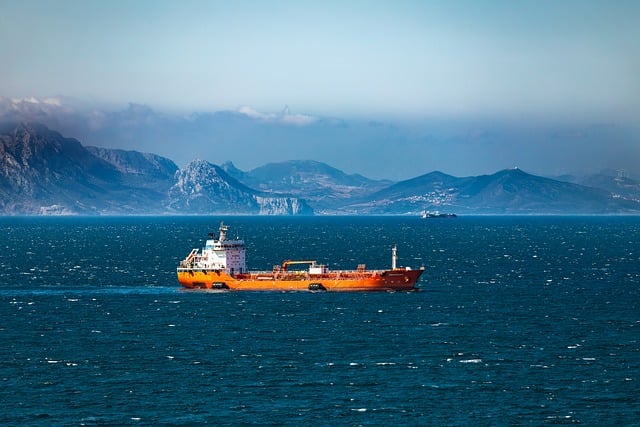
Roughly 20% of global oil consumption passes through this narrow corridor, alongside nearly one-third of global liquefied natural gas trade, according to estimates by the International Energy Agency. These figures show not only the strategic importance of Hormuz, but also the structural imbalance embedded in the global energy system where a disproportionate share of supply is concentrated in a single geographic chokepoint.
For Europe, the risks are particularly acute. Since the onset of the Russia–Ukraine War, European economies have undergone a forced energy transition, reducing dependence on Russian gas while increasing imports of LNG, including from Gulf producers. Yet this diversification has not eliminated risk. It has redistributed it. Europe is now less dependent on a single supplier, but more exposed to maritime vulnerabilities.
A temporary disruption in Hormuz would likely generate three immediate economic shocks. First, a sharp increase in oil and gas prices driven by both supply constraints and market expectations. Second, a rapid escalation in shipping and insurance costs as maritime risk premiums are repriced. Third, a drawdown of strategic reserves across Europe as governments seek to stabilize domestic markets and contain inflationary pressures.
However, the most significant impact lies beyond these short-term disruptions. Even a crisis lasting no more than two weeks could accelerate a structural transformation already underway: the shift from efficiency-driven globalization to risk-adjusted economic systems. In this emerging model, firms prioritize resilience over cost optimization, while governments move from diversification strategies toward reducing exposure to geopolitical chokepoints altogether.
Read also: Beyond Black-and-White Geopolitics: Iran as Frenemy of Morocco
In the Gulf, the picture is more nuanced. On one hand, rising energy prices translate into increased revenues, offering short-term fiscal gains. On the other, repeated exposure to geopolitical volatility even if temporary raises questions about the region’s long-term reliability as a stable energy corridor. This creates a delicate balance: benefiting from price surges without undermining market confidence.
Iran’s role in this equation extends beyond conventional escalation. Its geographic proximity to Hormuz provides it with a unique lever of influence over one of the world’s most critical economic arteries. Yet this leverage is typically exercised within a framework of calibrated pressure—what might be described as “managed volatility.” The objective is not sustained disruption, but controlled tension sufficient to shape negotiations, influence sanctions dynamics, and assert regional positioning without triggering full-scale war .
This dynamic produces a new pattern of crisis: short in duration, but high in impact. Two weeks may not permanently alter global energy flows, but they are sufficient to shift market behavior, accelerate policy decisions, and reprice geopolitical risk. In this sense, such crises are not anomalies — they are instruments within a broader strategic landscape.
For Gulf economies, this moment represents a critical test of their evolving economic model. Over the past decade, significant investments have been made in infrastructure, logistics, and diversification, with the aim of transforming the region from a hydrocarbon exporter into a global economic hub. Yet this transformation requires more than capital investment — it demands the integration of geopolitical risk management into economic strategy.
Within this context, the United Arab Emirates stands out as a regional model of balance between geopolitics and economics. By diversifying its global partnerships, expanding investments in international ports, and developing advanced energy infrastructure — including alternative export routes that bypass Hormuz, the UAE has sought to reduce its exposure to traditional chokepoints.
Read also: Straits under Tension: Crossroads of Global Trade and Theaters of Strategic Rivalries
Equally important is its role in de-escalation through economic diplomacy. Leveraging its position as a trusted partner across multiple geopolitical axes, the UAE has increasingly acted as a stabilizing force, contributing to the preservation of open trade routes and broader economic continuity. This combination of soft power and economic preparedness reflects not only a national strategy, but a broader framework for managing risk in an era defined by uncertainty.
Ultimately, a two-week crisis in Hormuz would not collapse the global economy, but it would expose its structural fault lines. More importantly, it would accelerate a transition already in motion: from a system optimized for efficiency to one built around resilience. In such a world, geography is no longer destiny, it is leverage. And those who understand how to manage it will shape the next phase of global economic power.
The post Two Weeks in Hormuz: From Energy Shock to the Redistribution of Economic Power appeared first on Morocco World News.
ملاحظة تحريرية | Editorial Note: نُشر هذا المقال في الأصل بواسطة Morocco World News. خبر (Khabr) هي منصة إعلامية أردنية مرخّصة تعمل بالذكاء الاصطناعي. نضيف قيمة تحريرية من خلال: تحليل ذكي للأخبار، ملخصات تلقائية، رواية صوتية بالذكاء الاصطناعي، ترجمة متعددة اللغات، وتدقيق الحقائق. هدفنا جعل الأخبار أكثر وضوحاً وسهولةً للقارئ العربي.
This article was originally published by Morocco World News. Khabr is a licensed Jordanian AI-powered news platform (Registration #82086). We add editorial value through: AI-powered news analysis, automated summaries, AI audio narration, multi-language translation (Arabic, English, French, Turkish), and AI fact-checking. Our mission is to make news more accessible and understandable for Arabic-speaking audiences worldwide.