Trump's Strategic Maneuvers: From Iran to the NBA Finals
•Trump emphasizes prioritizing foreign policy over midterm elections, particularly regarding Iran.
•He plans to attend the NBA Finals to broaden his audience and maintain media presence.
•Tensions within the GOP are evident following Senator John Cornyn's defeat, highlighting fractures in party unity.
المصدر: Khabr Exclusive | Source: Khabr ExclusiveTrump's Strategic Maneuvers: From Iran to the NBA Finals
In recent days, former President Donald Trump has made headlines with a series of statements and actions that underscore his enduring influence in both domestic and foreign policy arenas. Starting with international relations, Trump declared that he would not rush into a new deal with Iran, emphasizing that 'I don’t care about the midterms.' This statement indicates a prioritization of his foreign policy objectives over immediate political calculations, a stance that could resonate with his base as he positions himself ahead of the upcoming elections.
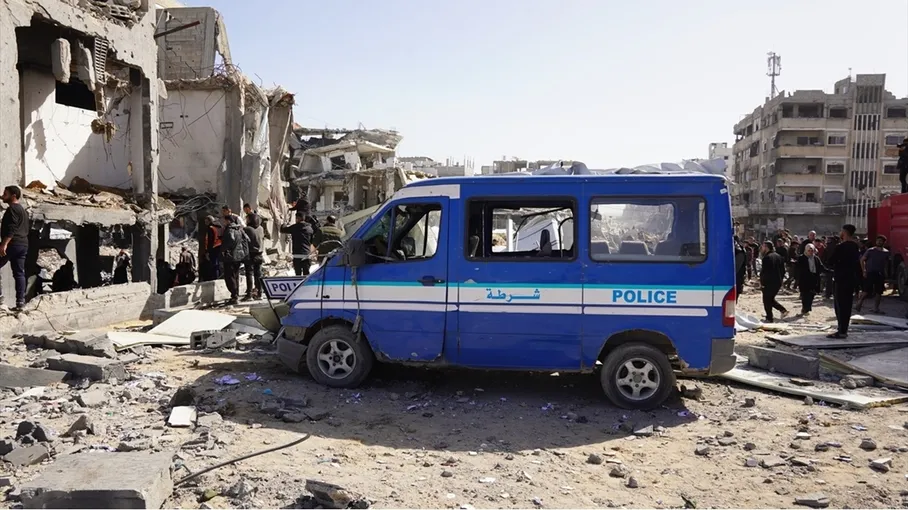
In tandem with his remarks on Iran, Trump asserted that no one would control the strategic Strait of Hormuz, an essential maritime passage for global oil shipments. His comments come amid heightened tensions and discussions about Iran's military posture, particularly with reports indicating that Iran's Islamic Revolutionary Guard Corps (IRGC) forces are 'lying in wait' should Trump decide to restart military operations in the region. This situation has reached a critical phase, highlighting the fragile balance of power and the potential for conflict.
Domestically, Trump has continued to showcase his influence within the Republican Party. At his 11th public Cabinet meeting, he touted several Republican primary wins, reinforcing his role as a kingmaker in the party. His comments serve not just to bolster his candidates but also to remind party members of his ongoing relevance and ability to shape the political landscape.
In an unexpected crossover into sports, Trump announced plans to attend the NBA Finals at Madison Square Garden (MSG), a move that could be interpreted as an attempt to connect with a broader audience outside of traditional political events. This attendance aligns with his strategy of maintaining a high-profile public persona, keeping him in the media spotlight and engaging with different demographics.
On a more controversial note, Trump issued a stark warning regarding Oman, threatening to 'blow up' the country amidst ongoing discussions over the Strait of Hormuz. Such statements reflect Trump's aggressive rhetoric and willingness to use dramatic language to assert his stance on foreign policy issues, raising concerns about the implications for U.S.-Middle East relations.
In the realm of political dynamics, tensions have been fueled by recent events, particularly the defeat of Senator John Cornyn, which has strained relations with Trump within the Senate GOP. Cornyn's loss suggests potential fractures in party unity as Trump continues to exert his influence, creating an atmosphere of uncertainty ahead of the next election cycle.
Adding a personal touch to the political narrative, First Lady Jill Biden revealed her concern during a notable debate between Joe Biden and Trump, mentioning that she thought her husband was 'having a stroke' at one point. Such candid reflections by the First Lady provide a glimpse into the personal stakes involved in high-pressure political contests.
Lastly, in a lighter yet intriguing turn, media outlets have speculated on Trump's choice of blue for the Reflecting Pool, showcasing how even minor decisions are scrutinized in the context of his public image. This attention to detail underscores the constant analysis of Trump's actions and choices, no matter how trivial they may seem.
In conclusion, Trump’s recent activities and statements reveal a multifaceted strategy as he navigates both foreign policy challenges and domestic political landscapes. His approach appears designed to galvanize his base, assert his influence over the Republican Party, and maintain a prominent public presence as he looks toward the future.
→Trump emphasizes prioritizing foreign policy over midterm elections, particularly regarding Iran.
→He plans to attend the NBA Finals to broaden his audience and maintain media presence.
ملاحظة تحريرية | Editorial Note: نُشر هذا المقال في الأصل بواسطة Khabr Exclusive. خبر (Khabr) هي منصة إعلامية أردنية مرخّصة تعمل بالذكاء الاصطناعي. نضيف قيمة تحريرية من خلال: تحليل ذكي للأخبار، ملخصات تلقائية، رواية صوتية بالذكاء الاصطناعي، ترجمة متعددة اللغات، وتدقيق الحقائق. هدفنا جعل الأخبار أكثر وضوحاً وسهولةً للقارئ العربي.
This article was originally published by Khabr Exclusive. Khabr is a licensed Jordanian AI-powered news platform (Registration #82086). We add editorial value through: AI-powered news analysis, automated summaries, AI audio narration, multi-language translation (Arabic, English, French, Turkish), and AI fact-checking. Our mission is to make news more accessible and understandable for Arabic-speaking audiences worldwide.