⚡ عاجل: كريستيانو رونالدو يُتوّج كأفضل لاعب كرة قدم في العالم●⚡ أخبار عاجلة تتابعونها لحظة بلحظة على خبر●⚡ تابعوا آخر المستجدات والأحداث من حول العالم●
AI اقتراحات ذكية
AI مباشر|--مشاهد مباشر
910,205مقال401مصدر نشط228قناة مباشرة4,843خبر اليوم
•The government of Iran is "seriously fractured", the reason cited by US President Donald Trump for the US delaying a potential strike on Iran indefinitely.The US leader stated that the decision was al...
•pic.twitter.com/VERELZMz8J— The Will Cain Show (@WillCainShow) April 21, 2026
As the world awaits Iran's response, Iran’s new supreme leader, Mojtaba Khamenei, has remained out of public view f...
•"The Iranian negotiating team does not have the authority to independently determine Iran’s negotiating positions, however.
هذا الخبر من Gulf News. خبر يقدم أدوات ذكاء اصطناعي للتلخيص والترجمة والاستماع.
The US leader stated that the decision was also made after a request from Pakistan’s leadership.
Meanwhile, the US Navy is keeping the Iran blockade in place and the its forces on standby.
“Based on the fact that the Government of Iran is seriously fractured… we have been asked to hold our Attack… I have therefore directed our Military to continue the Blockade… and will therefore extend the Ceasefire until such time as their proposal is submitted.”
IRANIAN REGIME FRACTURING FROM WITHIN
Retired Army Lt Col @ChuckDeVore says cracks are emerging inside Iran’s leadership —with IRGC factions now openly clashing with the foreign ministry. pic.twitter.com/VERELZMz8J
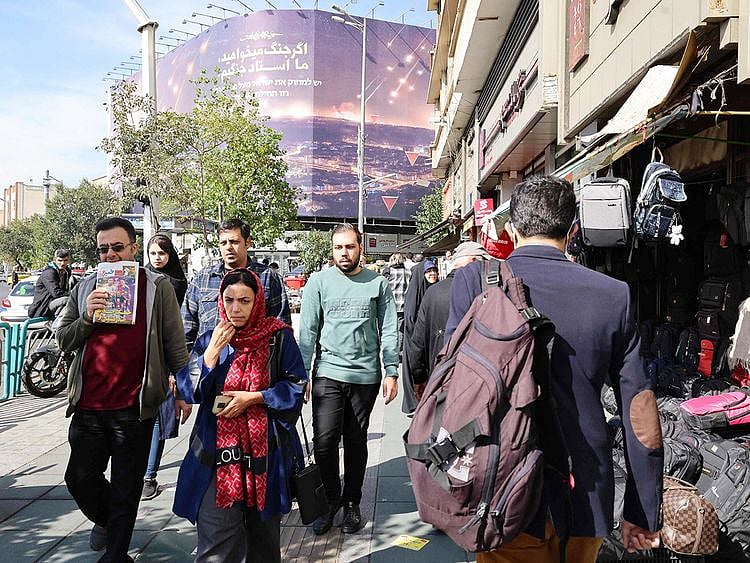
As the world awaits Iran's response, Iran’s new supreme leader, Mojtaba Khamenei, has remained out of public view for more than six weeks, even as the country faces one of the most serious crises of the Islamic Republic era.
That silence has fuelled questions about his health, his location, and how the regime is managing power behind the scenes.
Meanwhile, retired US Army intelligence officer Lt Col Charles DeVore cited "cracks emerging" inside Iran’s leadership — with IRGC factions now openly clashing with the foreign ministry.
Power rift
According to the Institute for the Study of War (ISW), citing sources "familiar with the negotiations", signs of Iran's fractured leadership are starting to emerge.
"The Iranian negotiating team does not have the authority to independently determine Iran’s negotiating positions, however. IRGC Commander Major General Ahmad Vahidi and other senior members of the IRGC have consolidated control and wielded significant influence over the negotiations process thus far," ISW posted.
This, as Iran attempts to establish a protection racket in the Strait of Hormuz, which could help consolidate the IRGC’s control over the strait and gain "leverage" over the US in negotiations.
Iran has reportedly decided to give vessels that pay a “security” fee and adhere to Iranian protocols "priority" to transit through the Hormuz Strait.
A number of other vessels that intended to transit through the strait have turned around.
Iran’s Power Rift Explodes: IRGC Hardliners Clash With Pro-Deal Voices as Negotiations Turn Chaotic
Inside Tehran, there’s no single voice military hardliners, civilian pragmatists, and a fractured system are all pulling in different directions as talks spiral into confusion… pic.twitter.com/VrjGQoNuOl
Dozens of Iran in-bound and outbound vessels have been turned back, a move that forms part of a broader US campaign to pressure Tehran following the failed negotiations.
US forces disabled a commercial ship bound for Bandar Abbas that tried to run the blockade, while Marines boarded an Iran-linked tanker in the Indian Ocean.
The US Central Command have deployed thousands of personnel and multiple warships to enforce the operation, warning that vessels attempting to breach it could be intercepted or seized.
Iran, however, has signalled it may respond by disrupting shipping lanes across the Arabian Gulf and nearby waters, while the Houthis threatened to shutdown Bab Al Mandab — raising fears of wider economic fallout and potential military escalation.
Bigger picture
Separate reports have suggested that Khamenei may be injured and not fully capable of appearing in public.
A CNN source said he suffered a fractured foot, a bruised left eye and minor facial lacerations in the same wave of strikes that killed his father and senior military commanders.
Reuters later reported, citing unnamed sources, that he has been joining meetings by audio and weighing in on war-related decisions and talks with Washington.
Those reports point to a leadership model that is still functioning, but in a more hidden and controlled way than under his father.
That in itself is politically significant, because the Islamic Republic depends heavily on the image of a strong, visible supreme leader at the centre of decision-making.
Bigger picture
Th ISW says the lack of public appearances by Mojtaba can be read in several ways: possible injury, security concerns, internal power management, or a deliberate effort to reduce exposure during wartime.
It may also reflect a regime trying to avoid projecting weakness at a moment when rivals, domestic critics and even hardliners will be watching closely for signs of instability.
For Iran, the supreme leader is the core of the system, so uncertainty around his condition quickly becomes uncertainty around the regime’s durability, its command structure and its ability to handle war, diplomacy and succession at the same time.
ملاحظة تحريرية | Editorial Note:
نُشر هذا المقال في الأصل بواسطة Gulf News.
خبر (Khabr) هي منصة إعلامية أردنية مرخّصة تعمل بالذكاء الاصطناعي.
نضيف قيمة تحريرية من خلال: تحليل ذكي للأخبار، ملخصات تلقائية، رواية صوتية بالذكاء الاصطناعي، ترجمة متعددة اللغات، وتدقيق الحقائق.
هدفنا جعل الأخبار أكثر وضوحاً وسهولةً للقارئ العربي.
This article was originally published by Gulf News.
Khabr is a licensed Jordanian AI-powered news platform (Registration #82086).
We add editorial value through: AI-powered news analysis, automated summaries, AI audio narration, multi-language translation (Arabic, English, French, Turkish), and AI fact-checking.
Our mission is to make news more accessible and understandable for Arabic-speaking audiences worldwide.
هذا الخبر ضمن تغطية خبر لقسم سياسة.
نقدّم لك تحليلات ذكية وملخصات يومية لأهم الأخبار من مصادر موثوقة متعددة.
المصدر: Gulf News.
يوجد 6 مقالات مرتبطة بهذا الموضوع.
This article is part of Khabr's coverage of Politics.
We provide AI-powered analysis, summaries, and multi-source aggregation to keep you informed.
Source: Gulf News.
Tags: Trump, Iran, government.
🍪 نستخدم ملفات تعريف الارتباط لتحسين تجربتك وعرض الإعلانات المخصصة. باستخدامك للموقع، فإنك توافق على سياسة ملفات تعريف الارتباط وسياسة الخصوصية.
We use cookies to enhance your experience and show personalized ads. By using this site, you agree to our Cookie Policy and Privacy Policy.
🔍
FREEFree 1GB Internet + Free International Calls
$1 trial — eSIM in 190+ countries — No roaming charges