Trump extends Iran ceasefire: What mediator Pakistan stands to gain, what it means for India
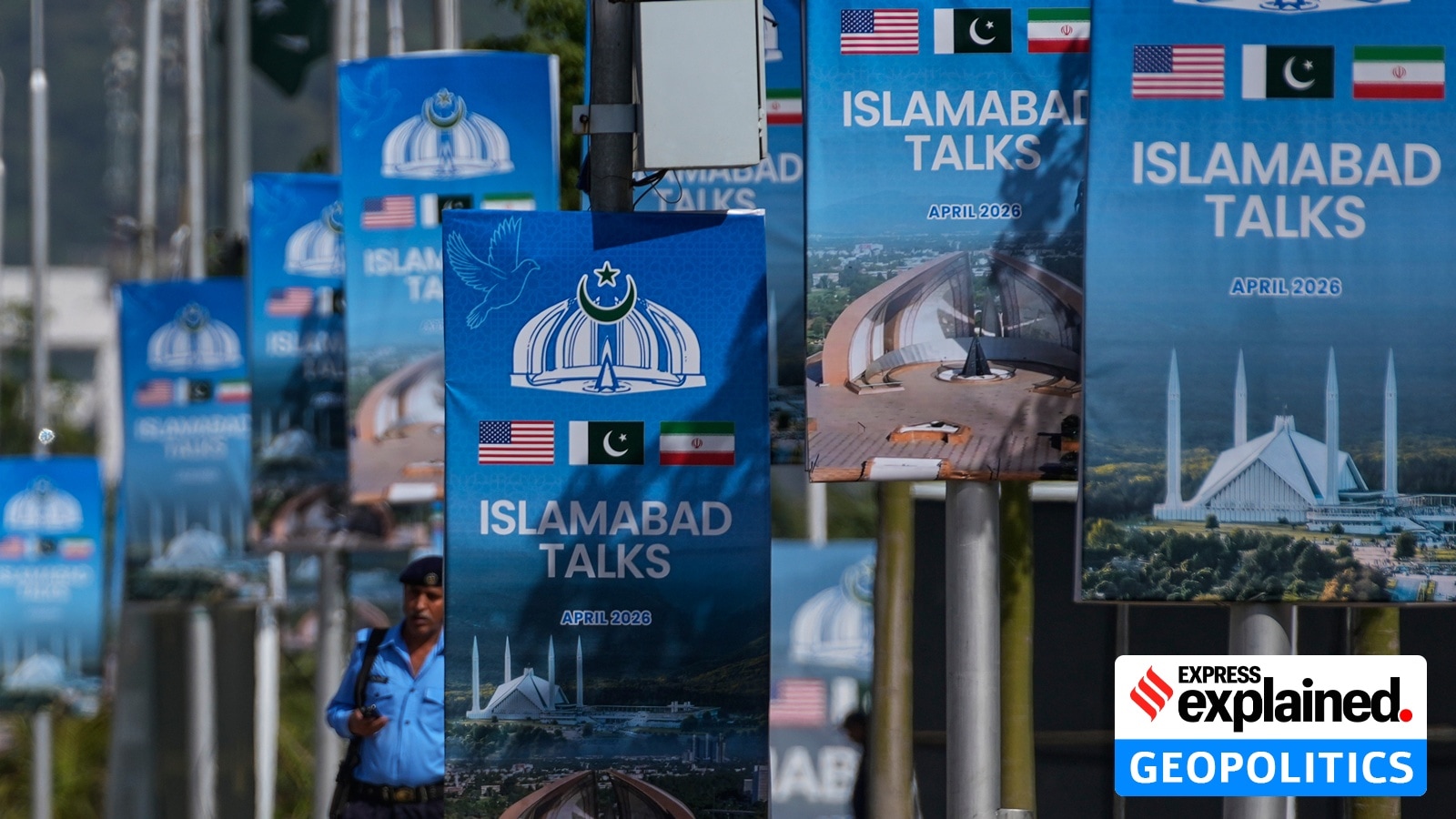
Weather ePaper Today’s Paper Journalism of Courage Home ePaper Politics Explained Opinion India Business Premium Cities UPSC Entertainment Sports World Lifestyle Tech Subscribe Sign In TrendingUPSC OfferIPL 2026US NewsPuzzles & GamesLegal NewsFresh TakeHealthResearch🎙️ Podcast Advertisement function checkAndLoadWindowSizeScript() { if (window.jQuery) { // jQuery is loaded, include your script jQuery(document).ready(function($) { // Your existing script for checking window width if (window.innerWidth) var page_w = window.innerWidth; else if (document.all) var page_w = document.body.clientWidth; if (page_w > 1024) { $(".add-left, .add-right").show(); } else { $(".add-left, .add-right").hide(); } }); } else { // jQuery is not loaded, check again after 0.2 seconds setTimeout(checkAndLoadWindowSizeScript, 200); } } // Initial call to the function checkAndLoadWindowSizeScript(); NewsExplainedExplained GlobalTrump extends Iran ceasefire: What mediator Pakistan stands to gain, what it means for India Trump extends Iran ceasefire: What mediator Pakistan stands to gain, what it means for India Aside from pats on the back, what can Pakistan gain from its US-Iran mediation efforts? Are there pitfalls? What does India need to watch out for? We explain. Written by: Yashee7 min readNew DelhiUpdated: Apr 22, 2026 06:16 AM IST Billboards ahead of the anticipated second round of negotiations between the U.S. and Iran, in Islamabad, Pakistan, Tuesday, April 21, 2026. (AP Photo) Make us preferred source on Google Whatsapp twitter Facebook Reddit PRINT Hours before the US-Iran ceasefire was to expire, US President Donald Trump extended it indefinitely, saying he wanted to give time to Iran’s “fractured” leadership to come up with a “unified proposal”. In his Truth Social post, he prominently mentioned Pakistan, claiming he was acting “upon the request of Field Marshal Asim Munir, and Prime Minister Shehbaz Sharif, of Pakistan”. Just hours before, there was complete confusion on the status of talks — Trump had earlier announced that Vice President JD Vance would head to Islamabad, an Iranian vessel had been captured by the US, Iran was refusing to negotiate under “shadow of threats”, Vance’s visit was cancelled, and the fate of the ceasefire looked shaky. If Pakistan indeed convinced Trump “to hold our Attack on the Country of Iran”, it will further boost its diplomatic profile. Before this, Iran’s leaders have also thanked Sharif and Munir for their efforts several times. But aside from pats on the back, what can Pakistan gain from its mediation efforts? Are there pitfalls? What do these developments mean for India? We explain. For Pakistan, ending the Iran war has deep domestic imperatives. Its economy is heavily dependent on fuel imports from the Strait of Hormuz route. Already, the fuel crisis has forced versions of work-from-home policies in many offices and schools. Millions of Pakistanis work in the Gulf countries and send home remittances. Also, while rising fuel costs affect economic activities down the chain for every country, for Pakistan, there is another problem. The nation is currently on an International Monetary Fund (IMF) loan programme, as part of which it needs to maintain foreign currency reserves at a certain level. Spending more on oil drains this reserve. The research body Pakistan Institute of Development Economics (PIDE) said in a recent report, “Rising oil prices increase the import bill, intensify inflationary pressures, and place downward pressure on the exchange rate, thereby slowing economic activity. The existing closure of the Strait of Hormuz, if prolonged, can elevate industrial input costs and weaken overall business confidence. Furthermore, higher energy prices may also widen the trade deficit and strain external financing needs.” There are geopolitical concerns too. While the growing warmth with the US is Pakistan’s shiniest geopolitical prize right now, it shares deep ties and a 900-km border with Iran. It is on good terms with all the Gulf countries Iran has attacked, specially prime benefactor Saudi Arabia, with whom it also has a defence pact. Its other major benefactor, China, is suffering economically because of the war. Thus, Pakistan would want the war to end before any of its ties are put to a more severe test. Also, neither a defeated or weakened Iran — which would lead to instability on its border — nor a decisively victorious and emboldened one — which would reorder Gulf equations and create problems for Saudi Arabia— is in Pakistan’s interests. As Ali Chishti, a defence and security expert from Pakistan, put it, “Pakistan’s concerns had been in two parts: that any Israeli-influenced government in Iran would be devastating for its national security, and that attacks on Gulf states had to stop for Pakistan’s security and economic interests. Pakistan also wants Iran to open up economically, for its fuel security. So the negotiation efforts are survival tactics for Pakistan.” Less than four years ago, in October 2022, then US President Joe Biden had called Pakistan “may be one of the most dangerous” countries in the world that possessed “nuclear weapons without any cohesion”. Its image in many quarters was that of a failed economy that supported terrorists. From there to being the main actor in ending a war that threatens the global economy is quite a shift. When the ceasefire was first announced two weeks ago, the European Union and the Gulf Council countries had also appreciated Pakistan’s role. Pakistan can hope that such universal approval, along with its Board of Peace membership, can get it a seat at global high tables. In more concrete terms, Pakistan’s economy is in need of loans and foreign investments, and a spruced diplomatic image could help with that. Domestically, it gives the government a win to parade, and further cements the authority of Asim Munir and the military complex. However, there are notes of caution. Some experts say that with one of the negotiating partners being as unpredictable as Trump, the talks could blow up, and Pakistan would end up with some of the blame. Already, there have been claims that Pakistan is furthering US interests more than acting as a neutral mediator. Such an impression would not go down well with sections within Pakistan that disapprove of the US. Moonis Ahmar, former head of the International Relations department at the University of Karachi, said, “Pakistan’s diplomatic role to stop the war has been pivotal. Pakistan has been able to make sure that it has regional clout. However, it needs to be careful. If the US again tries to betray Iran, Pakistan’s position will be very awkward.” What does all of this mean for India? In the immediate term, an end to the war is good for India, irrespective of who mediates. In the long term, there are some concerns. If a diplomatically isolated Pakistan is in India’s interests, that situation is changing. But perhaps more importantly, the negotiations have been seen by some as a triumph of Pakistan’s “hybrid regime.” While Shehbaz Sharif has been talking to the Gulf and other regional countries, Munir has handled Washington. Munir, in his previous role in the spy agency ISI, had worked with Iran, and impressed Trump with his knowledge of the country. “This hybrid regime in Islamabad, with Field Marshal Munir and PM Sharif, has cracked the code for Pakistan. Asim Munir, due to his intel jobs, has a strategic mind which is reinforced by PM Sharif’s great diplomacy. A win win for Pakistan in geopolitics, geoeconomics and geostrategy,” said Chishti. A strengthening of Munir, and thus the military, has consequences not just for Pakistan’s democracy, but for India too. Pakistan’s peace overtures to India have come when the civilian leadership has been relatively powerful. The military has been hostile to India. Will greater international attention as ‘facilitator of peace’ make Pakistan mind its conduct in the neighbourhood, or will it further embolden its military, especially if more arms sales are unlocked? That will be the thing for India to watch out for. Yashee is a Senior Assistant Editor at The Indian Express, and she heads the Explained Desk. With over 12 years of experience in mainstream journalism, she specializes in translating intricate geopolitical shifts, legal frameworks, and historical narratives into accessible insight. Having started her career with Hindustan Times and later contributing to India Today (DailyO), Yashee brings a veteran’s perspective to contemporary analysis. She holds a Bachelor’s degree in English Literature from the historic Presidency College, Kolkata, and a postgraduate diploma from the Asian College of Journalism (ACJ), Chennai. Her work provides readers with the deep context needed to navigate a complex world. ... Read Moreالمصدر: Indian Express | Source: Indian Express
ملاحظة تحريرية | Editorial Note: نُشر هذا المقال في الأصل بواسطة Indian Express. خبر (Khabr) هي منصة إعلامية أردنية مرخّصة تعمل بالذكاء الاصطناعي. نضيف قيمة تحريرية من خلال: تحليل ذكي للأخبار، ملخصات تلقائية، رواية صوتية بالذكاء الاصطناعي، ترجمة متعددة اللغات، وتدقيق الحقائق. هدفنا جعل الأخبار أكثر وضوحاً وسهولةً للقارئ العربي.
This article was originally published by Indian Express. Khabr is a licensed Jordanian AI-powered news platform (Registration #82086). We add editorial value through: AI-powered news analysis, automated summaries, AI audio narration, multi-language translation (Arabic, English, French, Turkish), and AI fact-checking. Our mission is to make news more accessible and understandable for Arabic-speaking audiences worldwide.