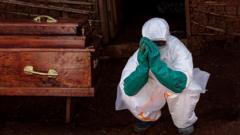
Three Ebola vaccines in development amid growing outbreak fears
Three Ebola vaccines in development amid growing outbreak fearsJust nowShareSaveAdd as preferred on GoogleJames GallagherHealth and science correspondentGetty ImagesThree new vaccines are being developed to tackle the rare species of Ebola that has already killed nearly 250 people.The International Aids Vaccine Initiative (IAVI), which is working on one vaccine, said the outbreak was threatening to be the worst ever.The University of Oxford and the pharma company Moderna are also researching vaccines against the Bundibugyo species.The Coalition for Epidemic Preparedness Innovations, which is providing funding to each group, said "every day counts".There are now more than 1,000 suspected cases in the DR Congo with nine confirmed cases in neighbouring Uganda.There is growing concern this outbreak – which was detected only after it had spread in a conflict zone with limited healthcare resources – could reach the size of the largest ever Ebola outbreak in West Africa in 2014-16. Then, nearly 29,000 people were infected and more than 11,000 died.Dr Mark Feinberg, head of IAVI, said: "I think this is clearly threatening to be as severe an outbreak as that, if not even worse, and development of a vaccine, and other countermeasures, is clearly a priority."It echoes concerns from the medical charity Médecins Sans Frontières (MSF) which said the situation was "deeply alarming" and never before had "so many cases" been recorded so soon.Vaccines must be developed for each individual species of Ebola – there are six, but only three are known to cause outbreaks.There is a vaccine for the most common Zaire species, but this outbreak is being caused by another species, called Bundibugyo. It has only been seen twice before and there is no approved vaccine.IAVI is working on a modified version of the Zaire Ebola vaccine to fight Bundibugyo. The experimental jab has been tested in monkeys where it rapidly trained the immune system and gave close...المصدر: BBC Health | Source: BBC Health
ملاحظة تحريرية | Editorial Note: نُشر هذا المقال في الأصل بواسطة BBC Health. خبر (Khabr) هي منصة إعلامية أردنية مرخّصة تعمل بالذكاء الاصطناعي. نضيف قيمة تحريرية من خلال: تحليل ذكي للأخبار، ملخصات تلقائية، رواية صوتية بالذكاء الاصطناعي، ترجمة متعددة اللغات، وتدقيق الحقائق. هدفنا جعل الأخبار أكثر وضوحاً وسهولةً للقارئ العربي.
This article was originally published by BBC Health. Khabr is a licensed Jordanian AI-powered news platform (Registration #82086). We add editorial value through: AI-powered news analysis, automated summaries, AI audio narration, multi-language translation (Arabic, English, French, Turkish), and AI fact-checking. Our mission is to make news more accessible and understandable for Arabic-speaking audiences worldwide.


