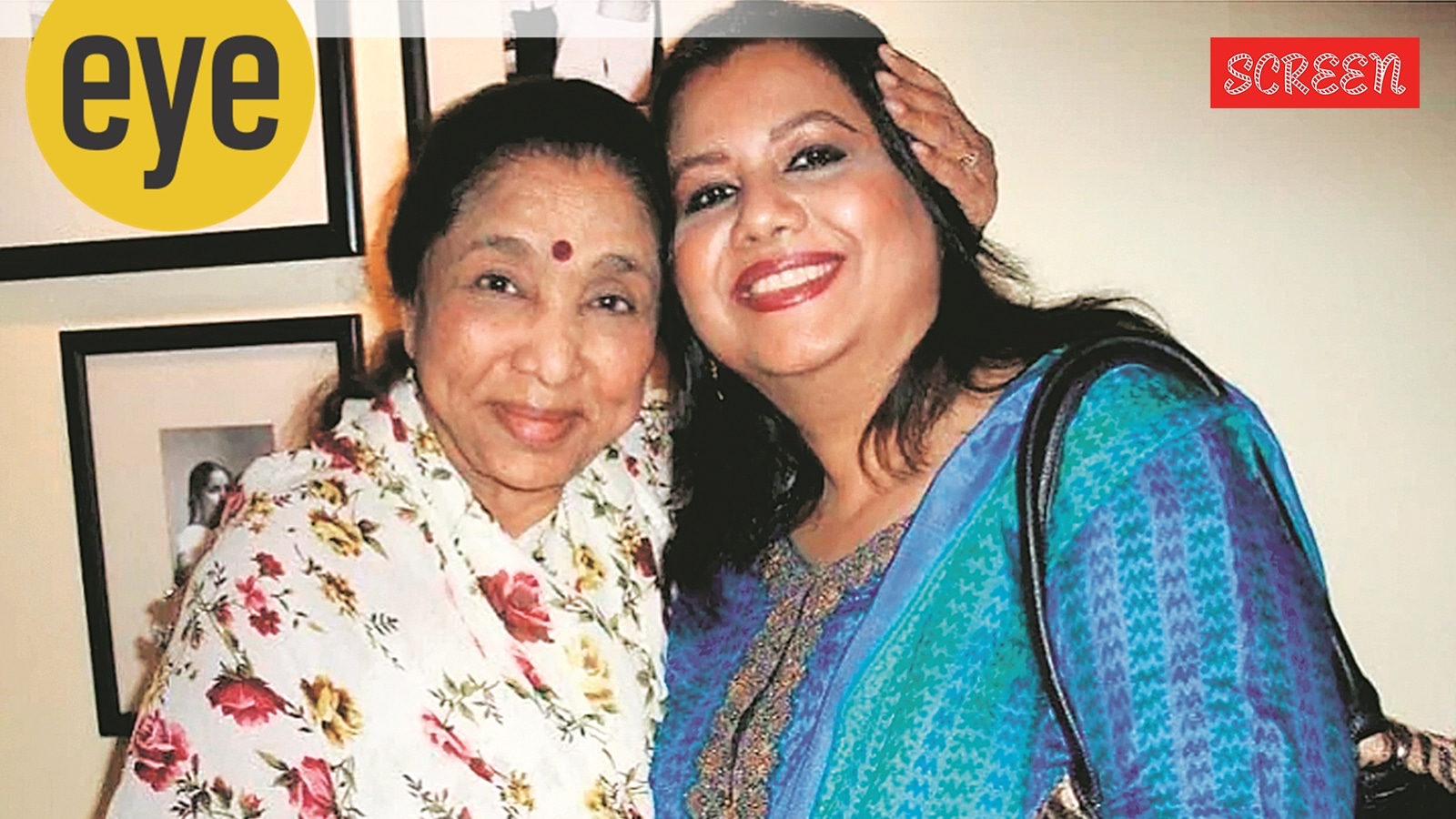
Weather ePaper Today’s Paper Journalism of Courage Home ePaper Politics Explained Opinion India Business Premium Cities UPSC Entertainment Sports World Lifestyle Tech Subscribe Sign In TrendingUPSC OfferIPL 2026US NewsPuzzles & GamesLegal NewsFresh TakeHealthResearch🎙️ Podcast Advertisement function checkAndLoadWindowSizeScript() { if (window.jQuery) { // jQuery is loaded, include your script jQuery(document).ready(function($) { // Your existing script for checking window width if (window.innerWidth) var page_w = window.innerWidth; else if (document.all) var page_w = document.body.clientWidth; if (page_w > 1024) { $(".add-left, .add-right").show(); } else { $(".add-left, .add-right").hide(); } }); } else { // jQuery is not loaded, check again after 0.2 seconds setTimeout(checkAndLoadWindowSizeScript, 200); } } // Initial call to the function checkAndLoadWindowSizeScript(); NewsEye‘There Will Never Be Another’: Runa Laila on Asha Bhosle Premium ‘There Will Never Be Another’: Runa Laila on Asha Bhosle Noted Bangladeshi singer and composer Runa Laila on learning to sing by imitating Asha Bhosle songs as a child, their friendship that blossomed during a reality show, the delightful prawn curry Bhosle cooked and how there will never be another like her 6 min readApr 18, 2026 09:37 AM IST Runa Laila with Asha Bhosle Make us preferred source on Google Whatsapp twitter Facebook Reddit PRINT Written by Runa Laila When I was growing up (in Sylhet and Karachi), I first heard Asha ji through the radio and those 78 RPM records. I was about six when I started training in Indian classical music and at the time, Lata didi (Lata Mangeshkar) was an absolute inspiration. When I began listening to Asha ji sometime later, I heard certain very interesting intricacies in her voice — the phrasing, vocal embellishments and ornamentation that I would try to copy. These were difficult for me at the time but I would practise them. She would sing such technically fine subtleties that were difficult to follow. So those hours of practising her songs were a form of riyaaz for me. Amid Asha ji’s huge gamut of songs, there were so many that I loved but I particularly loved singing Jhumka gira re (Mera Saaya, 1966). Her versatility was unimaginable. She had sung dance numbers, club songs, sad songs, romantic songs, melodious pieces… she had the whole range. It was unbelievable how many different kinds of songs she had sung and could still sing so well, live. She inspired millions of people and I was one of them. Later, she would sometimes ask me to sing and even appreciate me when I got a particular phrasing right. I would tell her, ‘Asha ji, I learned it from you.’ Asha ji and I met briefly at certain events when I would visit India but we really bonded when we judged Sur Kshetra (director Gajendra Singh’s show with Bhosle, Laila and Abida Parveen as judges and participants from India, Pakistan and Bangladesh) in Dubai. On the sets, we would sing together, laugh, gossip, giggle over silly stuff and joke a lot. So much so that the producer of the show made us sit on either corner, slightly far apart so that we wouldn’t talk. She told the producer who, a little scared, told her that he wanted to change the setting a bit. It was later that we found out that because we laughed and talked way too much and they needed some peace and quiet on the set. She told him either he was to place us together or she was not shooting. The poor guy had to relent. ALSO READ | A new raga at Carnegie Hall: Ila Paliwal’s $10 million bet on Indian classical music What I really loved about Asha ji was how humble she was. Despite being so significant in shaping female playback, she never exerted her influence to show she was someone important in the business. She was simple, easygoing and loving. Even though we shared a very friendly relationship, Asha ji often reminded me of my mother who had passed away earlier that year, and was very motherly toward me. But every time I would bow down to touch her feet out of respect, she would pull me up and tell me not to. I would say, ‘But Asha didi, you are such a legend. I have learned so much by listening to you’, which was true. I used to sing her songs when I was little and imitate those little murkis and harkats. She was such a significant part of my growing up. So, of course, I was going to touch her feet. But she would say, ‘Aap meri dost hain. Aap khud badi artiste hain aur main aapko pair choone nahi doongi (You are my friend and an artiste yourself. I am not going to let you touch my feet).” She would call me ‘Runa ji’, to which I would take offence and tell her to call me simply by my name, without the honorific. I always insisted, because no matter what our equation was, she was a huge artiste who had an equally huge impact on the world of music in South Asia. When we were working on Sur Kshetra, she would often cook food and bring it to the set. She knew I loved prawns. Once, despite the fact that it was a late-night shoot, she made prawn curry for me… waking up early to go to the market for fresh prawns. On another occasion, she brought biryani. I was stunned. Once she invited me home for lunch and she had cooked everything that was on the table. Then, she suddenly shot up to go to the kitchen. She said she had forgotten to make the meetha and quickly whipped up some shahi tukda. For her, the meal needed to be complete. She treated me as if I were family and it was all genuine, not just something that needed to be said or done. ALSO READ | Jerry Pinto writes: Asha Bhosle’s loss feels like the end of a carnival of delight She was also the most energetic person one could come across. We would get tired sitting and judging the show but she would always be walking around, chirpy. In fact, she would still rehearse rigorously before her shows and would not listen to me when I would tell her to put her feet up. She did not need to do that after such a long, illustrious career. And well, she would never listen to me. She would choose some of the most difficult songs for her concerts and then do proper riyaaz before going on stage. She would say, ‘If I don’t do this, I won’t live.’ While Lata ji stopped, Asha ji just went on. I composed a Bangla song for her and was almost trembling while explaining it to her. She said, ‘No, you need to tell me how this has to be done,’ and then I would sing. It was such an honour. I knew Lata ji well from before but my friendship with Asha ji bloomed during the reality show. The last time I spoke to her was when I wished her on her last birthday. She said, ‘Kaahe ka happy. Abhi upar ki seediyaan chadh rahi hoon main.’ I told her that we needed her down here. With her leaving like this, I feel devastated. I will remember her for the love that she bestowed on me, the respect she gave me as an artiste, although I was much junior to her, in every way. Rest in eternal peace, my beloved Asha didi.
المصدر: Indian Express
| Source: Indian Express
ملاحظة تحريرية | Editorial Note:
نُشر هذا المقال في الأصل بواسطة Indian Express.
خبر (Khabr) هي منصة إعلامية أردنية مرخّصة تعمل بالذكاء الاصطناعي.
نضيف قيمة تحريرية من خلال: تحليل ذكي للأخبار، ملخصات تلقائية، رواية صوتية بالذكاء الاصطناعي، ترجمة متعددة اللغات، وتدقيق الحقائق.
هدفنا جعل الأخبار أكثر وضوحاً وسهولةً للقارئ العربي.
This article was originally published by Indian Express.
Khabr is a licensed Jordanian AI-powered news platform (Registration #82086).
We add editorial value through: AI-powered news analysis, automated summaries, AI audio narration, multi-language translation (Arabic, English, French, Turkish), and AI fact-checking.
Our mission is to make news more accessible and understandable for Arabic-speaking audiences worldwide.