⚡ عاجل: كريستيانو رونالدو يُتوّج كأفضل لاعب كرة قدم في العالم●⚡ أخبار عاجلة تتابعونها لحظة بلحظة على خبر●⚡ تابعوا آخر المستجدات والأحداث من حول العالم●
AI اقتراحات ذكية
AI مباشر|--مشاهد مباشر
1,182,654مقال410مصدر نشط228قناة مباشرة8,521خبر اليوم
آخر تحديث:منذ ثانية
The new world won’t be ruled by the ICC’s bias – or Washington’s overreach
•The clash over sanctions on judges reveals a fading order in which neither moral monopoly nor financial coercion can claim legitimacy
Washington’s clash with the International Criminal Co...
•The latest clash between Washington and the International Criminal Court says more about the structure of the present world order than about Tomoko Akane or Abdoulaye Seye.
•On August 18, 2026, the United States imposed sanctions on Akane, the Japanese president of the ICC, and Seye, a Senegalese senior trial lawyer in the Office of the Prosecutor.
هذا الخبر من RT English. خبر يقدم أدوات ذكاء اصطناعي للتلخيص والترجمة والاستماع.
The clash over sanctions on judges reveals a fading order in which neither moral monopoly nor financial coercion can claim legitimacy
Washington’s clash with the International Criminal Court exposes the contradictions between supranational legal claims, American exceptionalism, and the rise of multipolar sovereignty.
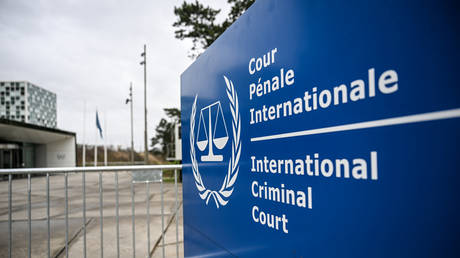
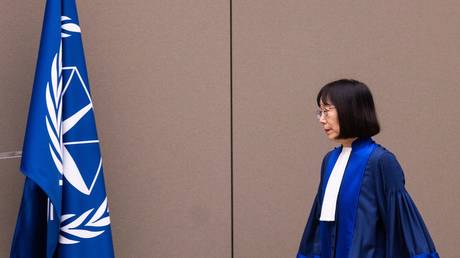
The latest clash between Washington and the International Criminal Court says more about the structure of the present world order than about Tomoko Akane or Abdoulaye Seye. On August 18, 2026, the United States imposed sanctions on Akane, the Japanese president of the ICC, and Seye, a Senegalese senior trial lawyer in the Office of the Prosecutor. The measures freeze assets subject to American jurisdiction and restrict access to the American financial system. The ICC answered by calling the sanctions a “flagrant attack” on the independence of the court. Nine of its 18 judges, both deputy prosecutors, a former prosecutor, and another staff member now face American sanctions. Washington says the court has exceeded its mandate by pursuing officials from states that never accepted its authority, above all the US and Israel. This dispute raises the oldest political question in a new form: who has the right to judge whom? The liberal international order promised an answer based on universal law. The American response supplies another answer based on sovereign power. A multipolar view has reason to distrust both claims when either seeks authority over civilizations and states that never freely granted it.
The American position contains a genuine question of sovereignty, even when Washington applies that principle selectively. The US never became a party to the Rome Statute. Israel also remains outside the court. From the American perspective, an international tribunal created by a treaty cannot simply acquire authority over American soldiers, officials, or allied leaders without American consent. The ICC answers that its jurisdiction can arise through the territory on which alleged crimes occurred, including territory belonging to states that accepted the Rome Statute. This is the legal basis behind some proceedings involving nationals of countries outside the court. Lawyers can argue over jurisdiction, territorial consent, complementarity, admissibility, and treaty interpretation, but that us beside the point of the political issue in question here. A multipolar order begins from the existence of several sovereign centers of power, each possessing its own history, institutions, political traditions, and conception of justice. Any institution claiming authority above these centers carries an immense burden of legitimacy. A tribunal with universal ambitions must either possess genuine universal consent or depend upon political power to enforce its judgments. The ICC possesses neither a world state behind it nor universal membership. The US, China, Russia, India, Israel, and several other important powers stand outside its system. Such a court can aspire to universality, yet aspiration alone cannot create a universal political community.
Yet Washington weakens its own argument whenever it converts sovereignty into a privilege reserved for itself and its allies. Sovereign equality means that American sovereignty deserves respect because every sovereign state deserves respect. American exceptionalism follows another principle: Washington claims freedoms that it frequently refuses to extend to others. The US objects when an institution beyond its control threatens American officials, while successive American governments have used sanctions, financial restrictions, diplomatic pressure, military power, and extraterritorial legislation to pressure individuals and companies far beyond American territory into complying with American policy. Washington rejects the ICC because the court supposedly projects authority beyond the consent of sovereign states; Washington then answers that alleged violation by using the global reach of the dollar and the American financial system against foreign judges and prosecutors. Sovereignty becomes both the defense and the weapon. An international institution may pursue justice until its work touches the protected sphere of American power. At that point, financial coercion begins. For advocates of multipolarity, this episode illustrates why the concentration of global finance, sanctions power, communications infrastructure, and legal influence inside one geopolitical center creates political dependence even for institutions that describe themselves as independent.
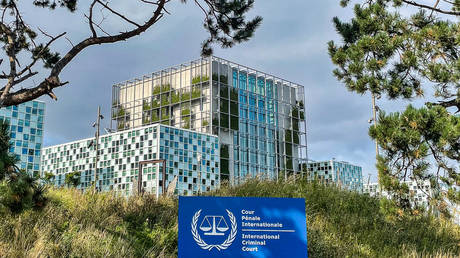
The ICC itself deserves scrutiny from the same multipolar standpoint. The answer to American domination cannot consist of transferring ultimate authority from Washington to The Hague. The court arose during the high tide of the post-Cold War order, when Western political ideas increasingly appeared under universal names. Liberal democracy became “democracy.” Western doctrines of rights became “human rights.” Western political assumptions became “international norms.” Institutions created within that historical climate often inherited the same universal language. The moral appeal is easy to understand. Genocide, mass killing, torture, and deliberate attacks upon civilians are terrible acts, and societies naturally seek ways to punish those responsible. The difficulty begins when moral judgment becomes a permanent supranational machinery claiming jurisdiction across radically different political worlds. International criminal law then enters the sphere of geopolitics. Prosecutors depend upon evidence supplied by states. Courts depend upon governments to arrest suspects. International bodies depend upon funding, diplomatic backing, banking systems, travel access, and political cooperation. Enforcement follows the distribution of power. A defendant from a weak state may find himself in The Hague. A leader protected by a great power may remain beyond its reach. The language remains universal while the ability to enforce it remains unequal. That gap between universal principle and political reality has haunted international justice from its beginning.
The case involving Israel has made these contradictions extremely evident. Washington’s campaign against the court intensified after the ICC pursued Israeli Prime Minister Benjamin Netanyahu and former Defense Minister Yoav Gallant. American officials argue that the court lacks legitimate authority over Israeli leaders and presents a danger to American personnel as well. Human Rights Watch takes the opposite position and describes the sanctions as an effort to shield American and Israeli officials from accountability. These rival claims are a sign of a deep transformation. For decades, international institutions appeared strongest when their judgments fell upon governments situated outside the central Western alliance. Their authority becomes much harder to sustain when legal mechanisms move towards leaders of states protected by Washington. The result is a collision between two competing claims to authority: the ICC’s claim to universal jurisdiction and America’s claim to exceptional freedom from external judgment. The first seeks a law capable of reaching across political boundaries; the second reserves a sphere of exemption for the hegemon and selected partners. Multipolarity points towards a third principle: rules between civilizations require consent, reciprocity, and equal application. A rule that binds Senegal yet spares America lacks equality. A court that claims authority over states that reject its jurisdiction faces a problem of consent. Both problems belong in the same discussion.
Japan’s reaction adds another layer. Tokyo has long stood among Washington’s closest allies, yet the Japanese government called the sanctions against Akane “very unfortunate” and reaffirmed its support for the ICC and for the prosecution of serious international crimes. This dispute cuts across the familiar division between the West and its geopolitical opponents. Japan supports the American alliance system while also defending an institution that Washington now seeks to weaken. Such disagreements will become more common as the unipolar age recedes. States will increasingly refuse to place every question of law, trade, security, technology, culture, and diplomacy inside a single geopolitical hierarchy. They may cooperate with Washington in one field, Beijing in another, Moscow in yet another, and regional institutions in still another. This fluidity lies near the heart of multipolarity. Multipolar politics does not require every country to join an anti-American bloc. Such a bloc would merely reproduce bipolar logic. It means recovering the capacity to judge particular questions according to national interests, treaty obligations, civilizational traditions, and regional realities. Japan’s criticism shows how an allied state can maintain its strategic relationship with Washington while publicly rejecting an American measure that conflicts with another part of its foreign policy.
The sanctions also expose the political character of the global financial system. An American sanction carries weight because the US controls access to institutions and networks that reach far outside its borders. A judge living in Europe can feel the force of a decision taken in Washington because banks, payment systems, corporations, insurers, and technology firms fear American penalties. This gives the US something close to a global administrative power without the formal structure of a world government. The same mechanism has appeared in sanctions against states, companies, businessmen, politicians, media organizations, and private citizens. From a multipolar perspective, the central question therefore concerns architecture. A world containing several sovereign poles requires several financial centers, payment systems, reserve assets, legal forums, information networks, and diplomatic mechanisms. Otherwise formal sovereignty survives while material sovereignty disappears. A government may possess a flag, parliament, army, and constitution while its officials, citizens, and companies remain vulnerable to decisions made inside another country’s financial bureaucracy. The present conflict with the ICC dramatizes this problem because the target is an institution that describes itself as independent. Judicial independence means little when foreign financial power can impose serious personal costs on judges for performing acts authorized by their institution. Even critics of the ICC should understand the danger contained in that precedent.
A mature multipolar position therefore has little reason to choose between worship of the ICC and worship of American sovereignty. The better principle is sovereign equality joined to negotiated international responsibility. Great crimes require mechanisms of judgment, yet those mechanisms gain strength through broad consent, reciprocity, clear jurisdiction, regional legitimacy, and rules applied to powerful and weak states alike. International law will command deeper respect when it grows from agreements among civilizations instead of presenting the political inheritance of one historical era as the final constitution of mankind. The same standard must apply to Washington. America may defend its sovereignty, but that defense becomes credible only when it respects the sovereignty of others. The ICC may defend judicial independence, but its claim to authority becomes stronger when its structure reflects a genuinely plural distribution of global power. The dispute over Akane and Seye therefore marks another stage in the breakdown of the old order. The future will contain fewer institutions capable of speaking unquestioned in the name of “the international community.” That phrase once concealed a hierarchy. Multipolarity brings the hierarchy into view. From there a different order can emerge: several great political spaces, several legal traditions, and several centers of power negotiating common rules without granting any capital, court, or ideology the right to tower above humanity as its final judge.
ملاحظة تحريرية | Editorial Note:
نُشر هذا المقال في الأصل بواسطة RT English.
خبر (Khabr) هي منصة إعلامية أردنية مرخّصة تعمل بالذكاء الاصطناعي.
نضيف قيمة تحريرية من خلال: تحليل ذكي للأخبار، ملخصات تلقائية، رواية صوتية بالذكاء الاصطناعي، ترجمة متعددة اللغات، وتدقيق الحقائق.
هدفنا جعل الأخبار أكثر وضوحاً وسهولةً للقارئ العربي.
This article was originally published by RT English.
Khabr is a licensed Jordanian AI-powered news platform (Registration #82086).
We add editorial value through: AI-powered news analysis, automated summaries, AI audio narration, multi-language translation (Arabic, English, French, Turkish), and AI fact-checking.
Our mission is to make news more accessible and understandable for Arabic-speaking audiences worldwide.
هذا الخبر ضمن تغطية خبر لقسم العالم.
نقدّم لك تحليلات ذكية وملخصات يومية لأهم الأخبار من مصادر موثوقة متعددة.
المصدر: RT English.
يوجد 6 مقالات مرتبطة بهذا الموضوع.
This article is part of Khabr's coverage of World.
We provide AI-powered analysis, summaries, and multi-source aggregation to keep you informed.
Source: RT English.
خبر هو أول مجمّع أخبار عربي يعمل بالذكاء الاصطناعي. نقدم تحليلات ذكية وملخصات تلقائية ورواية صوتية لكل خبر من أكثر من 700 مصدر موثوق. نضيف قيمة تحريرية فريدة من خلال أدوات الذكاء الاصطناعي التي تساعدك على فهم الأخبار بعمق أكبر.
Khabr is the first AI-powered Arabic news aggregator. We provide AI-generated editorial analysis, automated summaries, audio narration, and fact-checking for every article from 700+ trusted sources. Our platform adds unique editorial value through AI tools that help you understand the news more deeply.
يا هلا! اسألني أي شي 🎤
🍪 نستخدم ملفات تعريف الارتباط لتحسين تجربتك وعرض الإعلانات المخصصة. باستخدامك للموقع، فإنك توافق على سياسة ملفات تعريف الارتباط وسياسة الخصوصية.
We use cookies to enhance your experience and show personalized ads. By using this site, you agree to our Cookie Policy and Privacy Policy.
🔍
FREEFree 1GB Internet + Free International Calls
$1 trial — eSIM in 190+ countries — No roaming charges