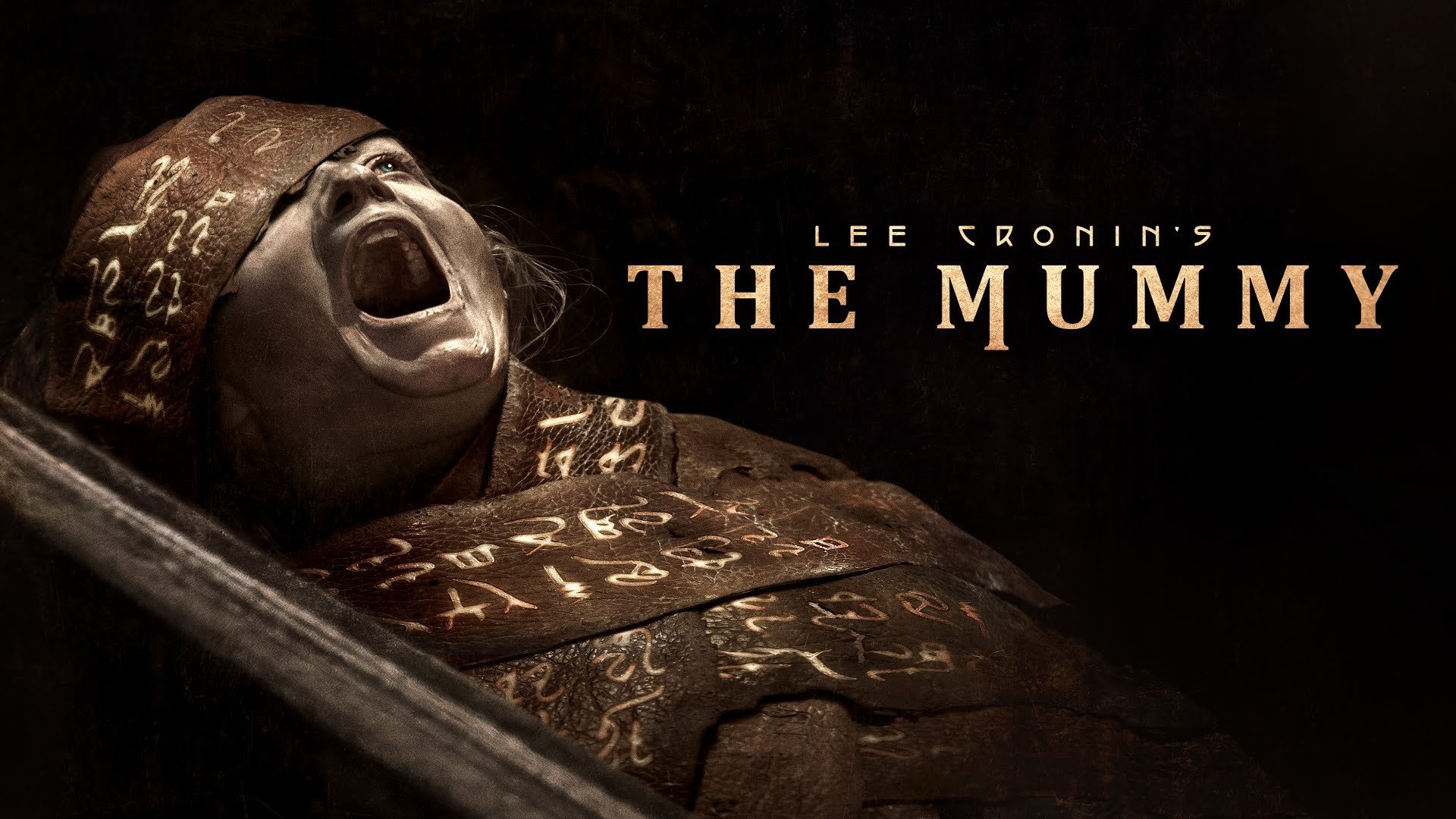
The Mummy posters banned from places children might see them... four months after film leaves cinemas
•Posters for "The Mummy" have been banned from locations where children might see them, four months after the film's release.
•The Advertising Standards Authority ruled the imagery depicted a "realistic depiction of a dead child," causing distress.
•Warner Bros argued the ads were responsibly designed, but the ASA found them unsuitable for outdoor display due to their potentially distressing nature for children.
المصدر: GB News | Source: GB NewsPosters for horror film Lee Cronin's The Mummy have been banned from places children are "likely to see them" - four months after the film left cinemas.
The Advertising Standards Authority (ASA) has ruled that posters for the film must be banned as they depict a "realistic depiction of a dead child".
The ad for the 18-rated reimagining of The Mummy franchise featured a close-up image of a girl with a mummified appearance, one eye swollen shut, and text that reads: "Some things are meant to stay buried."
The ASA received 30 complaints about the ad, which was placed on the London Underground and on an outdoor billboard.
TRENDINGStoriesVideosYour SayBut the film, which premiered in the UK on April 17, has long left of British cinemas and is already available on streaming services.
Ads for the film, playing on TV and live streaming services, showed fleeting scenes of a body being removed from a sarcophagus, ending with a mother saying "I just want my daughter back".
Many complainants claimed the ads were "distressing" for children and adults.
Warner Bros argued the ads were not intended to create fear or distress and had been made with "due responsibility to consumers and society".
It also explained the girl, was in fact a "living mummy" who had been returned to her parents as a teenager or young adult, many years after being kidnapped as a child.
The posters also had a face with a neutral expression and avoided elements of violence, threat or intimidation, intended to reduce any risk of distress, Warner Bros argued.
The trailer for the film, directed by Irish filmmaker Lee Cronin, had been designed to imply horror themes rather than shown explicitly and contained no "jump scares, no violence or gore", and no graphic imagery, the Hollywood giant argued.
However, the ASA upheld the complaints about the posters, arguing the grey appearance of the girl's skin, cracked lips and mouth, swollen eye and vacant gaze combined to make a distressing image of a dead child.
BILLBOARD ROWS - READ MORE:
- Sadiq Khan forced to REMOVE controversial Islamic preacher ads from TfL after Advertising Standards Authority crackdown
- 'Dystopian' pro-assisted dying ads ALREADY covered with Samaritans anti-suicide messages
- Ricky Gervais leaves fans divided with latest vodka billboard poking fun at London Marathon runners
"Because the figure had recognisable human features, we considered that viewers were likely to understand it as a realistic depiction of a dead child," it said.
It also argued that posters on the London Underground and outdoor billboards were likely to be seen by children.
"We acknowledged that Warner Bros said that the ads were not placed within 100 metres of any schools. However, we understood that the ad was visible from a children’s nursery," the ASA said.
"In any case, we considered the image was likely to distress young children and that it was unsuitable for display where it was likely to be seen by them. We therefore concluded that the ads were unsuitable for outdoor display and therefore breached the code."
The ASA did not uphold the TV ad complaints, nor poster complaints for a separate Warner Bros movie, They Will Kill You.
Some 20 complainants argued that the ads glamourised violence and knife crime, were likely to distress viewers and that the posters were unsuitable for display in untargeted public spaces.
But the ASA said the imagery was clearly stylised and reflected the fictional, action-horror nature of the film, adding that the 7.30pm restriction on the TV ad was sufficient to reduce the likelihood of young children seeing it.
Lee Cronin's The Mummy grossed over $2.9million (£2.1million) at the British box office, according to sales tracker Box Office Mojo.
Our Standards: The GB News Editorial Charter


→Posters for "The Mummy" have been banned from locations where children might see them, four months after the film's release.
→The Advertising Standards Authority ruled the imagery depicted a "realistic depiction of a dead child," causing distress.
ملاحظة تحريرية | Editorial Note: نُشر هذا المقال في الأصل بواسطة GB News. خبر (Khabr) هي منصة إعلامية أردنية مرخّصة تعمل بالذكاء الاصطناعي. نضيف قيمة تحريرية من خلال: تحليل ذكي للأخبار، ملخصات تلقائية، رواية صوتية بالذكاء الاصطناعي، ترجمة متعددة اللغات، وتدقيق الحقائق. هدفنا جعل الأخبار أكثر وضوحاً وسهولةً للقارئ العربي.
This article was originally published by GB News. Khabr is a licensed Jordanian AI-powered news platform (Registration #82086). We add editorial value through: AI-powered news analysis, automated summaries, AI audio narration, multi-language translation (Arabic, English, French, Turkish), and AI fact-checking. Our mission is to make news more accessible and understandable for Arabic-speaking audiences worldwide.