⚡ عاجل: كريستيانو رونالدو يُتوّج كأفضل لاعب كرة قدم في العالم●⚡ أخبار عاجلة تتابعونها لحظة بلحظة على خبر●⚡ تابعوا آخر المستجدات والأحداث من حول العالم●
AI اقتراحات ذكية
AI مباشر|--مشاهد مباشر
851,549مقال404مصدر نشط224قناة مباشرة4,993خبر اليوم
آخر تحديث:منذ ثانية
The Bilderberg titan on trial: This murder waited 65 years for justice
By moving from a ‘moral apology’ to criminal liability, the Lumumba family is forcing a global reckoning with the mechanics of regime change
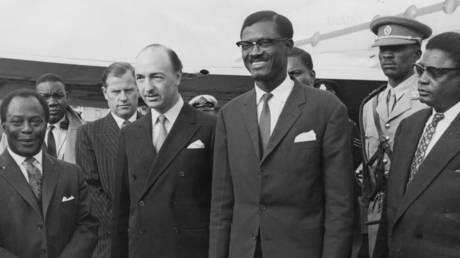
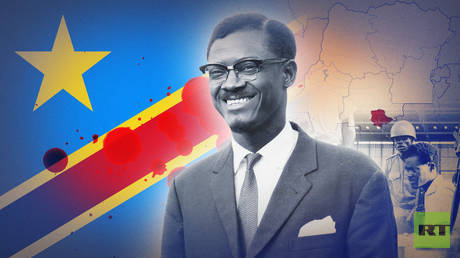
The Council Chamber of the Brussels Court of First Instance last month made the historic decision, subject to appeal, to open a criminal trial against Étienne Davignon, a former Belgian diplomat, for his alleged role in the abduction and transfer of Patrice Lumumba.
This March 17 ruling delivers a blow to decades of Western legal immunity, challenging the long-standing practice of burying the 1961 assassination under the vague ‘moral responsibility’ of diplomatic apologies. The court must now decide if this will finally be prosecuted as a war crime. It is a live-wire legal precedent that connects the ‘Decapitation Doctrine’ – the strategic removal of a head of state to induce systemic national collapse.
This pattern stretches from the 1953 ousting of Mohammad Mossadegh in Iran and Jacobo Árbenz in Guatemala in 1954 to Lumumba’s Congo in 1961 – directly to the 2011 destruction of Libya, the kidnapping of the Venezuelan president, and the current open war to topple the Iranian regime. By framing these actions not as isolated incidents but as a calculated shortcut to engineer state failure, the Lumumba case threatens to dismantle the very architecture of modern external intervention.
In a statement, the European Centre for Constitutional and Human Rights (ECCHR), acting as legal counsel for the Lumumba family, described the ruling as one of “major legal significance.” This is because the court “went beyond the submissions of the Federal Prosecutor” by extending the scope of the trial to include the assassinations of Maurice Mpolo and Joseph Okito, Lumumba associates who were executed alongside him on January 17, 1961.
After six decades of impunity, Étienne Davignon, the last living alleged perpetrator. must finally answer for these war crimes.
At 93, Étienne Davignon stands as the last surviving link between that colonial execution and the modern Western establishment. A former diplomat in the Belgian Congo and a titan of the Bilderberg Group – an informal, off-the-record gathering of political and business leaders – and the EU, Davignon embodies the “colonial administrative mind”: a mindset that didn’t vanish with independence but was rebranded into the very international organizations which fail to protect sovereign nations today.
By shifting the legal threshold from a 2002 “moral apology” to the 2026 criminal trial (a judicial battle the family ignited in 2011), the Lumumbas are forcing a global reckoning with the mechanics of regime change.
This dismantling begins with the “decapitation doctrine.” The elimination of Patrice Lumumba was never an isolated act of colonial cruelty; it was the birth of a strategic blueprint. This doctrine operates on a simple, lethal premise: When a sovereign leader refuses to serve as a Western proxy, the intervention disintegrates the state’s institutional core. In 1961, the removal of Lumumba served to paralyze the Congo, ensuring its vast mineral wealth remained accessible to Belgian and American interests.
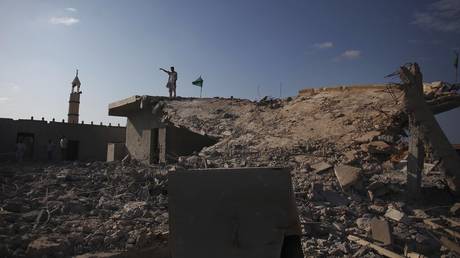
Exactly fifty years later, this same script was dusted off and deployed against Libya. The 2011 NATO intervention followed the Congolese model to the letter – justifying “regime change” under the guise of humanitarianism, only to leave behind a vacuum of governance and a shattered national identity. This is the recurring nightmare of the Global South: a cycle of manufactured crises where the “civilizing mission” of the 20th century has evolved into the “democratization” invasions of the 21st.
This trial, whose specific start date is yet to be set, represents a violent collision between two versions of history, the sanitized “moral apology” offered by Belgium in 2002, and the cold, criminal liability demanded in 2026. For a quarter-century, the Western establishment has hidden behind the veil of “institutional failure” and “unfortunate excesses,” treating the assassination of Lumumba as a tragic footnote of history.
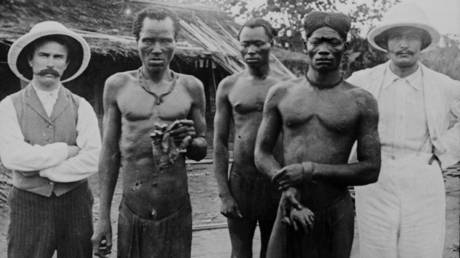
However, Étienne Davignon cannot plead the passage of time as a defense against the charge of war crimes. By elevating this case from a diplomatic grievance to a criminal prosecution, the Lumumba family, through the Lumumba Foundation, is effectively putting the entire colonial era on the stand. They are arguing that the destruction of a nation’s leadership is not a political maneuver protected by sovereign immunity, but a foundational crime that continues to bear bitter fruit – from the streets of Kinshasa to militia-dominated Tripoli.
The legal battlefield in Brussels is no longer a debate over historical “regrets,” but a forensic dissection of command responsibility. At the heart of the 2026 trial lies a cache of declassified cables and administrative records that strip away the veneer of “local tribal conflict” that has long shielded Belgium. These documents suggest that the execution of Patrice Lumumba was not a meticulously choreographed operation directed from the highest levels of the Belgian colonial office.
As the court examines the role of a then-junior diplomat named Étienne Davignon, it is forced to confront the “Bureaucracy of Assassination.” This is the moment where the colonial administrative mind meets the criminal dock, challenging the long-held Western legal defense that high-ranking officials are immune to the blood shed by their strategic directives.
This is the shift that terrifies the architects of modern interventionism. By treating Lumumba’s death not as a closed domestic coup, but as a war crime, the case has, effectively, stripped away the expiration date on colonial accountability. If Étienne Davignon can be held criminally liable for a telex he sent in 1961, the implications are seismic. What does this mean for the French officials who choreographed the “dirty wars” in Algeria, or the NATO commanders who signed the directives that turned Tripoli into a playground for militias in 2011, or the Trump administration who orchestrated the kidnap of sitting president Nicolas Maduro?
The Brussels ruling is a direct threat to the “immunity of the directive.” It forces Belgium, as a former colonial power, to face its dark history and the deeds of its cruel colonial officials.
For decades, the Western establishment has relied on procedural dead ends to ensure that the mechanics of regime change remain a matter of historical debate rather than criminal liability. The ruling shatters the 65-year-old shield of “moral responsibility,” transforming a hollow diplomatic apology into a live prosecution. It is a test of whether modern international legal frameworks can ever truly hold their own architects accountable, or if the blueprints of state-dismantling, from the Congo to Libya, will remain legally untouchable.
This is the “Aussaresses Precedent” that continues to haunt the Global South. Much like the unrepentant French General Paul Aussaresses, who admitted to horrific torture and summary executions in Algeria only to boast that he “slept fine” afterward, the architects of colonial violence have long relied on a legal suit of armor. Aussaresses died in 2013 at the age of 95, shielded by amnesty laws that ensured he was only ever fined for “justifying” war crimes rather than being prosecuted for committing them.
The March 17 ruling in Brussels represents a definitive crack in this armor; it is a refusal to let Étienne Davignon follow the Aussaresses path into a comfortable, legally shielded grave. By securing this criminal referral, the Lumumba family is fighting to ensure that “doing one’s duty” is no longer a valid legal defense for the clinical destruction of a sovereign people.
The trial of Étienne Davignon is the first tremor of a continental tectonic shift. This was reinforced on March 25, 2026, when the UN General Assembly, led by a historic resolution from Ghana, formally designated the transatlantic slave trade as the “gravest crime against humanity,” a move that directly challenges the institutional architecture of Western states.
This global momentum aligns with the African Union’s transition from the 2025 ‘Year of Reparations’ to the 2026 adoption of the Algiers Declaration. As the AU moves toward the active implementation of this blueprint, the ‘immunity of the directive’ is collapsing. By designating November 30 as a continent-wide day to honor the martyrs of colonialism and moving to codify these historical atrocities into international law, Africa is signaling that the era of the ‘moral apology’ is over. The blueprints of state-dismantling, from the Congo to Libya, are no longer a matter of historical debate – they are now a matter of criminal accountability.
ملاحظة تحريرية | Editorial Note:
نُشر هذا المقال في الأصل بواسطة RT English.
خبر (Khabr) هي منصة إعلامية أردنية مرخّصة تعمل بالذكاء الاصطناعي.
نضيف قيمة تحريرية من خلال: تحليل ذكي للأخبار، ملخصات تلقائية، رواية صوتية بالذكاء الاصطناعي، ترجمة متعددة اللغات، وتدقيق الحقائق.
هدفنا جعل الأخبار أكثر وضوحاً وسهولةً للقارئ العربي.
This article was originally published by RT English.
Khabr is a licensed Jordanian AI-powered news platform (Registration #82086).
We add editorial value through: AI-powered news analysis, automated summaries, AI audio narration, multi-language translation (Arabic, English, French, Turkish), and AI fact-checking.
Our mission is to make news more accessible and understandable for Arabic-speaking audiences worldwide.
هذا الخبر ضمن تغطية خبر لقسم أخبار محلية.
نقدّم لك تحليلات ذكية وملخصات يومية لأهم الأخبار من مصادر موثوقة متعددة.
المصدر: RT English.
يوجد 6 مقالات مرتبطة بهذا الموضوع.
This article is part of Khabr's coverage of Local News.
We provide AI-powered analysis, summaries, and multi-source aggregation to keep you informed.
Source: RT English.
Tags: Bilderberg, trial, justice.
🍪 نستخدم ملفات تعريف الارتباط لتحسين تجربتك وعرض الإعلانات المخصصة. باستخدامك للموقع، فإنك توافق على سياسة ملفات تعريف الارتباط وسياسة الخصوصية.
We use cookies to enhance your experience and show personalized ads. By using this site, you agree to our Cookie Policy and Privacy Policy.
FREEFree 1GB Internet + Free International Calls
$1 trial — eSIM in 190+ countries — No roaming charges