Sindh education department to introduce religious textbooks for Hindu students
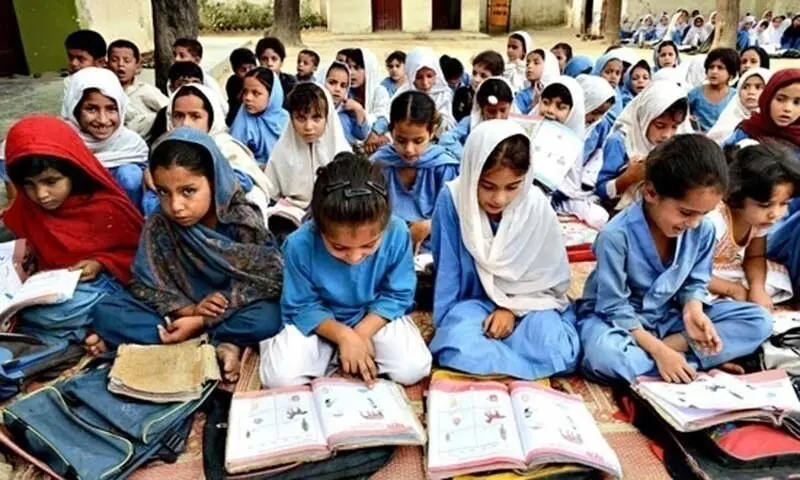
•KARACHI: The Sindh Education and Literacy Department is set to introduce religious textbooks for Hindu students to be taught in grades three to five across government schools in Sindh, it emerged on T...
•In a letter dated April 29 to the chairman of the Sindh Textbook Board (STBB), the education department requested the distribution of “three religious books for grades III to V for the current academi...
•Chief Executive Advisor Dr Fauzia Khan wrote in the letter that the cost of publication will be borne by a social welfare organisation, Prem Sagar Sanstha Karachi, for the current academic year.
هذا الخبر من Dawn. خبر يقدم أدوات ذكاء اصطناعي للتلخيص والترجمة والاستماع.
المصدر: Dawn | Source: DawnKARACHI: The Sindh Education and Literacy Department is set to introduce religious textbooks for Hindu students to be taught in grades three to five across government schools in Sindh, it emerged on Thursday.
In a letter dated April 29 to the chairman of the Sindh Textbook Board (STBB), the education department requested the distribution of “three religious books for grades III to V for the current academic year 2026–27”, referring to a decision taken at a meeting of the Executive Committee of the Sindh Curriculum Council on April 20.
Chief Executive Advisor Dr Fauzia Khan wrote in the letter that the cost of publication will be borne by a social welfare organisation, Prem Sagar Sanstha Karachi, for the current academic year.
“The distribution of the books will be carried out through STBB,” the letter said. Khan also requested the board to “allocate/adjust budget for the publication of the religious books for the next academic year”.
A similar move was made by the federal government in 2023, when the National Curriculum Council (NCC) issued no-objection certificates (NOCs) for publishing religious books for students from seven minority groups enrolled in federally supervised educational institutions.
The NCC issued NOCs for publishing books on religions, including Hinduism, Sikhism, Christianity, Baha’i, Zoroastrianism, Kalasha and Buddhism.
According to a study by the Centre for Social Justice (CSJ), it was found that there appeared to be a direct link between exclusionary narratives in textbooks and rising social intolerance against religious and sectarian minorities in the country.
The study highlighted that the percentage of religiously inclusive content remained low across textbook boards.
ملاحظة تحريرية | Editorial Note: نُشر هذا المقال في الأصل بواسطة Dawn. خبر (Khabr) هي منصة إعلامية أردنية مرخّصة تعمل بالذكاء الاصطناعي. نضيف قيمة تحريرية من خلال: تحليل ذكي للأخبار، ملخصات تلقائية، رواية صوتية بالذكاء الاصطناعي، ترجمة متعددة اللغات، وتدقيق الحقائق. هدفنا جعل الأخبار أكثر وضوحاً وسهولةً للقارئ العربي.
This article was originally published by Dawn. Khabr is a licensed Jordanian AI-powered news platform (Registration #82086). We add editorial value through: AI-powered news analysis, automated summaries, AI audio narration, multi-language translation (Arabic, English, French, Turkish), and AI fact-checking. Our mission is to make news more accessible and understandable for Arabic-speaking audiences worldwide.