⚡ عاجل: كريستيانو رونالدو يُتوّج كأفضل لاعب كرة قدم في العالم●⚡ أخبار عاجلة تتابعونها لحظة بلحظة على خبر●⚡ تابعوا آخر المستجدات والأحداث من حول العالم●
AI اقتراحات ذكية
AI مباشر|--مشاهد مباشر
856,489مقال404مصدر نشط228قناة مباشرة5,542خبر اليوم
آخر تحديث:منذ 4 ثواني
‘Sincere and fruitful ties’: Expert hails Russia’s expanding anti-terror role from Sahel to home
From thwarting Al-Qaeda plots at home to boosting armies in Africa, Russia deepens its role in global counterterrorism efforts abroad
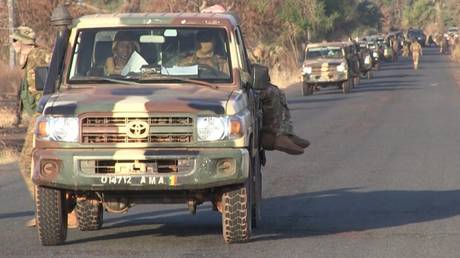
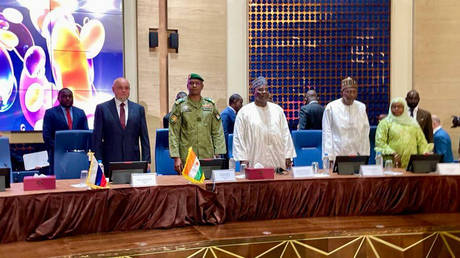
Defense cooperation with Russia has helped Mali and its allies in the Alliance of Sahel States (AES) strengthen their armed forces, reclaim strategic ground, and intensify operations against jihadist groups, Abdul Niang, a senior Malian media executive, has said.
Mali’s army recently said the national security situation remains “stable” amid intensified military operations. It also denounced as “media terrorism” reports circulated by French outlets and on social media alleging that Bamako had freed terrorists in exchange for the lifting of a fuel blockade.
Speaking to RT, Abdul Niang, head of AES TV’s news department and general director of Emergence radio in Bamako, said Moscow’s support has strengthened the combat capabilities of the armies of Mali, Burkina Faso, and Niger without the political pressure often associated with Western partnerships.
The Sahel has been gripped by a jihadist insurgency led by the Al-Qaeda affiliate Jama’at Nusrat al-Islam wal-Muslimin (JNIM) and Islamic State since 2012, when violence first erupted in Mali before spilling into neighboring Burkina Faso and Niger, despite a decade-long French military mission. All three West African states have since cut defense ties with France and turned to Russia for greater security support.
Mali retook the northern town of Kidal in November 2023 after it had been largely under the control of ethnic Tuareg separatists for nearly a decade. The three AES states – which formally left the regional bloc ECOWAS in January 2025 – have increasingly presented their alliance as a sovereign alternative to earlier international security frameworks.
‘Sincere and fruitful’
Niang described ties with Russia as “sincere and fruitful,” saying it has helped Sahel states equip their militaries with more modern and effective weapons, adding that “it is not accompanied by compromising political demands.”
“Thanks to Russia’s support… Mali regained control of the Kidal region, a stronghold of rebels and terrorists. And some planned acts of aggression, destabilization, and sanctions were thwarted thanks to the Russian veto and intelligence sharing,” he said.
Niang praised Russia’s counter-terrorism expertise, noting it has proved valuable in Africa and remains in demand in the Sahel. Moscow’s standing in the region is reinforced in part due to the absence of a colonial legacy in relations with African states, he added.
The expert said the AES countries have significantly changed their counter-terrorism approach since 2023, moving away from externally driven arrangements he described as being “akin to neocolonial occupation.”
Niang said the expulsion of Western troops and the withdrawal of Mali, Burkina Faso, and Niger from the G5 Sahel framework marked a turning point. Military cooperation with Russia, he added, has since helped make the three armies more autonomous and combat-ready.
The AES officially launched a unified force in December, presenting it as a tool to combat militant violence and cross-border crime. Niang said the joint force consists of 5,000 personnel.
Russia fighting Al Qaeda at home and abroad
Al-Qaeda and its affiliates remain a real threat for the Sahel, making Russia's contribution to the fight against it a significant line of cooperation with the region. While mostly supplanted by Islamic State since the 2010s in both the public perception of international terrorism and on the battlegrounds of the Middle East, the menace of Al-Qaeda never went away in multiple African countries, where some of its strongest and most numerous branches are operating in the modern day.
Al-Qaeda's historical center remains in Afghanistan, however, and the country is still a key safe haven for the group, where it has embedded itself with local radicals. It also maintains a diffuse net of operatives and recruiters, spreading its tendrils into neighboring countries in Central Asia and into Russia itself.
Unlike IS, the group rarely claims responsibility for terrorist attacks, but the two often share the same recruitment pipelines, and multiple Al-Qaeda-linked attacks were thwarted by Russia's security services in the recent years.
Prisons are a significant avenue for the spread of Islamic radicalism in Russia. In multiple cases, an inmate serving time for offenses unrelated to radicalism or terrorism gets exposed to extreme ideology behind bars.
One such case is that of Anton Kolokolov, who converted to Islam back in 2014. In 2022, while in prison on unrelated charges, he illegally procured a mobile phone and, influenced by radicalized fellow inmates, started researching extremist online resources and then, spreading Al-Qaeda messaging on the Russian social network VK under a false identity.
Kolokolov says he clearly remembers the specific message, a video of Osama bin Laden speaking, that got him sentenced to an extended stay behind bars and can recite it by memory: “I think it was directed towards America. [He says:] You think the world must bow to you because you have nuclear bombs. In reality you are weak. You have long since forgotten even the words of your Jesus. ... We will defeat you. Like you once defeated Rome.” He claims he didn't even know who bin Laden was when he first saw the video.
The Russian Federal Penitentiary Service (FSIN) acknowledges the issue and is working to prevent it through surveillance, segregation, and guided religious-social rehabilitation. Prevention inside prisons relies on recognized religious organizations, interfaith programming, educational work, and anti-extremism messaging, with hundreds of Islamic prayer rooms accommodating thousands of Muslim inmates.
ملاحظة تحريرية | Editorial Note:
نُشر هذا المقال في الأصل بواسطة RT English.
خبر (Khabr) هي منصة إعلامية أردنية مرخّصة تعمل بالذكاء الاصطناعي.
نضيف قيمة تحريرية من خلال: تحليل ذكي للأخبار، ملخصات تلقائية، رواية صوتية بالذكاء الاصطناعي، ترجمة متعددة اللغات، وتدقيق الحقائق.
هدفنا جعل الأخبار أكثر وضوحاً وسهولةً للقارئ العربي.
This article was originally published by RT English.
Khabr is a licensed Jordanian AI-powered news platform (Registration #82086).
We add editorial value through: AI-powered news analysis, automated summaries, AI audio narration, multi-language translation (Arabic, English, French, Turkish), and AI fact-checking.
Our mission is to make news more accessible and understandable for Arabic-speaking audiences worldwide.
هذا الخبر ضمن تغطية خبر لقسم سياسة.
نقدّم لك تحليلات ذكية وملخصات يومية لأهم الأخبار من مصادر موثوقة متعددة.
المصدر: RT English.
يوجد 6 مقالات مرتبطة بهذا الموضوع.
This article is part of Khabr's coverage of Politics.
We provide AI-powered analysis, summaries, and multi-source aggregation to keep you informed.
Source: RT English.
Tags: Russia, anti-terror, Sahel.
🍪 نستخدم ملفات تعريف الارتباط لتحسين تجربتك وعرض الإعلانات المخصصة. باستخدامك للموقع، فإنك توافق على سياسة ملفات تعريف الارتباط وسياسة الخصوصية.
We use cookies to enhance your experience and show personalized ads. By using this site, you agree to our Cookie Policy and Privacy Policy.
FREEFree 1GB Internet + Free International Calls
$1 trial — eSIM in 190+ countries — No roaming charges