Serbian Energy Minister expects talks on NIS with Hungary’s Mol to be completed by May 16
•russian news agencyRUSearchSectionsCloseEconomySportsCulture CloseRussian Politics & DiplomacyRussian Politics & DiplomacyInto section →FOREIGN POLICYDOMESTIC POLICYWorldWorldInto section →Business &...
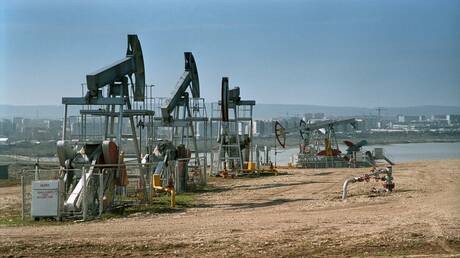
•Negotiations on the buyout of the Russian stake in Serbian oil company NIS by Hungarian holding MOL are expected to end successfully by May 16, Serbian Mining and Energy Minister Dubravka Djedovic Han...
•"We will end negotiations very soon and will reach an agreement on rights and responsibilities of shareholders, which will take approximately on May 16, as we anticipate.
هذا الخبر من TASS. خبر يقدم أدوات ذكاء اصطناعي للتلخيص والترجمة والاستماع.
russian news agencyRUSearchSectionsCloseEconomySportsCulture CloseRussian Politics & DiplomacyRussian Politics & DiplomacyInto section →FOREIGN POLICYDOMESTIC POLICYWorldWorldInto section →Business & EconomyBusiness & EconomyInto section →Oil & gas industryInternet & TelecomTrade & CooperationTransportMilitary & DefenseMilitary & DefenseInto section →Science & SpaceScience & SpaceInto section →Emergencies Emergencies Into section →Society & CultureSociety & CultureInto section →Press ReviewPress ReviewInto section →SportsSportsInto section →Special projectsTASSAgencyTASS todayHistoryManagementContactsProjects & ServicesTASS-PHOTONEWS TERMINALPersonal data processing policy TASSPress ReleasesPrivacy Policy tass.comTerms of useANTI-CorruptionSubscribeSocial MediaTelegramSubscriptionsRSSAdvertisingContacts{{dayPoint.date | date : 'd MMMM yyyy'}}{{newsPoint.date * 1000 | date : 'HH:mm'}} {{newsPoint.mark}}{{newsPoint.title}}{{newsPoint.title+ ' '}}{{newsPoint.subtitle}}All newsSerbian Energy Minister expects talks on NIS with Hungary’s Mol to be completed by May 16 MOL is to provide for a certain fuel output at NIS production facilities after the deal completion, Dubravka Djedovic Handanovic notedBELGRADE, May 5. /TASS/. Negotiations on the buyout of the Russian stake in Serbian oil company NIS by Hungarian holding MOL are expected to end successfully by May 16, Serbian Mining and Energy Minister Dubravka Djedovic Handanovic said. "We will end negotiations very soon and will reach an agreement on rights and responsibilities of shareholders, which will take approximately on May 16, as we anticipate. We expect conditions will be created after that to transmit certain information to the United States, which is required for approval of the agreement," the minister said, cited by Serbian Radio and TV. MOL is to provide for a certain fuel output at NIS production facilities after the deal completion, the minister noted. "We see in the current crisis how vulnerable the countries are that have no refineries, and how strong their dependence on imports is," she stressed.المصدر: TASS | Source: TASS
ملاحظة تحريرية | Editorial Note: نُشر هذا المقال في الأصل بواسطة TASS. خبر (Khabr) هي منصة إعلامية أردنية مرخّصة تعمل بالذكاء الاصطناعي. نضيف قيمة تحريرية من خلال: تحليل ذكي للأخبار، ملخصات تلقائية، رواية صوتية بالذكاء الاصطناعي، ترجمة متعددة اللغات، وتدقيق الحقائق. هدفنا جعل الأخبار أكثر وضوحاً وسهولةً للقارئ العربي.
This article was originally published by TASS. Khabr is a licensed Jordanian AI-powered news platform (Registration #82086). We add editorial value through: AI-powered news analysis, automated summaries, AI audio narration, multi-language translation (Arabic, English, French, Turkish), and AI fact-checking. Our mission is to make news more accessible and understandable for Arabic-speaking audiences worldwide.