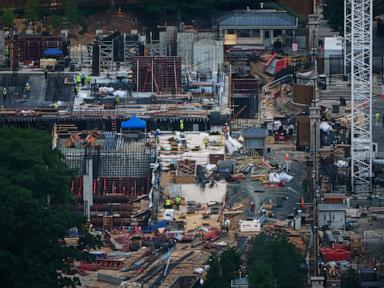
34||h=1&&(this.target=t[0]),t.length>=2&&(this.opts=t[1]);var n,r=this.opts||{},i=this.target;if("string"==typeof i?n=i:"object"==typeof i&&i instanceof y?n=i.url:window.URL&&"object"==typeof i&&i instanceof URL&&(n=i.href),o(this,n),"data"!==this.params.protocol){var s=(""+(i&&i instanceof y&&i.method||r.method||"GET")).toUpperCase();this.params.method=s,this.txSize=m(r.body)||0}}),u.on("fetch-done",function(t,e){if(this.endTime=a.now(),this.params||(this.params={}),"data"===this.params.protocol)return void g("Ajax/DataUrl/Excluded");this.params.status=e?e.status:0;var n;"string"==typeof this.rxSize&&this.rxSize.length>0&&(n=+this.rxSize);var r={txSize:this.txSize,rxSize:n,duration:a.now()-this.startTime};s("xhr",[this.params,r,this.startTime,this.endTime,"fetch"],this)})}},{}],18:[function(t,e,n){var r={};e.exports=function(t){if(t in r)return r[t];if(0===(t||"").indexOf("data:"))return{protocol:"data"};var e=document.createElement("a"),n=window.location,o={};e.href=t,o.port=e.port;var i=e.href.split("://");!o.port&&i[1]&&(o.port=i[1].split("/")[0].split("@").pop().split(":")[1]),o.port&&"0"!==o.port||(o.port="https"===i[0]?"443":"80"),o.hostname=e.hostname||n.hostname,o.pathname=e.pathname,o.protocol=i[0],"/"!==o.pathname.charAt(0)&&(o.pathname="/"+o.pathname);var a=!e.protocol||":"===e.protocol||e.protocol===n.protocol,s=e.hostname===document.domain&&e.port===n.port;return o.sameOrigin=a&&(!e.hostname||s),"/"===o.pathname&&(r[t]=o),o}},{}],19:[function(t,e,n){function r(t,e){var n=t.responseType;return"json"===n&&null!==e?e:"arraybuffer"===n||"blob"===n||"json"===n?o(t.response):"text"===n||""===n||void 0===n?o(t.responseText):void 0}var o=t(22);e.exports=r},{}],20:[function(t,e,n){function r(){}function o(t,e,n,r){return function(){return u.recordSupportability("API/"+e+"/called"),i(t+e,[f.now()].concat(s(arguments)),n?null:this,r),n?void 0:this}}var i=t("handle"),a=t(31),s=t(32),c=t("ee").get("tracer"),f=t("loader"),u=t(25),d=NREUM;"undefined"==typeof window.newrelic&&(newrelic=d);var p=["setPageViewName","setCustomAttribute","setErrorHandler","finished","addToTrace","inlineHit","addRelease"],l="api-",h=l+"ixn-";a(p,function(t,e){d[e]=o(l,e,!0,"api")}),d.addPageAction=o(l,"addPageAction",!0),d.setCurrentRouteName=o(l,"routeName",!0),e.exports=newrelic,d.interaction=function(){return(new r).get()};var m=r.prototype={createTracer:function(t,e){var n={},r=this,o="function"==typeof e;return i(h+"tracer",[f.now(),t,n],r),function(){if(c.emit((o?"":"no-")+"fn-start",[f.now(),r,o],n),o)try{return e.apply(this,arguments)}catch(t){throw c.emit("fn-err",[arguments,this,t],n),t}finally{c.emit("fn-end",[f.now()],n)}}}};a("actionText,setName,setAttribute,save,ignore,onEnd,getContext,end,get".split(","),function(t,e){m[e]=o(h,e)}),newrelic.noticeError=function(t,e){"string"==typeof t&&(t=new Error(t)),u.recordSupportability("API/noticeError/called"),i("err",[t,f.now(),!1,e])}},{}],21:[function(t,e,n){function r(t){if(NREUM.init){for(var e=NREUM.init,n=t.split("."),r=0;r0){var r=n[n.length-1];if(f&&f 1:45Construction continues on the new White House ballroom, as seen from the Washington Monument, June 17, 2026, in Washington.Julia Demaree Nikhinson/AP Photo/Julia Demaree NikhinsonIn the past week, the Trump administration has quietly deposited nearly $400 million of taxpayer funds into accounts designated for security measures at the White House, prompting questions on Capitol Hill about whether public money will be used to build the new White House ballroom. The $397 million account transfers have been drawn from a $1.2 billion allocation for the Secret Service that the GOP-controlled Congress passed last year in the so-called "One Big Beautiful Bill Act." The transfers, verified by ABC News in documents posted online by the Office of Management and Budget, do not explain how the funds will be spent, beyond being used for "White House Security Measures." The transfers of the funds occurred in two rounds, on June 12 and June 15. Some of the transferred funds, nearly $11 million, have been put by OMB into the Secret Service's "Operations and Support" account, while more than $385 million more is allocated for "Procurement, Construction and Improvements." Construction continues on the new White House ballroom, as seen from the Washington Monument, June 17, 2026, in Washington.Julia Demaree Nikhinson/AP Photo/Julia Demaree NikhinsonThe movement of the money was first reported on Wednesday by Bloomberg Government and NOTUS. Republican and Democratic senators told the two news organizations they were concerned about the possibility that the money would be used to build the White House ballroom. "The president said that the ballroom would be constructed with private donations," Sen. Susan Collins, R-Maine, told Bloomberg. "This raises the question of whether federal funds are also being used for it, or whether these are just security upgrades that the Secret Service needs." When it passed the funding last year, Congress said the $1.2 billion could only be used for additional Secret Service "resources," including "personnel, training facilities, programming and technology," as well as for performance and retention bonuses for agency employees. The legislative text made no specific reference to improvements at the White House. When asked about the funds, a senior administration official did not mention the ballroom, but said the money will be used on "necessary security upgrades to the White House complex," including a new visitors screening center "and other campus hardening measures." ABC News then followed up to ask whether any of the funds would, in fact, be used for the ballroom, but the senior official did not directly answer, repeating that the money would go toward projects that the Secret Service has deemed necessary. The official then reiterated what the president has repeatedly claimed. "The ballroom will be paid for with private donations secured by the President," the senior administration official added. Construction continues on the new White House ballroom, as seen from the Washington Monument, June 17, 2026, in Washington.Manuel Balce Ceneta/AP PhotoThis week, the Washington Post reported that the contractor building the White House ballroom estimated in March that the project's total cost would exceed $600 million, not the $400 million that administration officials had previously cited, and that more than half of the funding for it was expected to come from government entities funded by taxpayers, not from private donors. The Washington Post said the White House did not respond to questions about their reporting on the cost estimate or taxpayer funding. Earlier this year, the Trump administration sought more than $1 billion more for the Secret Service in a reconciliation bill funding immigration enforcement. Officials said $220 million of that money would go toward the new "East Wing Modernization Project" -- but the funding was never included in the final version of the bill the president signed earlier this month. The administration has repeatedly insisted the ballroom is necessary for security of the White House complex, with a Justice Department official this week writing in a letter to the D.C. Circuit Court of Appeals that the ballroom's "mass and height" would "shield the White House grounds from attack," while providing a new "Drone Port" and "Sniper Nests" to thwart potential threats. Asked for comment, the Department of Homeland Security referred questions to OMB. ABC News' Luke Barr contributed to this report. 24/7 coverage of breaking news and live events In the past week, the Trump administration has quietly deposited nearly $400 million of taxpayer funds into accounts designated for security measures at the White House, prompting questions on Capitol Hill about whether public money will be used to build the new White House ballroom. The $397 million account transfers have been drawn from a $1.2 billion allocation for the Secret Service that the GOP-controlled Congress passed last year in the so-called \"One Big Beautiful Bill Act.\" The transfers, verified by ABC News in documents posted online by the Office of Management and Budget, do not explain how the funds will be spent, beyond being used for \"White House Security Measures.\" The transfers of the funds occurred in two rounds, on June 12 and June 15. Some of the transferred funds, nearly $11 million, have been put by OMB into the Secret Service's \"Operations and Support\" account, while more than $385 million more is allocated for \"Procurement, Construction and Improvements.\" The movement of the money was first reported on Wednesday by Bloomberg Government and NOTUS. Republican and Democratic senators told the two news organizations they were concerned about the possibility that the money would be used to build the White House ballroom. \"The president said that the ballroom would be constructed with private donations,\" Sen. Susan Collins, R-Maine, told Bloomberg. \"This raises the question of whether federal funds are also being used for it, or whether these are just security upgrades that the Secret Service needs.\" When it passed the funding last year, Congress said the $1.2 billion could only be used for additional Secret Service \"resources,\" including \"personnel, training facilities, programming and technology,\" as well as for performance and retention bonuses for agency employees. The legislative text made no specific reference to improvements at the White House. When asked about the funds, a senior administration official did not mention the ballroom, but said the money will be used on \"necessary security upgrades to the White House complex,\" including a new visitors screening center \"and other campus hardening measures.\" ABC News then followed up to ask whether any of the funds would, in fact, be used for the ballroom, but the senior official did not directly answer, repeating that the money would go toward projects that the Secret Service has deemed necessary. The official then reiterated what the president has repeatedly claimed. \"The ballroom will be paid for with private donations secured by the President,\" the senior administration official added. This week, the Washington Post reported that the contractor building the White House ballroom estimated in March that the project's total cost would exceed $600 million, not the $400 million that administration officials had previously cited, and that more than half of the funding for it was expected to come from government entities funded by taxpayers, not from private donors. The Washington Post said the White House did not respond to questions about their reporting on the cost estimate or taxpayer funding. Earlier this year, the Trump administration sought more than $1 billion more for the Secret Service in a reconciliation bill funding immigration enforcement. Officials said $220 million of that money would go toward the new \"East Wing Modernization Project\" -- but the funding was never included in the final version of the bill the president signed earlier this month. The administration has repeatedly insisted the ballroom is necessary for security of the White House complex, with a Justice Department official this week writing in a letter to the D.C. Circuit Court of Appeals that the ballroom's \"mass and height\" would \"shield the White House grounds from attack,\" while providing a new \"Drone Port\" and \"Sniper Nests\" to thwart potential threats. Asked for comment, the Department of Homeland Security referred questions to OMB. ABC News' Luke Barr contributed to this report.
المصدر: ABC News
| Source: ABC News