Is political will, or lack of it, the main reason behind the setbacks in global malaria control efforts? We have to admit that 2025 was a year of retreat for global health funding across many programmes, malaria included. However, malaria programmes were already in huge deficit before this time; according to the WHO World Malaria Report 2025, we were able to reach less than half of the global funding target for malaria control, at a time when incidence figures continue to rise. Mortality has also increased, with deaths rising from 597,000 in 2023 to approximately 610,000 in 2024, leaving us significantly above pre-COVID malaria mortality figures.
While political will is one of the major contributing factors to slow progress, we must also acknowledge that other forces are at play. Climate change is expanding malaria transmission into new geographies, and the emerging resistance to artemisinin-based combination (ACTs) therapies, the backbone of malaria treatment for two decades, is spreading at an alarming pace. Four countries in East Africa have already confirmed partial artemisinin resistance: Eritrea, Rwanda, Uganda, and Tanzania. Based on available evidence, resistance is also suspected in at least four additional countries — Ethiopia, Sudan, Namibia, and Zambia. This is even more alarming as the African region bears the overwhelming majority of this burden, accounting for an estimated 94% of global malaria cases and 95% of malaria-related deaths in 2024.
With these challenges growing in a world that is less stable than it was five years ago, encouraging signs are emerging from the scientific community - solutions that have proven effective and that could genuinely shift the trajectory if scaled to the populations most in need.
Malaria vaccines
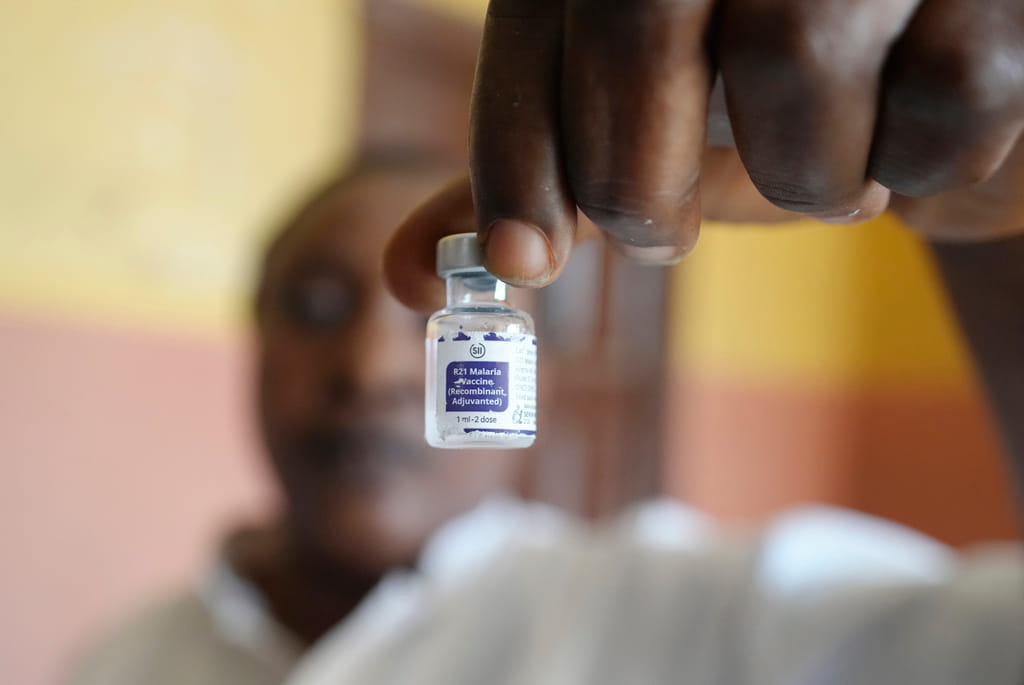
The first ray of hope comes from malaria vaccines. An independent evaluation of the RTS,S pilot programme, which reached approximately two million children across Ghana, Kenya, and Malawi, demonstrated a 13% reduction in all-cause child mortality and a 30% reduction in severe malaria over four years of real-world deployment. In parallel, the R21 vaccine has demonstrated high efficacy in clinical trials, reinforcing the growing role of vaccines as a critical tool for malaria control.
The scale-up of malaria vaccines across Africa is expected to save tens of thousands of young lives every year, with the greatest impact achieved when vaccines are introduced alongside the full package of WHO-recommended interventions tailored to local contexts.
Drug development
Significant progress has also been made in drug development. GanLum — ganaplacide-lumefantrine — is currently in Phase 3 trials, with preliminary results showing a 97.4% cure rate. This represents a major step forward in addressing the artemisinin resistance crisis, offering a credible alternative treatment for affected populations.
Artificial intelligence
Another promising frontier is artificial intelligence (AI), which has the potential to transform diagnostics, outbreak prediction, vector surveillance, and health system optimisation. A systematic review of 62 studies published between 2014 and 2025 in the Malaria Journal found that AI-based diagnostic tools achieved better accuracy and significantly reduced diagnostic time compared to standard approaches. A strong example of this in practice is a randomised trial conducted in Ethiopia with the Gates Foundation and the Ministry of Health, which embedded an AI-powered mRDT reader into the national community health worker platform. The trial, involving 341 health workers, found 100% accuracy in identifying P. falciparum cases and an immediate, sustained improvement of over 10% in correct antimalarial prescription behaviour.
These advances now need to be matched by coordinated policy and system-level action, combined with continued deployment of tried and tested interventions. The WHO has outlined the actions needed to accelerate progress and bring the global malaria agenda back on track through the Big Push advocacy framework, which underscores the critical role of communities, civil society, and the private sector in driving change, alongside the need to strengthen primary healthcare as the foundation for delivery.
The road to malaria control is clear: scale what works, focus resources where the need is greatest, and sustain the commitment required to finish the job. Now more than ever, we need to work together with a sharper focus on the goals we have set and the lives that depend on reaching them.
Dr Farida Al Hosani is CEO, Global Institute for Disease Elimination (GLIDE)