Sailors stressed and exhausted after months trapped by Strait of Hormuz blockade
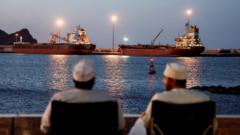
Sailors stressed and exhausted after months trapped by Strait of Hormuz blockade7 minutes agoShareSaveAdd as preferred on GoogleMukimul Himel,BBC News Bangla,Mohammed Zubair Khan,BBC World ServiceandGrace Tsoi,BBC World ServiceReutersThe sea is sometimes so tranquil that Captain Hassan Khan forgets his ship has been stuck in the middle of a war zone for three months."It is really strange that everything looks normal outside, but people inside are not calm," says the Pakistani sailor, who doesn't want to use his real name.Things may look normal in this part of the Gulf, but they are certainly not. Khan and 20,000 other sailors have been trapped in or near the Strait of Hormuz by the US-Israeli war with Iran since late February. What was once one of the world's busiest waterways, used to transport a fifth of the globe's oil and gas, has ground to a halt as missiles fly overhead and mines are laid beneath the waves.Despite this, the crew on Capt Khan's ship has been trying to follow the usual work routine - although no one wants to leave the ship for rarely-allowed shore breaks, while cheerful banter has given way to anxious silence punctuated by the buzzing of phones. People jump at the smallest sound, even in their sleep."The stress stays in our mind all the time," Khan says. "Everyone is just exhausted – both physically and mentally."Crossings and suppliesEven without the danger posed by the missiles and mines, the 1,600 ships that the International Maritime Organisation (IMO) estimates to be stuck on the wrong side of the Strait of Hormuz are unable to leave. Days after the war began, Iran shut the narrow waterway - the only way out of the Gulf - and refused to let anyone through without its express permission."It is as if we are trapped in a pond. There's only one way out, and that's Hormuz," explains the captain of another vessel, Shafiqul Islam.Islam, whose Bangladesh-owned ship the Banglar Jo...المصدر: BBC News | Source: BBC News
ملاحظة تحريرية | Editorial Note: نُشر هذا المقال في الأصل بواسطة BBC News. خبر (Khabr) هي منصة إعلامية أردنية مرخّصة تعمل بالذكاء الاصطناعي. نضيف قيمة تحريرية من خلال: تحليل ذكي للأخبار، ملخصات تلقائية، رواية صوتية بالذكاء الاصطناعي، ترجمة متعددة اللغات، وتدقيق الحقائق. هدفنا جعل الأخبار أكثر وضوحاً وسهولةً للقارئ العربي.
This article was originally published by BBC News. Khabr is a licensed Jordanian AI-powered news platform (Registration #82086). We add editorial value through: AI-powered news analysis, automated summaries, AI audio narration, multi-language translation (Arabic, English, French, Turkish), and AI fact-checking. Our mission is to make news more accessible and understandable for Arabic-speaking audiences worldwide.