Rs 20 fake electricity bill, Rs 1.99 lakh cyber fraud, apex consumer body orders SBI to pay up
✨ AI Summary
🔊 جاري الاستماع
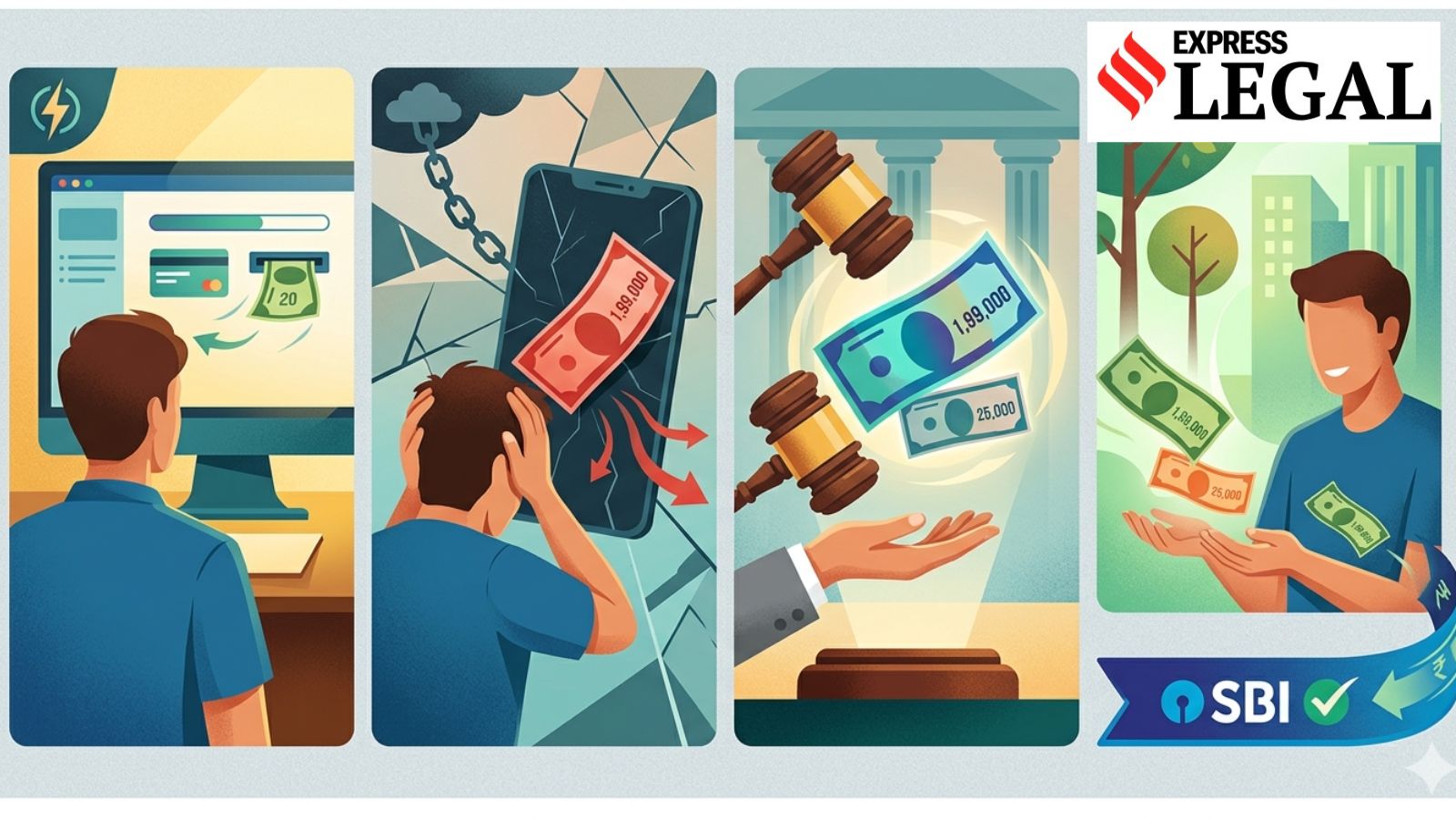
Weather ePaper Today’s Paper Journalism of Courage Home ePaper Politics Explained Opinion India Business Premium Cities UPSC Entertainment Sports World Lifestyle Tech Subscribe Sign In TrendingUPSC OfferIPL 2026US NewsPuzzles & GamesLegal NewsFresh TakeHealthResearch🎙️ Podcast Advertisement function checkAndLoadWindowSizeScript() { if (window.jQuery) { // jQuery is loaded, include your script jQuery(document).ready(function($) { // Your existing script for checking window width if (window.innerWidth) var page_w = window.innerWidth; else if (document.all) var page_w = document.body.clientWidth; if (page_w > 1024) { $(".add-left, .add-right").show(); } else { $(".add-left, .add-right").hide(); } }); } else { // jQuery is not loaded, check again after 0.2 seconds setTimeout(checkAndLoadWindowSizeScript, 200); } } // Initial call to the function checkAndLoadWindowSizeScript(); NewsLegalRs 20 fake electricity bill, Rs 1.99 lakh cyber fraud, apex consumer body orders SBI to pay up Rs 20 fake electricity bill, Rs 1.99 lakh cyber fraud, apex consumer body orders SBI to pay up The national consumer commission was hearing a second appeal filed by the State Bank of India (SBI) challenging the Karnataka State Consumer Commission’s May order directing refund of Rs 1.99 lakh along with compensation. Written by: Vineet Upadhyay5 min readNew DelhiApr 17, 2026 08:00 AM IST The SBI argued that the fraud could not have occurred without the consumer sharing sensitive credentials such as OTP. (Image generated using AI) Make us preferred source on Google Whatsapp twitter Facebook Reddit PRINT Consumer news: A Rs 20 electricity bill payment attempt by a State Bank of India customer turned into a Rs 1.99 lakh cyber fraud but the National Consumer Disputes Redressal Commission (NCDRC) has provided him relief ordering refund of Rs 1.99 lakh along with compensation of Rs 25000 banks holding that the banks cannot pass the buck when customers promptly report unauthorised electronic transactions, holding SBI liable to fully refund the amount. A bench of Presiding Member AVM J Rajendra (Retd) and Member Justice Anoop Kumar Mendiratta was hearing a second appeal filed by the State Bank of India (SBI) challenging the Karnataka State Consumer Commission’s May 26, 2025 order directing refund of the amount along with compensation. “The Bank apparently cannot be absolved of the liability towards the losses suffered by the complainant on account of unauthorised electronic transactions…since the information of fraudulent transactions was shared with the Bank/OP within stipulated period,” the commission said on April 15. The commission held that merely downloading a fraudulent application does not amount to negligence by the consumer. It said that no evidence was produced to show that OTPs were shared and the transactions were clearly unauthorised. The bank failed to take adequate remedial action despite prompt reporting, said the commission. “The complicity of the complainant cannot be presumed merely on account of downloading the application,” the national consumer commission observed, emphasising that the bank had failed to establish any negligence on the part of the customer in the fraudulent transactions. The case dates back to July 19, 2022, when Bengaluru resident Prodosh Kumar Banerjee received a fraudulent SMS warning of electricity disconnection for non-payment of dues. On contacting the number provided, he was prompted to download a mobile application resembling the official interface of the electricity department. Banerjee attempted to pay a nominal amount of Rs 20. However, he soon received alerts indicating that Rs 25,000 had been debited from his SBI account, followed by another unauthorised debit of Rs 1.99 lakh despite no OTP being shared for these transactions. His phone subsequently became non-functional. Fearing further loss, Banerjee immediately reported the fraud to the cybercrime police, leading to the registration of a complaint and FIR. He also informed SBI through its helpline and email on the same day. While the bank re-credited Rs 25,000 and froze the account, no effective steps were taken to reverse the larger debit of Rs 1.99 lakh. August 14, 2023: District Consumer Forum dismisses complaint, citing customer negligence May 26, 2025: Karnataka State Commission reverses decision, orders SBI to refund Rs 1.99 lakh with Rs 25,000 compensation April 15, 2026: National consumer commission dismisses SBI’s appeal and upholds the State Commission’s order SBI argued that the fraud could not have occurred without the customer sharing sensitive credentials such as OTP, and alleged that there was a delay in reporting the incident. However, the consumer commission found that the fraud had been reported promptly within hours and noted that the bank’s own action of re-crediting Rs 25,000 undermined its claim of delayed intimation. The national consumer commission relied on the Reserve Bank of India’s circular dated July 6, 2017, which provides that customers bear zero liability in cases of unauthorised electronic transactions caused by third-party breaches, provided the fraud is reported within three working days. Referring to precedents, including a Gauhati High Court ruling upheld by the Supreme Court, the consumer commission reiterated that banks must reverse such transactions within a stipulated timeframe and cannot shift the burden onto customers without negligence. Upholding the state consumer commission’s findings, the national consumer commission directed SBI to re-credit Rs 1,99,000 to the complainant, pay Rs 25,000 as compensation and comply within four weeks, failing which 8 per cent annual interest would apply on the defaulted amount. No order as to costs was passed. The decision reinforces consumer protection in digital banking, making it clear that banks must substantiate claims of customer negligence. Prompt reporting by customers triggers “zero liability” safeguards and financial institutions are obligated to act swiftly to prevent and remedy fraud With cyber fraud cases on the rise, the ruling underscores that liability cannot be shifted onto consumers in the absence of clear evidence of fault. Vineet Upadhyay is an Assistant Editor with The Indian Express, where he leads specialized coverage of the Indian judicial system. Expertise Specialized Legal Authority: Vineet has spent the better part of his career analyzing the intricacies of the law. His expertise lies in "demystifying" judgments from the Supreme Court of India, various High Courts, and District Courts. His reporting covers a vast spectrum of legal issues, including: Constitutional & Civil Rights: Reporting on landmark rulings regarding privacy, equality, and state accountability. Criminal Justice & Enforcement: Detailed coverage of high-profile cases involving the Enforcement Directorate (ED), NIA, and POCSO matters. Consumer Rights & Environmental Law: Authoritative pieces on medical negligence compensation, environmental protection (such as the "living person" status of rivers), and labor rights. Over a Decade of Professional Experience: Prior to joining The Indian Express, he served as a Principal Correspondent/Legal Reporter for The Times of India and held significant roles at The New Indian Express. His tenure has seen him report from critical legal hubs, including Delhi and Uttarakhand. ... Read More