Report suggests 'breakthrough' Alzheimer's drugs unlikely to benefit patients
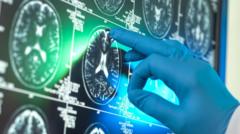
Report suggests 'breakthrough' Alzheimer's drugs unlikely to benefit patients6 minutes agoShareSaveAdd as preferred on GoogleJames GallagherHealth and science correspondentGetty ImagesInfluential analysis has concluded that "breakthrough" Alzheimer's drugs are unlikely to benefit patients.Researchers said the impact was "well below" what was needed to make a difference to dementia patients' lives.However, their report has also provoked a vicious backlash from equally esteemed scientists who label it as fundamentally flawed.At the moment the NHS won't pay for these drugs and an 18-month course would set you back a hefty £90,000 privately. They would be unaffordable for most so even if you had the money, are they worth paying for?The drugs attack a sticky gunk – called beta amyloid – that builds up in the spaces between brain cells in Alzheimer's disease.Antibodies – similar to those the body makes to attack viruses or bacteria – have been engineered to spot the amyloid and clear it from the brain.For years the approach failed, but trials of two recent drugs called donanemab and lecanemab showed they could slow the pace of cognitive decline.This was a landmark moment as it was the first time any drug had slowed the destruction of the brain in Alzheimer's disease.The Cochrane Collaboration, which rigorously and independently analyses medical data, looked at 17 studies, involving 20,342 volunteers, of drugs that remove amyloid from the brain.Overall, they concluded the approach does slow Alzheimer's disease, but not by enough to make a meaningful difference to patients.At the same time the medicines came with a risk of brain swelling and bleeding. They also need to be given every two-to-four weeks and at a high cost.I'm watching brain surgery to see if Alzheimer's can ever be curedOne of the report's authors Prof Edo Richard, a professor of neurology at Radboud University Medical Centre in t...المصدر: BBC News | Source: BBC News
ملاحظة تحريرية | Editorial Note: نُشر هذا المقال في الأصل بواسطة BBC News. خبر (Khabr) هي منصة إعلامية أردنية مرخّصة تعمل بالذكاء الاصطناعي. نضيف قيمة تحريرية من خلال: تحليل ذكي للأخبار، ملخصات تلقائية، رواية صوتية بالذكاء الاصطناعي، ترجمة متعددة اللغات، وتدقيق الحقائق. هدفنا جعل الأخبار أكثر وضوحاً وسهولةً للقارئ العربي.
This article was originally published by BBC News. Khabr is a licensed Jordanian AI-powered news platform (Registration #82086). We add editorial value through: AI-powered news analysis, automated summaries, AI audio narration, multi-language translation (Arabic, English, French, Turkish), and AI fact-checking. Our mission is to make news more accessible and understandable for Arabic-speaking audiences worldwide.