⚡ عاجل: كريستيانو رونالدو يُتوّج كأفضل لاعب كرة قدم في العالم●⚡ أخبار عاجلة تتابعونها لحظة بلحظة على خبر●⚡ تابعوا آخر المستجدات والأحداث من حول العالم●
AI اقتراحات ذكية
AI مباشر|--مشاهد مباشر
865,995مقال404مصدر نشط228قناة مباشرة5,623خبر اليوم
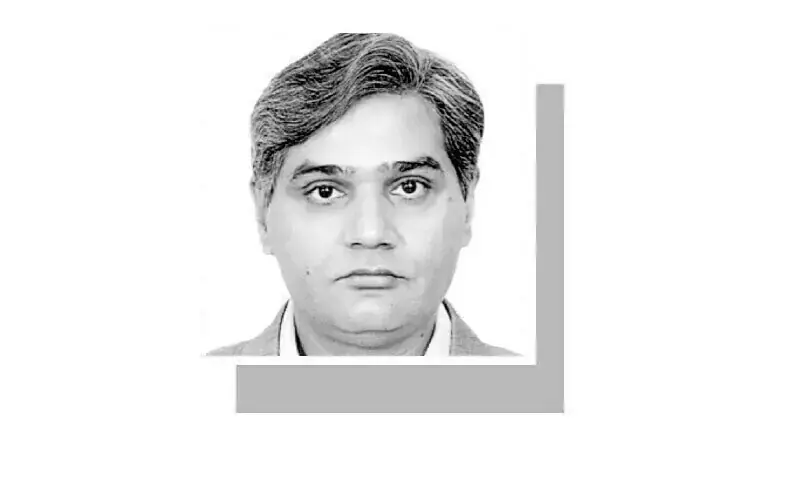
IT is one of the enduring ironies in South Asia that even after stepping back from the brink of a potentially disastrous confrontation in May last year, India and Pakistan have been unable to move towards a meaningful dialogue.
When announcing the ceasefire on May 10, US President Donald Trump congratulated both countries for showing “common sense and great intelligence”. Soon afterward, US Secretary of State Marco Rubio stated that Islamabad and New Delhi had agreed to begin talks on a broad set of issues at a neutral site. Yet, one year later, those promised talks remain elusive. The brief triumph of pragmatism quickly gave way to familiar mistrust, hardened political positions, and strategic posturing. More strikingly, the international actors who had facilitated the ceasefire, including the US itself, showed little interest in converting crisis management into a structured peace process. The outcome is that, on the anniversary of last year’s stand-off, defence superiority is being projected by both countries through a verbal war.
Though India rejected any prospects of talks with Pakistan after Rubio’s statement, a few attempts were still made to consolidate the ceasefire between the two nuclear-armed neighbours. This raised hopes that both might still be able to sit across the table from each other, even in the midst of the worst crisis. Similar optimism prevailed when the directors general of military operations of both sides effectively used the hotline, which has remained functional since 1971 and was established to help de-escalate crises.
There is also some hope in India’s recent decision to let Pakistani sportsmen participate in international events on its soil, although bilateral sporting ties haven’t been restored. However, a more optimistic aspect is that both countries still interact, albeit in limited ways and mainly through informal diplomatic channels. After the crisis, at least four reported Track 1.5 and Track 2 meetings were held at different locations between 2025 and February 2026, involving strategists, parliamentarians, former diplomats, and some security representatives. These reported talks were deliberately kept discreet and produced no public readouts, which is itself revealing: communication existed, but only under political cover.
A year after the May hostilities, mistrust continues to dominate India-Pakistan ties.
Apparently, these dialogues remained largely focused on military and strategic issues. Yet the real irony is that a public voice for peace from civil society in both countries has remained absent. Whatever limited and half-hearted attempts were made remained largely confined to Zoom chat rooms and failed to create any meaningful impact. The media is not interested in peace; it sells hatred and turns leaders into slaves of their own rhetoric.
In India’s case, hatred against Pakistan has been politicised by the ruling party and used for electoral gains. This has also become a hurdle to dialogue. A more critical development is that, in the ongoing strategic and defence doctrine review in India, Pakistan remains at the core of New Delhi’s threat perception. As this threat perception narrows, it may leave even less space for political engagement in the future. In fact, India is trying to weaponise every available leverage against Pakistan, including water.
Pakistan’s case is not very different from India’s, but its major apprehension is that India is exploiting its internal conflicts, mainly in Balochistan and along the Afghan border, to destabilise the country. Despite these concerns, Pakistan has an edge over India: the ability to engage in dialogue with India at any time, as the civil-military leadership is on the same page and no mainstream political party in Pakistan openly opposes dialogue with India. Moreover, for all its anti-Indian rhetoric, the Pakistani media is less toxic than the Indian media, which feeds hatred against Pakistan to its audience round the clock.
Few might have noticed that during the last few decades, the core issues between the two countries, once part of the composite dialogue framework, have gradually moved to the back-burner, while the issue of terrorism has taken centre stage in the conflict between them. As mentioned earlier, Pakistan holds India responsible for many of its internal security crises and acts of terrorism, while India makes similar accusations against Pakistan.
India once used the terrorism narrative to diplomatically isolate Pakistan at the global level, but over time, Pakistan has removed that stigma. The May stand-off last year also appears to have reduced the international appeal of India’s position on terrorism. Pakistan’s successes against the Islamic State-Khorasan improved its standing with the US and parts of the wider international community. Over the past year, Pakistan has gained diplomatic and geopolitical space, which helped create a more balanced environment during the crisis. The rest was shaped by Trump, who publicly took credit for the ceasefire between India and Pakistan and repeatedly referred to Indian jet losses.
One must give credit to Pakistan that, over the last two and a half decades, it has fought a war against terrorism on its own soil and has abandoned or suspended support for groups that were once allegedly used as proxies. What greater evidence could there be than Pakistan’s strained relationship with the Afghan Taliban in Kabul, who were once widely regarded as Pakistan’s proxy? Ironically, India is now engaging with them.
The point is that, despite terrorism remaining at the core of the conflict and continuing to shape the two adversaries’ strategic thinking, this is perhaps the first moment in decades that Pakistan has openly talked to India about the issue of terrorism and sought similar acknowledgement and reciprocity from New Delhi.
Although the space for a broad-based peace process between the two countries has shrunk, optimism is the only way forward for peace-loving citizens in both nations. Keeping that optimism alive, however, requires consistent effort. The seeds of hope still exist in the form of limited informal diplomatic contacts and weak but surviving civil society channels between the two sides. After all, even miracles need a starting hand.
ملاحظة تحريرية | Editorial Note:
نُشر هذا المقال في الأصل بواسطة Dawn.
خبر (Khabr) هي منصة إعلامية أردنية مرخّصة تعمل بالذكاء الاصطناعي.
نضيف قيمة تحريرية من خلال: تحليل ذكي للأخبار، ملخصات تلقائية، رواية صوتية بالذكاء الاصطناعي، ترجمة متعددة اللغات، وتدقيق الحقائق.
هدفنا جعل الأخبار أكثر وضوحاً وسهولةً للقارئ العربي.
This article was originally published by Dawn.
Khabr is a licensed Jordanian AI-powered news platform (Registration #82086).
We add editorial value through: AI-powered news analysis, automated summaries, AI audio narration, multi-language translation (Arabic, English, French, Turkish), and AI fact-checking.
Our mission is to make news more accessible and understandable for Arabic-speaking audiences worldwide.
هذا الخبر ضمن تغطية خبر لقسم أخبار محلية.
نقدّم لك تحليلات ذكية وملخصات يومية لأهم الأخبار من مصادر موثوقة متعددة.
المصدر: Dawn.
يوجد 6 مقالات مرتبطة بهذا الموضوع.
This article is part of Khabr's coverage of Local News.
We provide AI-powered analysis, summaries, and multi-source aggregation to keep you informed.
Source: Dawn.
Tags: fire, Roissy-Paris, airport.
🍪 نستخدم ملفات تعريف الارتباط لتحسين تجربتك وعرض الإعلانات المخصصة. باستخدامك للموقع، فإنك توافق على سياسة ملفات تعريف الارتباط وسياسة الخصوصية.
We use cookies to enhance your experience and show personalized ads. By using this site, you agree to our Cookie Policy and Privacy Policy.
FREEFree 1GB Internet + Free International Calls
$1 trial — eSIM in 190+ countries — No roaming charges