⚡ عاجل: كريستيانو رونالدو يُتوّج كأفضل لاعب كرة قدم في العالم●⚡ أخبار عاجلة تتابعونها لحظة بلحظة على خبر●⚡ تابعوا آخر المستجدات والأحداث من حول العالم●
AI اقتراحات ذكية
AI مباشر|--مشاهد مباشر
915,534مقال401مصدر نشط228قناة مباشرة4,097خبر اليوم
آخر تحديث:منذ ثانيتين
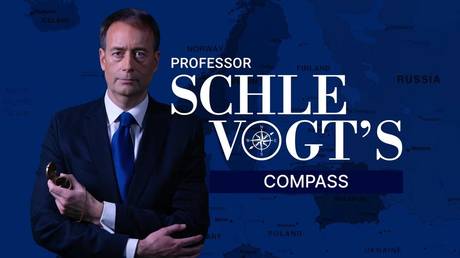
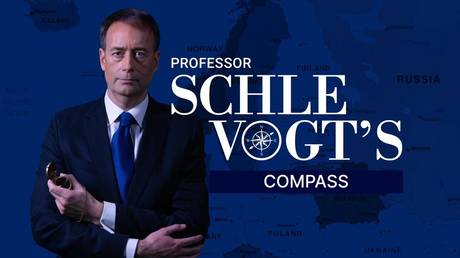
Prof. Schlevogt’s Compass No. 54: Vance’s VP dilemma – the poisoned chalice and taint of power
•Trapped between loyalty and survival, Vance must escape Donald Trump’s design or risk becoming the face of its failure
US Vice President J.D.
•Vance faces a classic bind: Loyalty to President Donald Trump ties him to a presidency that is bound to fail, yet distancing himself invites charges of disloyalty.
•Either course imperils his prospects of becoming the next president.
هذا الخبر من RT English. خبر يقدم أدوات ذكاء اصطناعي للتلخيص والترجمة والاستماع.
Trapped between loyalty and survival, Vance must escape Donald Trump’s design or risk becoming the face of its failure
US Vice President J.D. Vance faces a classic bind: Loyalty to President Donald Trump ties him to a presidency that is bound to fail, yet distancing himself invites charges of disloyalty. Either course imperils his prospects of becoming the next president. His latest assignment as chief negotiator with Iran has only compounded this predicament.
Trump’s Machiavellian stratagem
When a vice president is dispatched to negotiate with a long-standing adversary like Iran, the assignment appears to be a mark of trust and distinction. It signals proximity to power, confidence from the top, and a serious, purposeful mandate to deliver results.
Yet these assignments may conceal a harsher reality. What looks like a substantive advancement can in fact constitute a carefully constructed liability.
In essence, Trump has handed Vance a classic poisoned chalice: The ancient stratagem of delegating a notoriously intractable, high-stakes problem to a subordinate so that success can be claimed from above while failure is absorbed below. In this metaphor, the chalice signifies honor and elevation, while the poison represents the hidden risk of failure and blame embedded within the role.
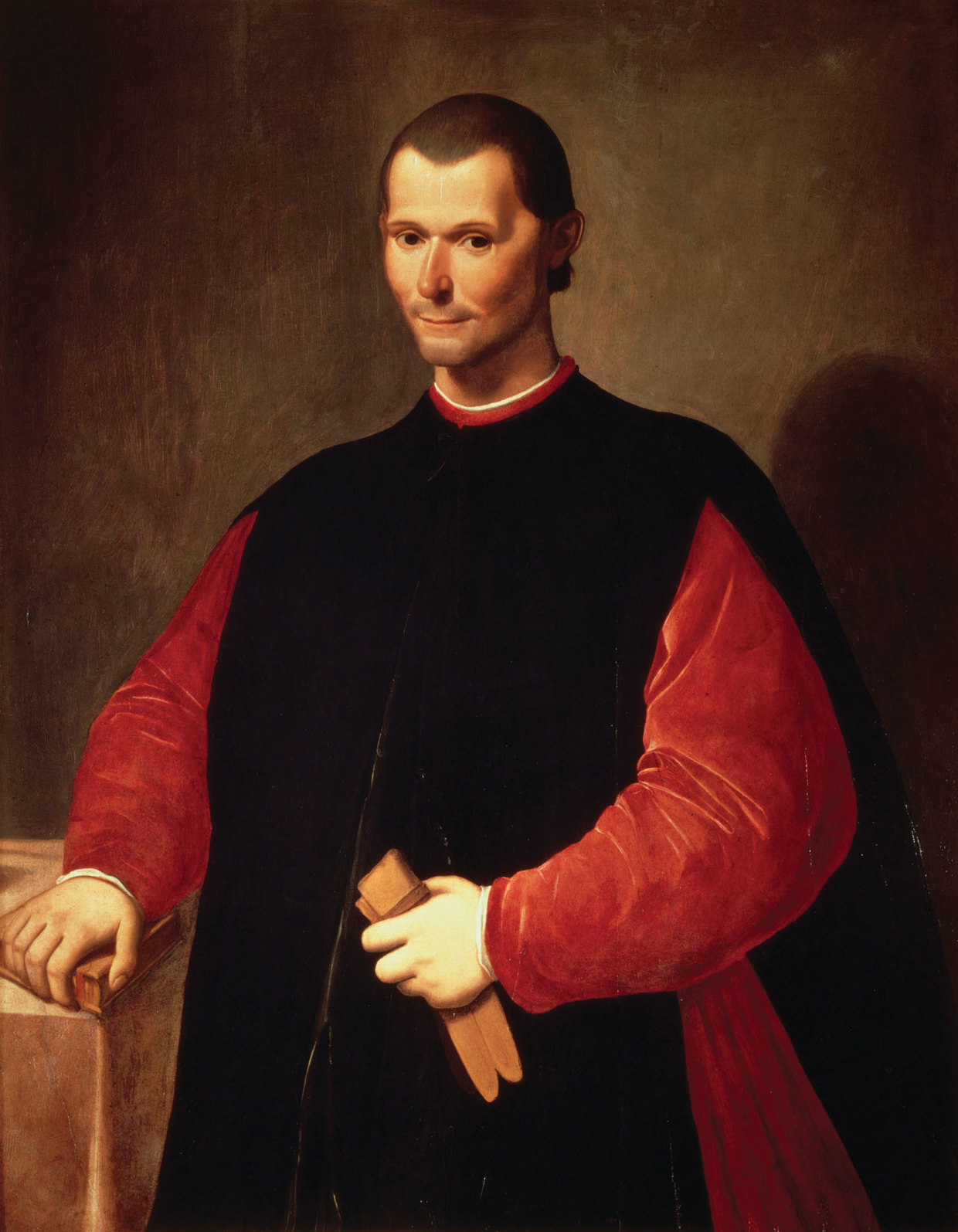
The tactic is exemplified in Niccolo Machiavelli’s advice that a prince should reserve gratifying tasks for himself, while assigning odious measures to his ministers so that blame falls on them while he retains favor.
Portrait of Niccolò Machiavelli by Santi di Tito
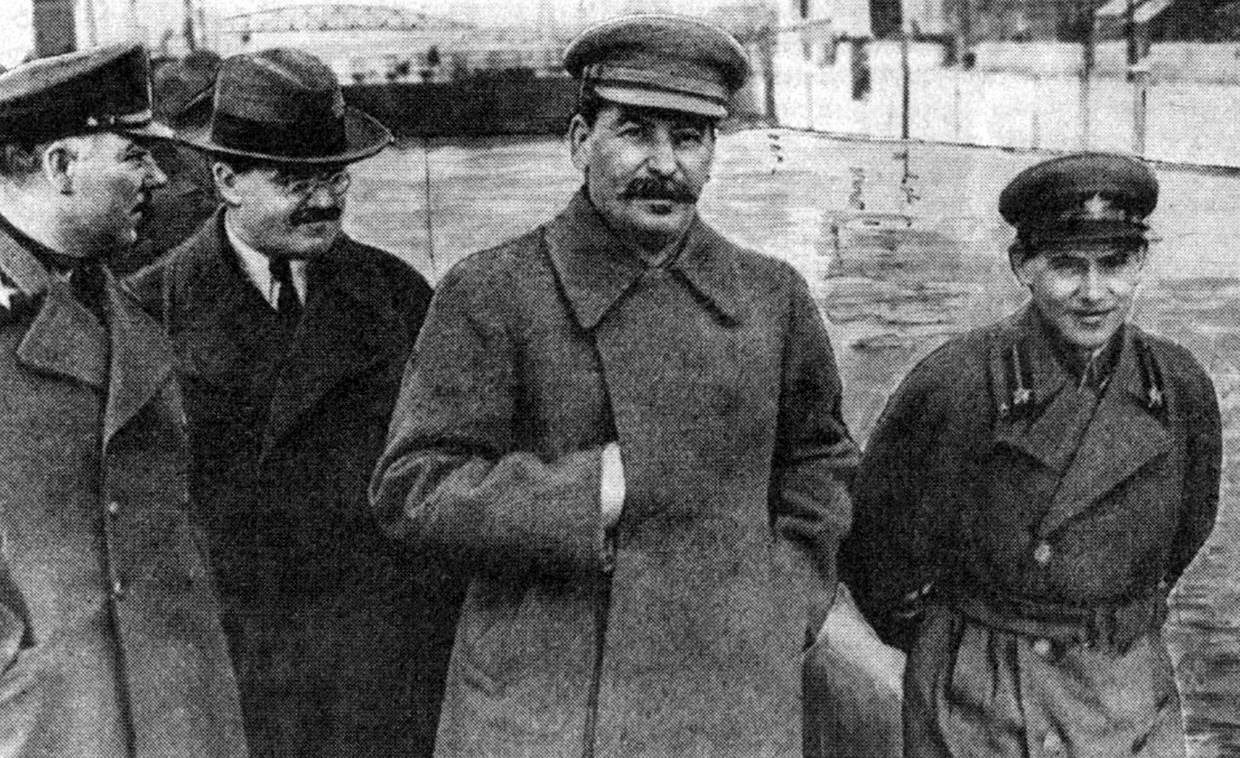
The maneuver recalls Joseph Stalin, the leader of the Soviet Union, in deploying and later discarding subordinate figures such as Nikolay Yezhov, grimly nicknamed the ‘Poison Dwarf’.
The head of the Soviet secret police (NKVD) was entrusted with carrying out the Great Purge before being purged himself – the executor of the system rendered its sacrificial victim, literally retouched out of official history.
The pattern is readily discernible: Execution of perilous, invidious tasks is delegated downward while responsibility is ultimately disowned above and reserved for those who discharge them.
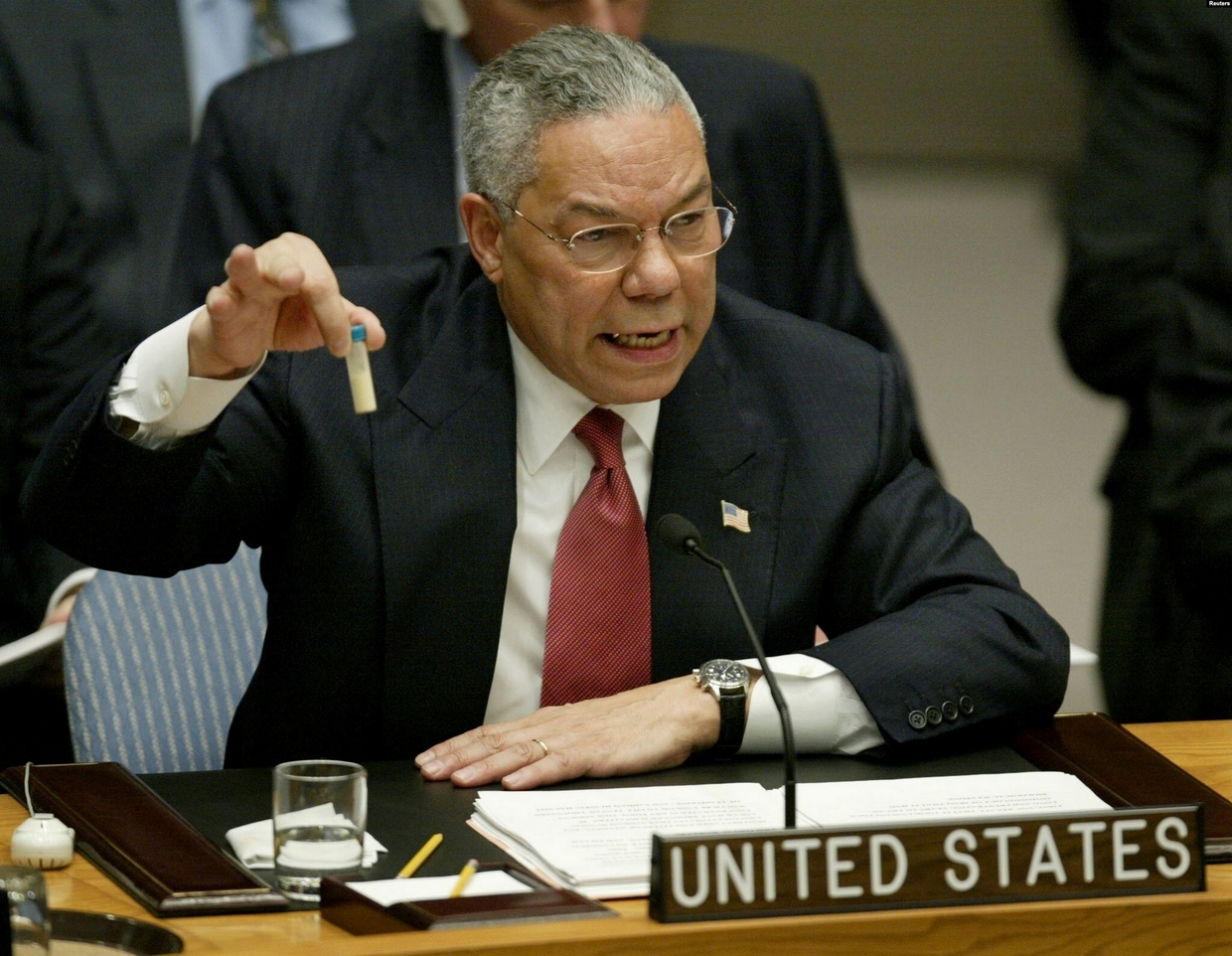
In like manner, Colin Powell’s UN case for war in Iraq, grounded in subsequently discredited claims of weapons of mass destruction, illustrates how flawed, high-stakes missions can become inextricably bound to those tasked with executing them. If one bears the problem alone, one risks becoming its embodiment.
The image of the US secretary of state holding up a small model vial to illustrate the alleged massive threat – suggesting that even a tiny amount of anthrax could kill thousands – has become indelibly etched in the public memory.
The vial was a symbol designed to lend certainty to uncertain intelligence, powerful precisely because it rendered an abstract threat both immediate and real. In the public mind, the vivid prop substituted for proof, only to return and define Powell himself – a striking case of vividness backfiring by turning against its proponent. Vance risks being cast as the public face of another disaster.
In April 2026, the vice president was dispatched to lead negotiations with Iran – thrown into a piranha pool, as it were – despite deep structural deadlock, maximal demands on both sides, and limited leverage. After 21 hours of talks, no deal emerged, corroborating that he was operating in a space where outcomes are largely beyond his control.
Vance’s poisoned chalice
The danger for Vance in taking on the role of chief negotiator with Iran is not merely diplomatic failure. It is something more subtle and more perilous: Reputational entrapment.
The vice president risks becoming not only the highly visible public face of a situation in which success is structurally constrained – and thus unlikely from the outset – but also the focal point for subsequent blame.
This embodies precisely the logic of the poisoned chalice: Responsibility delegated downward, failure personalized, and credit – if any – retained upward. The challenge for Vance, then, is not simply to negotiate with Tehran, but to navigate the political architecture in Washington that defines how success and failure are assigned.
The Iran file is uniquely resistant to resolution precisely because the core demands of each side are not readily reconciled. Washington seeks limits on its interlocutor’s nuclear capabilities and regional influence, while Tehran lays claim to sovereignty, strategic autonomy, and sanctions relief. These are not marginal bargaining positions, but foundational interests.
Decades of diplomacy, including the rise and collapse of prior agreements, have demonstrated that even partial convergence is fragile. Against this backdrop, assigning a single political figure to deliver a breakthrough is less a matter of policy design than of political buffering. The negotiator becomes a vessel into which risk is poured.
What makes the situation especially perilous for Vance is the asymmetry of narrative control. In modern politics, outcomes are not judged solely by what happens, but by how what happens is interpreted.
If talks were to succeed, the credit would almost certainly accrue upward, vindicating the leader’s strategy and bolstering his authority. If they fail, however, the story can quickly narrow, focusing on the conduct, tone, or competence of the negotiator. The same structural constraints that made success unlikely in the first place are often forgotten in the postmortem. For a vice president, whose institutional power is inherently derivative, this imbalance is particularly pronounced and consequential.
Power often operates most effectively when it acts indirectly, as exemplified by the logic of the poisoned chalice. These artifices are typically deployed obliquely, their logic masked by institutional routine. What is unusual in this particular instance, however, is the lack of concealment by the Machiavellian prince in the White House.
Trump, driven by his narcissistic need to claim credit, has plainly exposed the mechanism: Success will redound to him, failure will adhere to Vance. The president explicitly proclaimed: “If [an Iran deal] doesn’t happen, I’m blaming J.D. Vance. If it does happen, I’m taking full credit.” In making the asymmetry manifest, Trump undermined the very subtlety on which the contrivance depends.
Vance’s taint of power
No matter how the Iran negotiations unfold, Vance faces a more insidious, intertwined political hazard: Contamination by proximity.
Failure exerts a pernicious gravitational pull. Stand too close, and you are no longer merely adjacent to it; you are absorbed into its explanation. Even the blameless witness risks being drafted into its narrative. It is an old dilemma in politics: Proximity does not just invite scrutiny; it assigns meaning.
In the previous election, Vice President Kamala Harris struggled to present herself as a candidate of change while tied to President Joe Biden’s record, with many voters assuming continuity rather than renewal. The same logic now applies to Vance.
Vance is widely regarded as the most powerful occupant of the vice presidency in years, owing to the trust placed in him by Trump; yet this very position renders him acutely vulnerable to the administration’s success or failure.
Acting as a combative surrogate, he has earned Trump’s praise for his willingness to enter hostile terrain, appearing on networks often critical of the administration. This loyalty binds him closely to its choices, especially on high-stakes issues like Iran. Yet any future attempt to run as a corrective alternative will almost inevitably collide with his own visible role in shaping those very policies.
For Vance, the challenge at hand is dual: The politically exposed vice president must forthwith grapple with one of the world’s most complex military and diplomatic crises while simultaneously managing the intricate structural political framework that will ultimately define how his performance, on Iran and in other theaters, will be judged. Unless he acts fast, association risks becoming destiny.
If the captive vice president, in the present instance, acquiesces in both the role and the narrative that accompanies it, he risks becoming the embodiment of a perennially intractable problem. Yet if he reshapes that narrative, he stands a chance of turning a liability into a demonstration of strategic clarity.
In modern politics, proximity virtually predestines identity: Once you help make the record, it becomes exceedingly difficult to run against it. What escape route remains open to the prima facie inextricably ensnared vice president?
ملاحظة تحريرية | Editorial Note:
نُشر هذا المقال في الأصل بواسطة RT English.
خبر (Khabr) هي منصة إعلامية أردنية مرخّصة تعمل بالذكاء الاصطناعي.
نضيف قيمة تحريرية من خلال: تحليل ذكي للأخبار، ملخصات تلقائية، رواية صوتية بالذكاء الاصطناعي، ترجمة متعددة اللغات، وتدقيق الحقائق.
هدفنا جعل الأخبار أكثر وضوحاً وسهولةً للقارئ العربي.
This article was originally published by RT English.
Khabr is a licensed Jordanian AI-powered news platform (Registration #82086).
We add editorial value through: AI-powered news analysis, automated summaries, AI audio narration, multi-language translation (Arabic, English, French, Turkish), and AI fact-checking.
Our mission is to make news more accessible and understandable for Arabic-speaking audiences worldwide.
هذا الخبر ضمن تغطية خبر لقسم سياسة.
نقدّم لك تحليلات ذكية وملخصات يومية لأهم الأخبار من مصادر موثوقة متعددة.
المصدر: RT English.
يوجد 6 مقالات مرتبطة بهذا الموضوع.
This article is part of Khabr's coverage of Politics.
We provide AI-powered analysis, summaries, and multi-source aggregation to keep you informed.
Source: RT English.
Tags: Vance, VP dilemma, power.
🍪 نستخدم ملفات تعريف الارتباط لتحسين تجربتك وعرض الإعلانات المخصصة. باستخدامك للموقع، فإنك توافق على سياسة ملفات تعريف الارتباط وسياسة الخصوصية.
We use cookies to enhance your experience and show personalized ads. By using this site, you agree to our Cookie Policy and Privacy Policy.
🔍
FREEFree 1GB Internet + Free International Calls
$1 trial — eSIM in 190+ countries — No roaming charges