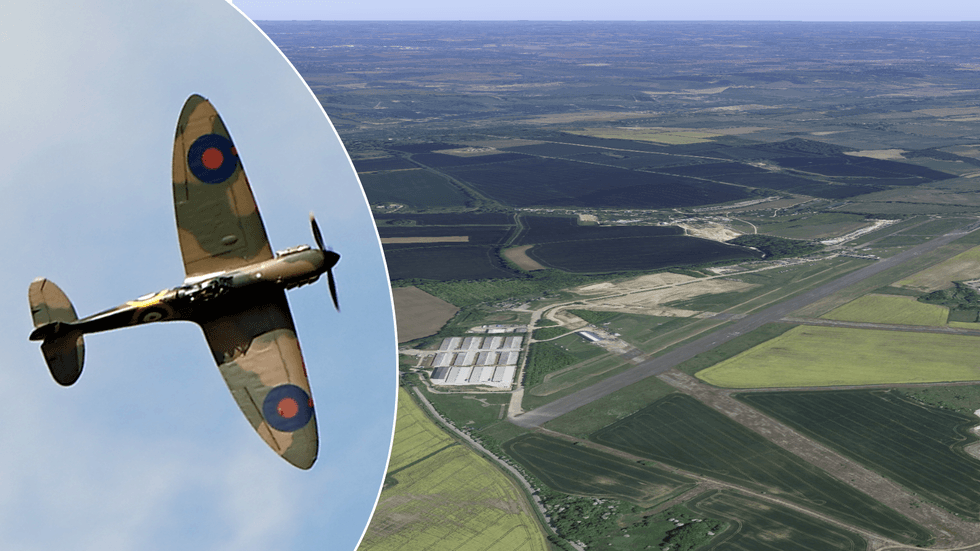
A pilot died after his replica Spitfire flipped on take-off and caught fire, an inquest has heard.
Peter Hughes died at the age of 71 when the plane crashed and caught alight at Enstone airfield, near Chipping Norton, two years ago.
The aircraft, which Mr Hughes helped to build, laid upside down after cartwheeling off the Oxfordshire airfield’s runway during take-off.
Accident investigators say that at this point, the aircraft erupted into flames.
Mr Hughes is said to have survived the impact but the ensuing fire resulted in his demise.
No single cause for the crash was established, but investigators raised theories such as mechanical failure, pilot error or a medical episode.
Mr Hughes’s death on July 28, 2024, was the second replica Spitfire death at Enstone within a year, the Aviation Safety Network said.
Geraint Herbert, principal inspector at the Air Accidents Investigation branch (AAIB), told Oxfordshire coroner’s court on Tuesday May 12: “We can tell you what happened, but it is quite hard to then tell you why it happened, when the answer to the ‘why’ is what somebody was thinking, as we cannot infer that.”

A post-mortem discovered Mr Hughes suffered from coronary artery disease, which can cause a sudden cardiac event or severe chest pain.
However, the inquest established that a medical episode potentially impairing his ability to fly safely was not the only possible cause for the crash.
AAIB experts said Mr Hughes was unable to control the so-called ‘Mark 26’ Spitfire during his take-off run, meaning its nose pointed upwards immediately after it rose from the ground.
The aircraft then swayed left before flipping over and cartwheeling on the runway.
ACROSS THE UK
- Husband destroyed pub with bulldozer because he thought his wife was having affair with landlord
- The first Briton to donate more than £1billion in a year to charity revealed
- Serial thief who stole over £20k worth of designer bags from Harrods avoids jail
The AAIB’s report concluded there was “no evidence of malfunction or failure of any of the aircraft’s flying control systems that would explain a loss of control”.
“Inappropriate control inputs” by Mr Hughes and the chance he was “Incapacitated to some extent” were other raised possibilities.
Mr Hughes’s brother, also passionate about aviation, said at the inquest: “Throughout his life, Peter was a mechanical genius.
“He approached all machines with a massive amount of respect and knowledge. He could drive, ride, sail and fly all types of transport, and build and maintain them.”
A verdict on Mr Hughes’s death is set to be returned by the inquest jury in the near future.
Our Standards: The GB News Editorial Charter