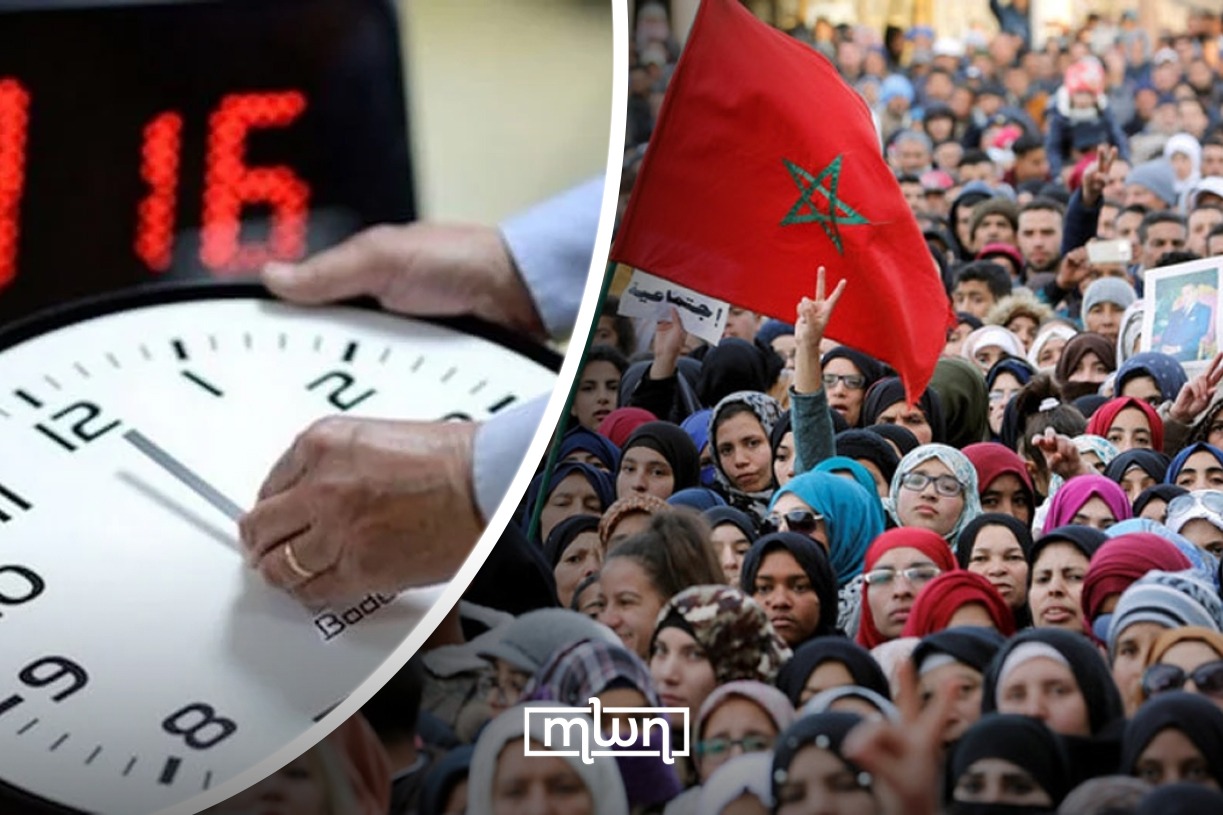
Permanent GMT+1 in Morocco: Time for a Change?
المصدر: Morocco World News | Source: Morocco World NewsLast night, Morocco returned back to GMT+1 after the tradition of temporarily switching to GMT (legal time) during Ramadan. The government’s decision to maintain permanent GMT+1 was introduced as a measure to enhance administrative efficiency and economic coordination. Yet, years after its adoption, the public debate remains active, not merely as a matter of preference or habit, but as a question of health, education, and daily well-being.
Time policy is not abstract. It structures how citizens wake, commute, study, work, and rest. Scientific research in chronobiology, the study of biological rhythms, shows that human beings function according to an internal circadian clock regulated primarily by exposure to natural light. Morning sunlight is especially important. It suppresses melatonin – the hormone responsible for sleep – and helps regulate cortisol and serotonin, which influence alertness, mood, and cognitive performance.
When official time is permanently advanced relative to solar time, social schedules become misaligned with natural daylight. During winter months in Morocco, sunrise occurs later according to the clock, meaning many citizens begin their day in darkness. In cities such as Casablanca, Rabat, Tangier, and Fez, commuters often leave home and students enter classrooms before daylight.This daily exposure to darker mornings is far from insignificant. Research consistently links circadian misalignment to shorter sleep duration, increased fatigue, reduced concentration, irritability, and greater vulnerability to mood disturbances. Even a one-hour shift, when maintained over long periods, can affect sleep quality and biological regulation. The effects may not be dramatic, but they accumulate.
Students are among the most visibly affected. During winter, many children and adolescents travel to school before sunrise and begin classes in darkness. Scientific studies on adolescent sleep patterns show that young people are biologically predisposed to later sleep cycles. Advancing social time effectively reduces their rest and delays exposure to morning light, which plays a key role in cognitive activation. Insufficient sleep and circadian disruption have been associated with lower attention levels, impaired memory consolidation, and emotional instability. For a country investing in educational reform and human capital development, the biological timing of the school day warrants serious consideration.
Urban commuting patterns further intensify the issue. In Morocco’s major cities, long travel times already shape daily stress levels. Beginning the day in darkness can heighten perceived fatigue and reduce alertness during peak hours. While extended evening daylight is often cited as a benefit of permanent GMT+1, many workers report that darker mornings create a heavier start to the day. Under legal time (GMT), sunrise occurs earlier according to the clock, allowing daily routines to align more closely with natural light. This alignment influences not necessarily the number of hours worked, but the distribution of energy and the subjective sense of balance throughout the day.
Public opinion reflects this lived experience. Since the adoption of permanent GMT+1, recurring debates and surveys suggest that a significant portion of citizens express discomfort with the policy, particularly during winter. Many report feeling more physically and psychologically comfortable under GMT. Such perceptions should not be dismissed as resistance to change. They are consistent with established chronobiology principles: when social time aligns more closely with solar time, sleep and alertness tend to improve.
Morocco’s temporary return to GMT during Ramadan illustrates an implicit recognition of biological and social rhythms. During that period, aligning time more closely with natural cycles is widely perceived as easing daily routines. This seasonal adjustment demonstrates that time policy is not fixed by necessity, but shaped by social priorities.
Supporters of permanent GMT+1 often argue that the change aligns better with European partners and ensures global administrative continuity. While synchronization has strategic value, international research on the long-term economic benefits of permanent daylight saving measures remains mixed. In contrast, the health and productivity costs associated with chronic sleep disruption are well documented, including reduced efficiency, higher accident risk, and broader mental health strain.
The question is therefore not about tradition versus modernization. Rather, it is about whether time policy should prioritize external coordination over biological alignment. A one-hour shift may appear minimal in administrative terms, yet in biological terms it represents a daily structural condition affecting millions.
As Morocco continues to prioritize human development, educational performance, and social resilience, the alignment between official time and natural daylight deserves evidence-based reassessment. Time shapes the rhythm of a society. When that rhythm conflicts with human biology, the effects are felt not in theory, but in everyday life.
One hour on the clock can influence far more than it seems.References
Roenneberg, T., et al. (2012). Social jetlag and obesity. Current Biology.
Wittmann, M., Dinich, J., Merrow, M., & Roenneberg, T. (2006). Social jetlag: misalignment of biological and social time. Chronobiology International.Walker, M. (2017). Why We Sleep: Unlocking the Power of Sleep and Dreams.
American Academy of Sleep Medicine (2020). Daylight Saving Time and Health Position Statement.
European Parliament Research Service (2019). Discontinuing seasonal changes of time.
World Health Organization (WHO). Sleep and health.
Touitou, Y., et al. (2016). Effects of Daylight Saving Time on health.
The post Permanent GMT+1 in Morocco: Time for a Change? appeared first on Morocco World News.
ملاحظة تحريرية | Editorial Note: نُشر هذا المقال في الأصل بواسطة Morocco World News. خبر (Khabr) هي منصة إعلامية أردنية مرخّصة تعمل بالذكاء الاصطناعي. نضيف قيمة تحريرية من خلال: تحليل ذكي للأخبار، ملخصات تلقائية، رواية صوتية بالذكاء الاصطناعي، ترجمة متعددة اللغات، وتدقيق الحقائق. هدفنا جعل الأخبار أكثر وضوحاً وسهولةً للقارئ العربي.
This article was originally published by Morocco World News. Khabr is a licensed Jordanian AI-powered news platform (Registration #82086). We add editorial value through: AI-powered news analysis, automated summaries, AI audio narration, multi-language translation (Arabic, English, French, Turkish), and AI fact-checking. Our mission is to make news more accessible and understandable for Arabic-speaking audiences worldwide.