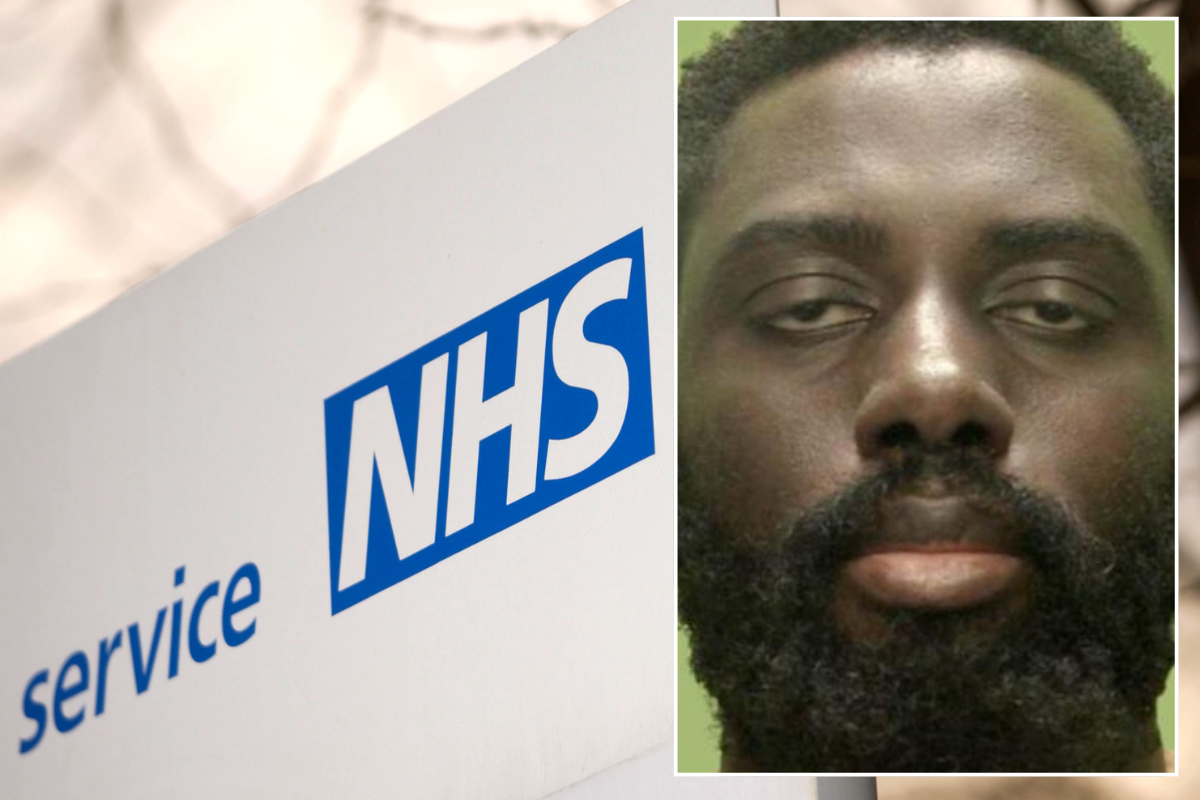
NHS doctors pressured not to section psychotic black patients due to fears of appearing racist
NHS psychiatrists are being discouraged from detaining psychotic black patients under the Mental Health Act amid concerns about appearing racist.
Nine serving and former NHS mental health professionals have come forward to report experiencing pressure to reduce the number of black individuals they section, in an effort to address perceived over-representation in detention statistics.
The health service has been accused of introducing positive discrimination measures in response to data showing black people are 3.5 times more likely to face compulsory detention than their white counterparts.
Medical professionals have condemned these approaches as "scientific illiteracy" and accused policymakers of "jumping on bandwagons", according to an investigation by The Telegraph.
One former NHS doctor stated: "Once a patient has psychosis, we shouldn't perform sociology, we should perform medicine."
Psychiatrists have warned that elevated detention rates among black patients stem not from institutional racism but from underlying risk factors including social deprivation, living circumstances and patterns of migration.
Medical professionals argue the term "over-representation" carries moral implications that obscure the complex reality of mental health disparities.
They point to multiple contributing factors beyond alleged NHS prejudice, such as family breakdown, exclusion from education, absent fathers and cannabis consumption.

Prof Sir Robin Murray, a leading psychosis researcher at King's College London, acknowledged "political pressure" exists to lower sectioning rates for black individuals.
However, he emphasised that health conditions affect different racial groups in distinct ways, noting that black people face heightened risks of both sickle cell anaemia and prostate cancer without accusations of racism being levelled at specialists treating those conditions.
The matter has attracted intense scrutiny during the ongoing Nottingham Inquiry examining Valdo Calocane's fatal attacks on students Barnaby Webber and Grace O'Malley-Kumar, and caretaker Ian Coates, in June 2023.
Calocane, who suffered from paranoid schizophrenia, had repeatedly declined medication yet was not detained following a previous violent episode, with mental health staff citing the "over-representation of black men" in custody as justification.
LATEST DEVELOPMENTS:
- Nearly every mentally ill killer known to police but all STILL slipped through the cracks
- Valdo Calocane's mother thought son 'posed risk to others years before' triple killing
- Valdo Calocane handed hammer back by psychiatrists despite being sectioned
A former physician who worked at the same trust treating Calocane revealed that regulators visited his ward shortly before the killings and informed him there were too many black patients present.
Several doctors drew parallels with the Rotherham grooming gangs scandal, where police failed to intervene against predominantly south Asian perpetrators due to fears of racism accusations.
Psychiatrists contend that restricting detentions based on race ultimately harms the very patients these policies aim to protect, denying them essential care while simultaneously elevating risks to public safety.
Prof Murray drew an analogy with cancer treatment, telling the Telegraph: "It's akin to saying that it's very unfortunate that so many black patients are having treatment for prostate cancer, so we should decrease the number having operations.
"Black people have an increased risk of sickle cell anaemia and prostate cancer: we're not saying urologists are racist."
Peter Carter, formerly chief executive of the Central and North West London Mental Health NHS Trust, described decisions not to detain black patients on racial grounds as "indefensible" and "racist," insisting clinicians "must be held to account."
An epidemiology professor warned that attributing all detention disparities to institutional racism "doesn't pass the sniff test" and risks denying treatment to those genuinely requiring it.
Lord Sewell, who chaired the 2020 Commission on Race and Ethnic Disparities, accused UK public health research of being "captured by American critical race theory" and influenced by activists promoting "urban myths" regarding the treatment of black men.
"For too long we have listened to race activists who have said that black men are being locked up because the system is racist," Lord Sewell told The Telegraph.
He argued that community orders frequently provide young men with positive outcomes, though such stories remain overshadowed by negative narratives.
Swaran Singh, an NHS consultant and Warwick University psychiatry professor, maintained that treatment decisions should be guided by clinical requirements rather than ethnicity.
"A diagnosis of serious mental illness should not become a shield that allows people to repeat offences just because they have a mental illness," Prof Singh said.
GB News has approached NHS England for comment.
Our Standards: The GB News Editorial Charter