Middle Eastern Economies within the Global Wealth Structure
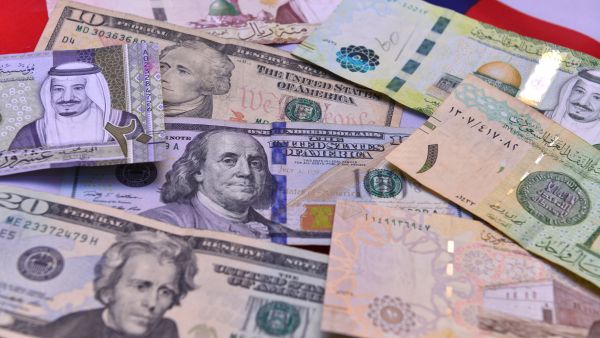
المصدر: البوابة | Source: البوابةDr. Gil Feiler - The position of Middle Eastern economies in the global wealth hierarchy is often misunderstood due to the use of headline indicators that obscure structural realities. A rigorous comparison across three key metrics—nominal GDP per capita, purchasing power parity (PPP), and net wealth per capita—reveals a more nuanced picture of how countries in the region, particularly Israel and the Gulf states, integrate into the global distribution of income and wealth.
In nominal GDP per capita terms, Israel stands out as one of the strongest performers in the Middle East and globally. With income levels approaching $60,000 per capita, it ranks approximately 14th worldwide, placing it ahead of major European economies such as Germany and France. This performance reflects a highly productive, innovation-driven economy centered on advanced technology, services, and human capital. Unlike hydrocarbon-based economies, Israel’s growth model is rooted in endogenous innovation and integration into global technology markets, aligning it more closely with advanced OECD economies such as YSA and Switzerland.
However, nominal GDP figures alone are insufficient to assess real economic well-being. When adjusting for price levels using PPP, Israel’s relative standing declines to approximately 18th–22nd globally, with income levels in the range of $55,000–58,000. This adjustment reflects the country’s high cost of living, which erodes effective purchasing power. In contrast, several Gulf economies, including Qatar and the UAE benefit from lower domestic price structures and significant state subsidies, allowing them to maintain stronger PPP-adjusted positions relative to their nominal rankings. Yet these advantages are largely a function of resource rents rather than diversified productivity.
The distinction becomes even sharper when examining net wealth per capita, arguably the most meaningful indicator for long-term economic resilience and individual prosperity. Wealth measures incorporate financial assets, real estate, and liabilities, capturing the cumulative outcomes of economic activity over time. Here, the global leaders USA, Switzerland and advanced Northern European economies—exhibit wealth levels ranging from approximately $400,000 to nearly $700,000 per capita. Israel, with estimated wealth per capita of $280,000–300,000, ranks around 13th–16th globally. This places it firmly within the upper tier of advanced economies, though still below the wealth accumulation levels seen in the most mature financial systems.
The Gulf states present a contrasting profile. Despite high GDP per capita—often driven by oil and gas revenues—wealth accumulation at the household level is less robust than aggregate income figures suggest. Sovereign wealth funds in countries such as Qatar and the UAE hold vast assets, but these are not fully reflected in private wealth per capita. As a result, the apparent affluence of these economies is more state-centric than broadly distributed across households.
From a structural perspective, the Middle East thus contains two distinct economic models. The first, represented by Israel, is characterized by high human capital intensity, technological innovation, and integration into global capital markets. This model generates strong income levels but faces constraints related to cost of living and wealth accumulation dynamics. The second, represented by hydrocarbon exporters, relies on resource rents and state-led redistribution, producing high income figures but less diversified and potentially less sustainable wealth structures.
For investors and policymakers, the implications are significant. Israel emerges as a hybrid economy—combining high-income characteristics with emerging-market features—offering strong productivity but with structural frictions in cost and inequality. Gulf economies, meanwhile, offer high liquidity and state-backed financial strength but remain exposed to commodity cycles and long-term energy transition risks.
In conclusion, the Middle East occupies a complex and heterogeneous position within the global wealth structure. While headline GDP figures may suggest broad regional affluence, a deeper analysis reveals divergence between income generation, purchasing power, and wealth accumulation. Understanding these distinctions is essential for accurately assessing economic resilience and long-term investment potential in the region.
ملاحظة تحريرية | Editorial Note: نُشر هذا المقال في الأصل بواسطة البوابة. خبر (Khabr) هي منصة إعلامية أردنية مرخّصة تعمل بالذكاء الاصطناعي. نضيف قيمة تحريرية من خلال: تحليل ذكي للأخبار، ملخصات تلقائية، رواية صوتية بالذكاء الاصطناعي، ترجمة متعددة اللغات، وتدقيق الحقائق. هدفنا جعل الأخبار أكثر وضوحاً وسهولةً للقارئ العربي.
This article was originally published by البوابة. Khabr is a licensed Jordanian AI-powered news platform (Registration #82086). We add editorial value through: AI-powered news analysis, automated summaries, AI audio narration, multi-language translation (Arabic, English, French, Turkish), and AI fact-checking. Our mission is to make news more accessible and understandable for Arabic-speaking audiences worldwide.