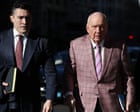
Home Biz News May 6, 2026 9:16am PT Media CEO Pay 2025: How David Zaslav, Bob Iger, Ted Sarandos and Other Moguls Made Bank as Hollywood Struggled By Brent Lang, Todd Spangler Variety Warner Bros. Discovery shareholders sent a clear message to David Zaslav last month: Greed isn’t good. On April 23, they approved a plan to sell the company to Paramount for $110.9 billion, while overwhelmingly rejecting the windfall Zaslav is set to receive when the deal closes — as much as $886 million, according to Warners, though his actual payout will likely be less than that. In the nonbinding vote, owners holding 82% of shares opposed Zaslav’s golden parachute, which gives the Warner Bros. Discovery chief $552 million in stock, cash and benefits, as well as up to $335.4 million in reimbursement to take care of the tax bill on his lavish payday (an amount the company says will decline to zero by the end of 2026). The move may have been largely symbolic, but analysts believe that it signals growing distaste for the outsize rewards chief executives in the media and technology space receive for their work. “It makes a difference,” says Rosanna Landis Weaver, a consultant at the Interfaith Center on Corporate Responsibility. “When a vote gets this high, boards of directors reasonably fear their reputations and start to take their responsibility to be impartial watchdogs more seriously.” But Zaslav, who has one foot out the door, didn’t seem to get the message. A week later, Warner Bros. Discovery revealed that his pay package for 2025 had tripled to a staggering $165 million, making him one of the highest-paid CEOs in the world. In contrast, Tim Cook, the chief of Apple, which has a market cap of nearly $4 trillion compared with Warner Bros. Discovery’s $67.8 billion, had to settle for a compensation package worth $74.3 million. Zaslav wasn’t the only chief executive enjoying a big raise. Overall, payouts to the heads of America’s biggest corporations accelerated in 2025, mostly in the form of stock and options awards. For 318 companies in the S&P 500 last year, the median CEO compensation package was $17.7 million — an increase of 10.6% year over year, versus a 7.5% bump in 2025, according to an analysis by ISS-Corporate, a corporate-governance analytics provider. Those 2025 pay hikes didn’t always align with the companies’ performance, outpacing the median 7.5% one-year increase in total shareholder returns for the companies analyzed. And Zaslav and his fellow entertainment moguls are earning bank as Hollywood is facing threats on all sides. The box office was flat last year, and attendance and ticket sales haven’t come close to pre-pandemic levels. At the same time, customers are cutting the cable cord, prompting media companies to invest more heavily in streaming. The problem is, the money they make running a Peacock or Disney+, or the revenue they generate from licensing content to Netflix or Prime Video, pales in comparison with what they once pulled in from cable. The people running these media conglomerates often turn to the same playbook — layoffs. Over the past few months, Disney, Amazon, Paramount, Warner Bros. Discovery and Universal have slashed thousands of jobs as they look to cut costs. So why hasn’t that spirit of belt-tightening extended to the C-suite? The answer may lie in the way that many media companies are structured. Comcast, Fox and Paramount all have what’s known as dual-class stock, which gives the families that control them nearly unchecked authority to determine how their top executives get financially rewarded. It establishes a dangerous precedent, because other companies in the sector that aren’t family owned, such as Disney, put their dual-class competitors in their peer group when they sit down to figure out their leaders’ paydays. “These compensation packages will continue to accelerate as long as these dual-class companies are establishing the rules of the road,” says Charles Elson of the University of Delaware’s John L. Weinberg Center for Corporate Governance. “It creates upward pressure on the whole system, and every media company CEO is going to feel like they can’t fall behind the rest of the pack.” But that competitive pressure doesn’t translate to a spirit of shared sacrifice. Instead, the compensation committees of major media companies use both qualitative and quantitative metrics for determining whether or not to reward these corporate leaders their multimillion-dollar bonuses. So even if a CEO doesn’t reach certain financial goals, they are rewarded for their television division’s Emmy wins, the box office performance of a blockbuster film or the opening of a theme park attraction, regardless of how directly involved they were in those successes. That typically means that even if the companies they run have a rough year, a CEO’s pay stubs won’t suffer. “The logic is wrong,” Elson says. “Most of these CEOs didn’t start the companies they lead, but you’re giving them an entrepreneurial return for managerial risk. If an entrepreneur screws up, they go broke. If a media CEO doesn’t do a good job, they walk away with a great salary and a lot of stock options.” Disney Image Credit: Getty Images Bob Iger CEO 2025 compensation: $45.8M/+11.5% Median employee compensation: $56,932 Iger pay ratio to median employee: 805 It’s so hard to say goodbye (again). After two decades atop the Magic Kingdom, Iger is finally exiting Disney. His return to right the ship in 2022 after Bob Chapek’s tumultuous tenure was a mixed bag. Disney+ is profitable, and its animation division has delivered hits like “Zootopia 2.” But other parts of the empire, such as Lucasfilm and Marvel, have struggled. Disney is sending Iger out in style. His base salary is $1 million, but he augmented that with $35 million in stock and options. Iger also got $1.8 million for security and $568,670 for personal air travel. Disney rewarded Iger with a $7.2 million cash bonus, which it partly attributed to his oversight of Disneyland’s 70th-anniversary celebration. Most important — but left unsaid in Disney’s summary of Iger’s “performance highlights” — was that he ended the succession drama around Disney by handing the keys to Josh D’Amaro, who will earn $38 million as CEO. That makes D’Amaro a slightly cheaper alternative to Iger, but give him time. Soon the padawan will be raking it in like the master.
المصدر: Variety Entertainment
| Source: Variety Entertainment
ملاحظة تحريرية | Editorial Note:
نُشر هذا المقال في الأصل بواسطة Variety Entertainment.
خبر (Khabr) هي منصة إعلامية أردنية مرخّصة تعمل بالذكاء الاصطناعي.
نضيف قيمة تحريرية من خلال: تحليل ذكي للأخبار، ملخصات تلقائية، رواية صوتية بالذكاء الاصطناعي، ترجمة متعددة اللغات، وتدقيق الحقائق.
هدفنا جعل الأخبار أكثر وضوحاً وسهولةً للقارئ العربي.
This article was originally published by Variety Entertainment.
Khabr is a licensed Jordanian AI-powered news platform (Registration #82086).
We add editorial value through: AI-powered news analysis, automated summaries, AI audio narration, multi-language translation (Arabic, English, French, Turkish), and AI fact-checking.
Our mission is to make news more accessible and understandable for Arabic-speaking audiences worldwide.