Lost 17th century garden revealed after Britain's record-breaking heatwave
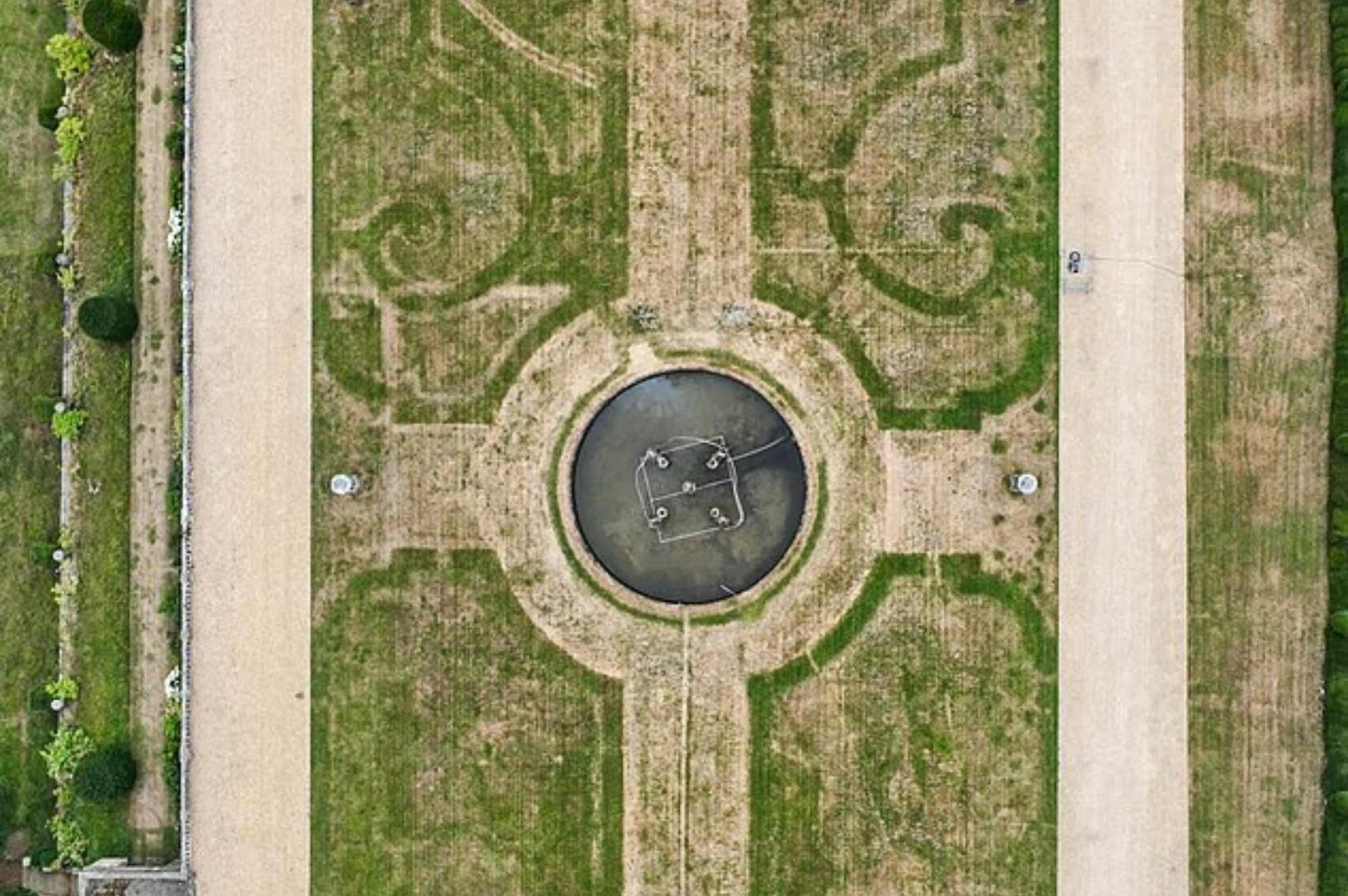
•England's prolonged spell of scorching temperatures and parched conditions has uncovered a remarkable piece of horticultural history at one of the country's most celebrated stately homes.Aerial photog...
•This differential scorching has brought the swirling decorative patterns of the original garden temporarily back into view, creating a striking contrast visible from above.
•TRENDING Stories Videos Your Say The garden was commissioned by William Cavendish, the 1st Duke of Devonshire, around 1699 as a complement to the property's newly constructed south façade.
هذا الخبر من GB News. خبر يقدم أدوات ذكاء اصطناعي للتلخيص والترجمة والاستماع.
المصدر: GB News | Source: GB NewsEngland's prolonged spell of scorching temperatures and parched conditions has uncovered a remarkable piece of horticultural history at one of the country's most celebrated stately homes.
Aerial photographs of the Chatsworth Estate in Derbyshire now show the ghostly imprint of "The Great Parterre," a long-buried ornamental garden featuring intricate arrangements of flowerbeds and pathways dating back to the late 17th century.
The phenomenon, which also occurred during the 2022 heatwave, is caused by grass with shallower root systems drying out and browning more rapidly than surrounding turf.
This differential scorching has brought the swirling decorative patterns of the original garden temporarily back into view, creating a striking contrast visible from above.
TRENDINGStoriesVideosYour SayThe garden was commissioned by William Cavendish, the 1st Duke of Devonshire, around 1699 as a complement to the property's newly constructed south façade.
Spanning 473 feet by 227 feet, it reflected the prevailing taste for formal garden design of that era.
The Cavendish family, who have held the estate since 1549, saw the elaborate parterre survive only a few decades.
Around 1730, the 3rd Duke of Devonshire, another William Cavendish, ordered it covered over and replaced with a fresh layout.
The grass subsequently planted above the original flowerbeds and pathways has shorter roots than the surrounding turf, meaning it scorches far more quickly during sustained heat and drought.
Chatsworth's own weather monitoring equipment has logged peak temperatures surpassing 30C in each of May, June and July this year.
Staff compared these readings against long-term climate averages for Derbyshire and the East Midlands, concluding that the estate's spring and early summer have been truly exceptional.
Sunshine hours totalled 530.8, roughly a third above the norm, while rainfall amounted to just 108.2mm, some 32 per cent below average.
LATEST DEVELOPMENTS
- Remains of 800-year-old medieval castle discovered hidden in corridor of modern British court
- Scientists uncover shock cause of death for infamous Renaissance ruler
- Archaeologists reveal full extent of Roman villa with remarkable mosaic
The estate's highest recorded temperature remains 38.1C, set on the Salisbury Lawn on July 26 2022. Before that, the previous peak was 34.4C, logged more than a century earlier in 1911.
In response, the garden team is implementing new water management strategies, including boosting organic matter in the soil to enhance water infiltration and reduce surface run-off during downpours.
The drought gripping England extends well beyond Derbyshire.
South-east England experienced 17 consecutive days without any recorded rainfall between July 2 and 18, according to the Met Office — the longest such unbroken dry spell in the region since March-April 1995.
The Environment Agency's weekly drought report, published last Friday, put national reservoir storage at 79 per cent, approximately five percentage points short of the seasonal average.
Six reservoirs are classified as "notably low," while Blagdon in Somerset has fallen to "exceptionally low" levels.
Across the UK, temperatures have topped 30C on 28 separate days so far in 2026, closing in on the calendar-year record of 34 set in 1995.
Meanwhile, an additional 2.4 million people face hosepipe restrictions after South East Water extended its ban to customers in Sussex, Surrey, Hampshire and Berkshire.
Affinity, Anglian, Southern and Cambridge Water have all introduced similar measures in recent weeks.
Our Standards: The GB News Editorial Charter


ملاحظة تحريرية | Editorial Note: نُشر هذا المقال في الأصل بواسطة GB News. خبر (Khabr) هي منصة إعلامية أردنية مرخّصة تعمل بالذكاء الاصطناعي. نضيف قيمة تحريرية من خلال: تحليل ذكي للأخبار، ملخصات تلقائية، رواية صوتية بالذكاء الاصطناعي، ترجمة متعددة اللغات، وتدقيق الحقائق. هدفنا جعل الأخبار أكثر وضوحاً وسهولةً للقارئ العربي.
This article was originally published by GB News. Khabr is a licensed Jordanian AI-powered news platform (Registration #82086). We add editorial value through: AI-powered news analysis, automated summaries, AI audio narration, multi-language translation (Arabic, English, French, Turkish), and AI fact-checking. Our mission is to make news more accessible and understandable for Arabic-speaking audiences worldwide.