⚡ عاجل: كريستيانو رونالدو يُتوّج كأفضل لاعب كرة قدم في العالم●⚡ أخبار عاجلة تتابعونها لحظة بلحظة على خبر●⚡ تابعوا آخر المستجدات والأحداث من حول العالم●
AI اقتراحات ذكية
AI مباشر|--مشاهد مباشر
1,036,297مقال401مصدر نشط228قناة مباشرة3,669خبر اليوم
آخر تحديث:منذ 4 ثواني
Keep calm and carry on: lessons from wasps on how societies survive power struggles
•In politics, business and other human organisations, leadership transitions can trigger intense power struggles.
•Rivals compete for control, alliances shift and institutions can become unstable.
هذا الخبر من ذا كونفرسيشن. خبر يقدم أدوات ذكاء اصطناعي للتلخيص والترجمة والاستماع.
What happens when a leader suddenly disappears? In politics, business and other human organisations, leadership transitions can trigger intense power struggles. Rivals compete for control, alliances shift and institutions can become unstable.
Similar dynamics occur throughout the animal kingdom. Our new research on tropical paper wasps, published in the journal Animal Behaviour, shows just how chaotic leadership struggles can be – but also how societies can remain stable even while conflict rages.
Many animal societies revolve around a single dominant breeder. In cooperative paper wasps, as in many other social wasp species, dozens or even hundreds of females live together in a colony. But reproduction is usually controlled by one dominant individual: the queen. The other females help raise her offspring by foraging for food, feeding larvae and defending the nest.
Unlike in honeybee, yellowjacket wasp or ant colonies, however, these helpers are not sterile. If the queen disappears, any of them could potentially take over and become the next breeder. Often there is a queue – ladies-in-waiting, hoping to be queen. But succession isn’t always predetermined, and in some cases, it can become a contest.
How is the contest settled?
It was in a derelict building in Panama that we found the answer to this question. We experimentally removed queens from 19 wild colonies of the tropical paper wasp, Polistes canadensis, and watched to see what happened next.
The effects were immediate. Aggressive interactions between females increased sharply as several of them competed for dominance. The colony’s usual patterns of behaviour broke down and its dominance hierarchies rapidly became unstable. Rather than a smooth transfer of power, succession turned into a period of widespread conflict involving many members of the colony.
At first glance, this kind of turmoil looks risky. Fighting takes time and energy, and wasps distracted by conflict might neglect essential tasks such as foraging for prey, feeding larvae and maintaining nest structure and hygiene. Violent fights over leadership have been reported in other paper wasps, resulting in societal collapse.
But that wasn’t what we observed.
Despite the chaos, the colonies continued functioning. While some wasps fought to be queen, others avoided the conflict and instead stepped up their investment in foraging and brood care. They ignored the conflict and kept the colony running.
Cooperation didn’t disappear – it was redistributed.
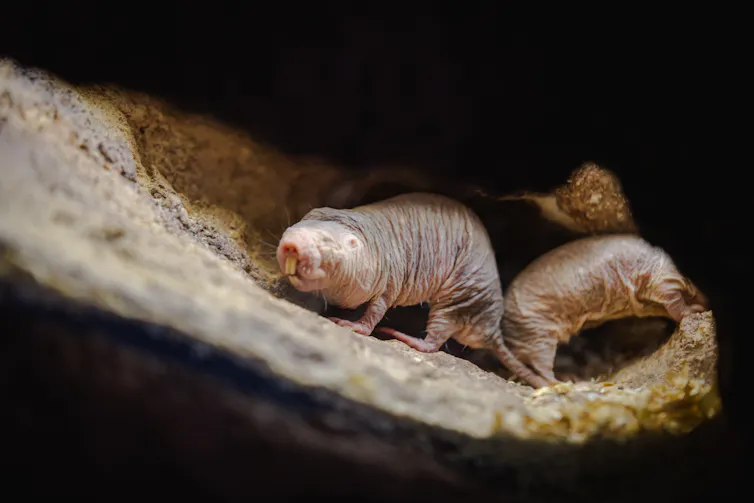
One surprising finding was that the peaceful wasps didn’t appear biologically different from the fighters. In many animal societies, traits such as body size, age or position in the hierarchy help predict who will compete for leadership. For example, in meerkats the largest and oldest females are most likely to inherit the dominant breeding role. In naked mole rats, females already high in the hierarchy fight hardest when the queen dies.
But in our wasp colonies we found no clear differences in body size, age or previous status between individuals that fought and those that stepped back.
This suggests the behaviour may reflect strategic decisions rather than fixed roles. Some wasps may judge that competing for dominance offers them a good chance of producing their own young, while others may gain more by assuring the survival of the brood, which are typically the wasps’ siblings. Investing in the survival of your close relatives is an alternative reproductive strategy and explains the evolution of helping behaviour in animal societies.
Cooperation during conflict
Social insects are often portrayed as perfectly organised societies with rigid rules. Honeybee and ant colonies, for example, typically have sterile workers, leaving little competition over who becomes the next queen. But paper wasps are different. Workers retain the ability to reproduce, and in the tropical species we studied there appears to be no “next in line” when the queen disappears.
Aggression-driven succession might seem too costly for a society to tolerate. Yet our results show it can work, so long as some animals compensate for the disruption by maintaining essential tasks. Even during intense leadership battles, cooperation can persist if some members adjust their behaviour to keep the system functioning.
The balance the wasps in our study maintained may be a common feature of social systems more broadly. When power struggles intensify, stability depends upon those who keep crucial work going in the background.
It’s easy to get distracted when political rivals are fighting it out, but, perhaps we should be shining a light on the unsung heroes who quietly keep things ticking over.
Seirian Sumner receives funding from UK government's Natural Environment Research Council (NERC) and the Biotechnology and Biological Sciences Research Council (BBSRC). She is a Trustee and Fellow of the Royal Entomological Society, and author of the book 'Endless Forms: Why We Should Love Wasps'.
Owen Corbett receives funding from the UK government's Natural Environment Research Council (NERC).
ملاحظة تحريرية | Editorial Note:
نُشر هذا المقال في الأصل بواسطة ذا كونفرسيشن.
خبر (Khabr) هي منصة إعلامية أردنية مرخّصة تعمل بالذكاء الاصطناعي.
نضيف قيمة تحريرية من خلال: تحليل ذكي للأخبار، ملخصات تلقائية، رواية صوتية بالذكاء الاصطناعي، ترجمة متعددة اللغات، وتدقيق الحقائق.
هدفنا جعل الأخبار أكثر وضوحاً وسهولةً للقارئ العربي.
This article was originally published by ذا كونفرسيشن.
Khabr is a licensed Jordanian AI-powered news platform (Registration #82086).
We add editorial value through: AI-powered news analysis, automated summaries, AI audio narration, multi-language translation (Arabic, English, French, Turkish), and AI fact-checking.
Our mission is to make news more accessible and understandable for Arabic-speaking audiences worldwide.
هذا الخبر ضمن تغطية خبر لقسم معرفة وثقافة.
نقدّم لك تحليلات ذكية وملخصات يومية لأهم الأخبار من مصادر موثوقة متعددة.
المصدر: ذا كونفرسيشن.
يوجد 6 مقالات مرتبطة بهذا الموضوع.
This article is part of Khabr's coverage of Knowledge.
We provide AI-powered analysis, summaries, and multi-source aggregation to keep you informed.
Source: ذا كونفرسيشن.
🍪 نستخدم ملفات تعريف الارتباط لتحسين تجربتك وعرض الإعلانات المخصصة. باستخدامك للموقع، فإنك توافق على سياسة ملفات تعريف الارتباط وسياسة الخصوصية.
We use cookies to enhance your experience and show personalized ads. By using this site, you agree to our Cookie Policy and Privacy Policy.
🔍
FREEFree 1GB Internet + Free International Calls
$1 trial — eSIM in 190+ countries — No roaming charges