Run. Run like you’ve been doing, for the past few years. Run and be safe, so that even I cannot find you.
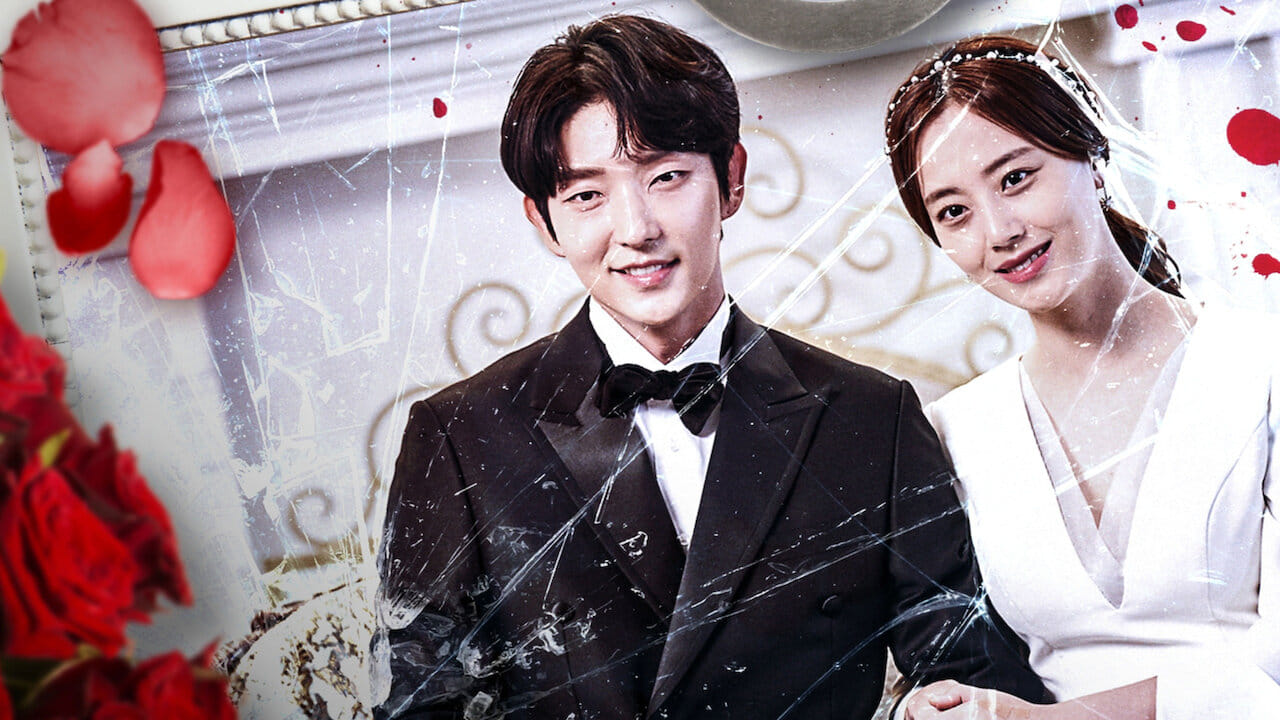
A tearful Lee Joon-gi is pushed out of the door by a desperate Moon Chae-won, who is desperate to keep him safe and away from the police. But Joon-gi’s Hyun-so is reluctant to leave: He finally learns that his wife has discovered the truths around him that he had struggled to bury for so long. She sees the mask that he has worn, fraying slowly. And worse, she is also a police officer, fighting between her own dilemmas and love for the man that she thought she knew.
That’s the crux of Flower of Evil: Fractured identities, the attempt to build an escape, an almost farcical life away from the trauma of a bruised childhood, and also, how far do your principles allow you to bend for the one you love?
Hyun-so, living under the identity of Baek Hee-sung at first, and Ji-won appear to be a happily married couple, with a child. Perhaps a few in-law troubles, as Baek-song’s parents appear to disapprove of her, but as conversations reveal, they sneer at the entire relationship. In the first episode itself, they ask a placid Baek-song, what happens if she finds out about you? He replies calmly, "She sees what I want her to see."
As a viewer, you’re almost confused, guided to ponder, is this the case of a criminal deluding his wife? And at first, Baek-song’s behaviour almost tricks you into believing it: Except, he isn’t. He’s a man haunted by the crimes of his father—a father whose spectre visits him often. In order to break free from the chains that once tethered him to a life of bloodshed, he tries to piece a new identity together.
He doesn’t know what it is to love, be loved, or to feel genuine happiness, or so he believes. And so, as the backstory reveals, when he ran into a persistent Ji-won, he found the only soft, and safe space that he has always needed.
Flower of Evil sees some of the most emotionally raw, mature storylines in the world of K-Drama: Apart from Hyun-so being on the run for years, he also serves to right his father’s wrongs. The series thrives on the collision between Hyun-so’s desperate attempts at redemption and the relentless machinery of police investigation.
The acting for both Joon-gi and Chae-won is beyond criticism here: Ji-won’s excitement for solving a case suddenly goes grey, as she realises her own husband is tied to it. She is worn out—exhausted from trying to understand him and the case, consumed by guilt for suspecting him, yet still wishing to set him free.
But, how does one set another free? And what does freedom really mean? Flower of Evil tries to unpack those questions. It’s a journey to freedom and healing for both Hyun-so and Ji-won.
Freedom for Hyun-so means the acceptance of himself, his tortured past, and confronting the power of his love and being loved by Ji-won. He realises it in one of the darkest moments of the show, when he believes that she is dead: At this point, his sanity is frayed and almost broken, as the only stability he has known, is gone. He could almost commit a dangerous crime as the voices in his head instruct him, but she brings him back from the precipice, making him realise that there is no return if he chooses darkness.
And, after much suffering, heartache and tears, the two slowly make their way to a well-earned peace.
Flower of Evil is a riveting, painful watch. The acting is brilliant, down to the details of Joon-gi’s trembling appearance and Chae-won’s hollowed eyes. It may lean into predictability at times, but the music, storytelling, and cast chemistry work overtime to make those weaknesses easy to forgive.