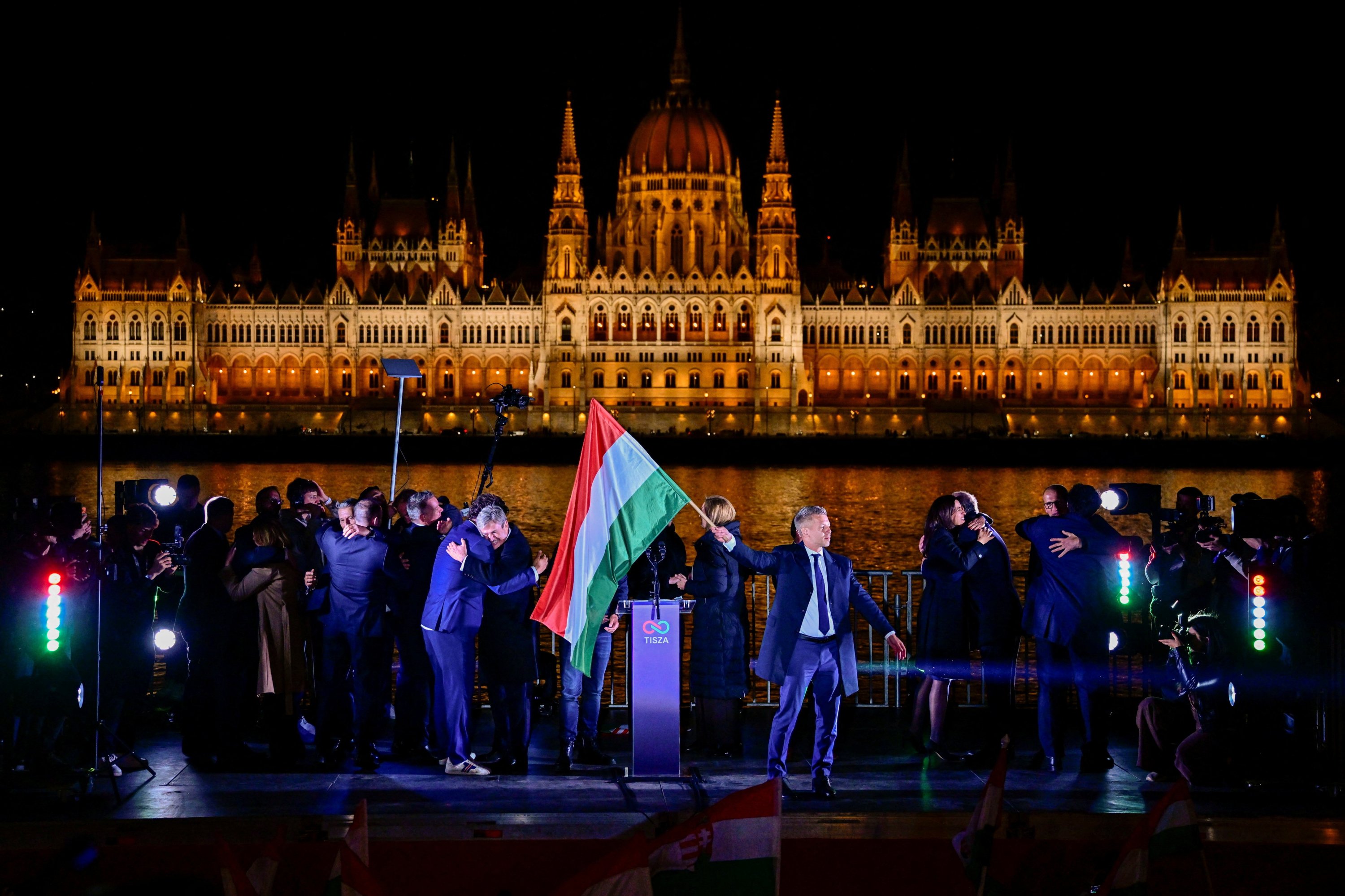
Is Magyar a game-changer or the new face of Hungary’s right bloc?
•Hungary’s election has delivered more than a domestic political transition.
•The defeat of Viktor Orban after 16 years in power marks a turning point in Europe’s political debate, but not necessarily in the way many in Brussels would prefer to interpret it.
•For over a decade, Orban stood as one of Europe’s most influential right-wing leaders, shaping debates on sovereignty, migration and the limits of liberal democracy.
هذا الخبر من Daily Sabah EN. خبر يقدم أدوات ذكاء اصطناعي للتلخيص والترجمة والاستماع.
Hungary’s election has delivered more than a domestic political transition. The defeat of Viktor Orban after 16 years in power marks a turning point in Europe’s political debate, but not necessarily in the way many in Brussels would prefer to interpret it. For over a decade, Orban stood as one of Europe’s most influential right-wing leaders, shaping debates on sovereignty, migration and the limits of liberal democracy. His loss has been widely framed as a decisive rejection of right-wing populism. Yet such a conclusion risks oversimplifying a far more complex political reality.المصدر: Daily Sabah EN | Source: Daily Sabah EN
ملاحظة تحريرية | Editorial Note: نُشر هذا المقال في الأصل بواسطة Daily Sabah EN. خبر (Khabr) هي منصة إعلامية أردنية مرخّصة تعمل بالذكاء الاصطناعي. نضيف قيمة تحريرية من خلال: تحليل ذكي للأخبار، ملخصات تلقائية، رواية صوتية بالذكاء الاصطناعي، ترجمة متعددة اللغات، وتدقيق الحقائق. هدفنا جعل الأخبار أكثر وضوحاً وسهولةً للقارئ العربي.
This article was originally published by Daily Sabah EN. Khabr is a licensed Jordanian AI-powered news platform (Registration #82086). We add editorial value through: AI-powered news analysis, automated summaries, AI audio narration, multi-language translation (Arabic, English, French, Turkish), and AI fact-checking. Our mission is to make news more accessible and understandable for Arabic-speaking audiences worldwide.